
Biden
Expanded Child Tax Credit helping millions of children avoid poverty
Capriana Lindsey wasn’t planning to be a mother.
“When I found out I was pregnant I was staying in a shelter and I was sick,” Lindsey says.
Lindsey was battling homelessness and suicidal thoughts when she discovered she had a baby on the way. But all that changed once her son was born.
“The journey of being a mother has grown me. It has shown me so much love. It’s just a true pure love that I have for my son, and he has for me,” Lindsey says.
Then COVID hit. Suddenly Lindsey was learning not only how to be a single mother but also how to raise a newborn son alone during a global pandemic.
“I was really trying to be a teacher at home for him. I wanted him to have fun and learn, I didn’t want him to be frustrated. I didn’t want him to feel what I was feeling,” Lindsey says.
Lindsey struggled to secure childcare services while pursuing her career, and keeping a steady job seemed impossible. She’s not alone; nearly 1.8 million women have left the workforce amid the pandemic, many due to the increased caregiving burden to provide for their children or parents. According to the National Women’s Law Center, those numbers have started to rebound, with a strong October report of 531,000 new jobs added, with 57% of the going to women.
“I have to work around his schedule. Most jobs don’t have shifts that work with my son’s childcare. It’s tricky finding something that really works,” Lindsey says.
As families across the nation grapple with new challenges, national and state-wide initiatives are playing out to help. According to a Columbia University study, the Child Tax Credit has already saved three million children from falling below the poverty line in July. For Lindsey, the tax credit has been an enormous help every month.
“It’s a great weight off my shoulders, when I can get that case of pullups and get his food stocked up,” Lindsey says.
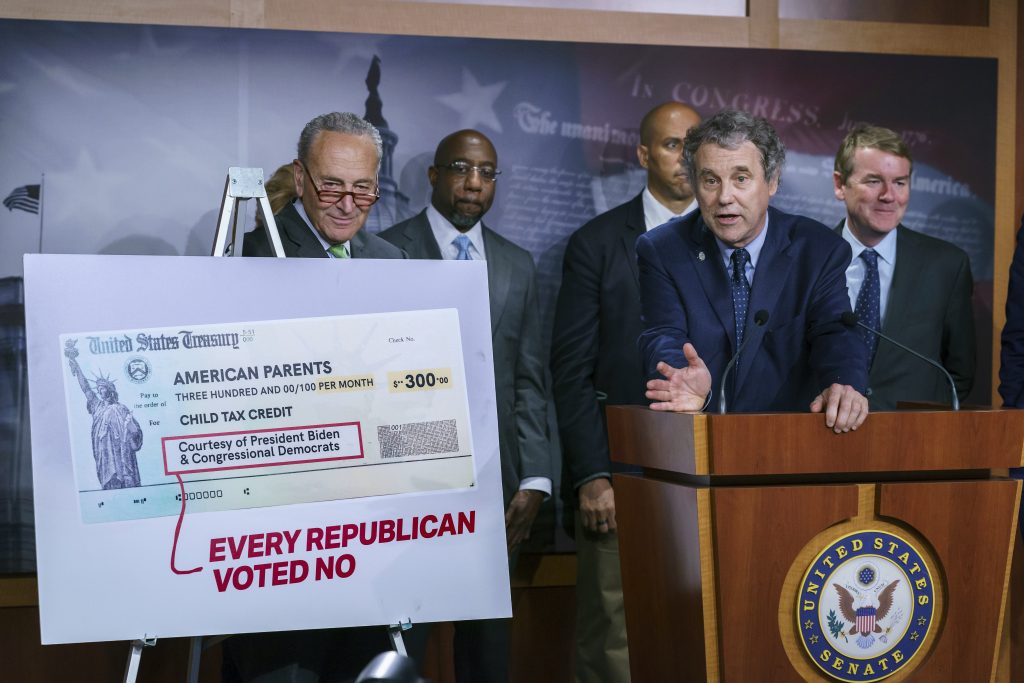
The American Rescue Plan, which became law in March 2021, passed with solely Democratic support and expanded Child Tax Credit. In July 2021, the first payments reached 59.3 million children. Now, the fifth payment is reaching millions of families with the potential to combat child poverty nationwide.
White House data says that most families receive an average of$3,000 in tax credits for each child between the ages of six and 17. For kids under six, households receive an average of $3,600 in tax credits per child. For the first time, families can use tax credits through monthly payments from the government to pay for household costs, rather than waiting and budgeting for annual tax returns.
Waters has received the credit on top of her paycheck, and she says that the savings have helped her family rise toward financial freedom.
“I’m not saying money is everything but once you have kids, with no father really around, working and money is the only thing that can keep everything afloat and happy,” Laura Waters, a single mother of two, says.
The expanded tax credit is now in effect until the end of this year. While Democratic lawmakers were looking to extend the monthly payments to 2025, the latest version of the Build Back Better reconciliation bill would extend the payments through 2022. Eligibility requirements would stay the same, covering individuals whose gross income is less than $75,000 per year (the threshold for couples remaining at $150,000). The tax credit has already helped reduce child poverty after one payment, and experts say extending the payment could decrease child poverty by 40%.
There is still room for improvement. Despite declines in overall poverty, racial and ethnic differences in poverty remain persistent. In July, Black and Latino children face twice the rate of monthly poverty relative to White children, according to research.
For now, the extra money also gives families a sense of stability. Waters said the extra money has helped her family save during this time.
“My life has been going up from here, not stuck in the middle, not going down, it’s just going up,” Waters says.