
Abortion
Illinois and Wisconsin Planned Parenthood affiliates partner to meet high volume of abortion demand
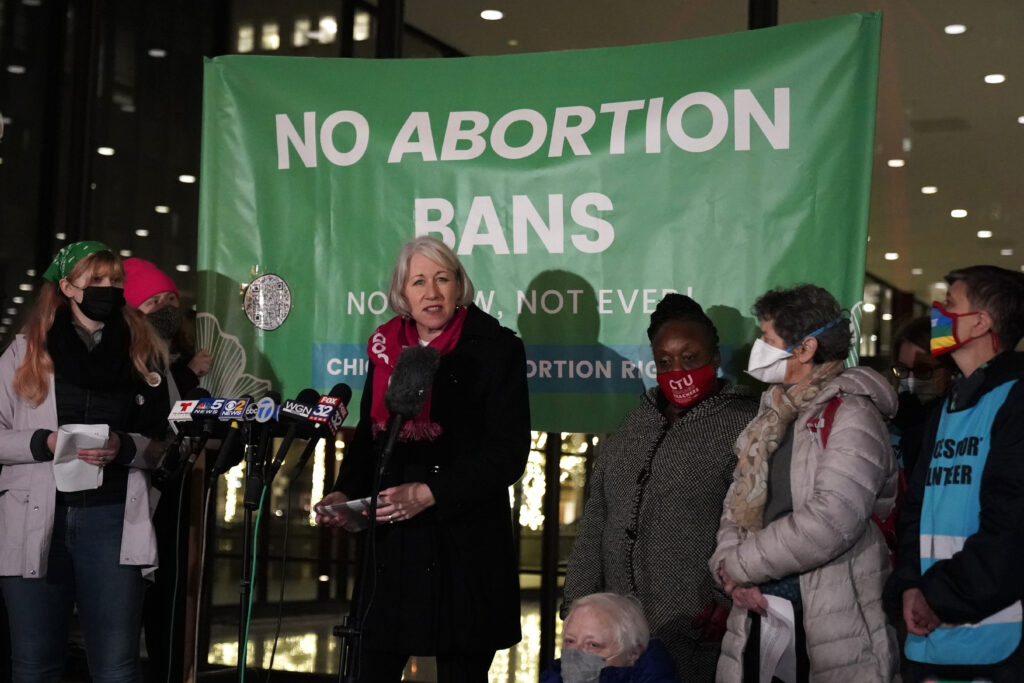
Planned Parenthood affiliates in Illinois and Wisconsin presented details Thursday about a new partnership to streamline resources for patients seeking abortions by having Wisconsin doctors commute to Illinois.
As a result of the partnership, a substantial number of medical professionals from Wisconsin with experience in abortion care have begun commuting to Illinois Planned Parenthood’s Waukegan, Ill. location. This is to help meet the substantial number of new patients Illinois is expecting now that abortion rights have greatly diminished in surrounding states.
“We knew that there would be a wealth of trained, specialized medical professionals who would be barred from providing the healthcare that they are licensed to perform,” said Planned Parenthood of Illinois’ Chief Strategy Officer Kristen Schultz in a video press conference Thursday. “At the same time, Planned Parenthood Illinois was anticipating a surge of 20,000 to 30,000 out of state abortion patients seeking care.”
Under the new partnership, women in Wisconsin will also have access to financial assistance to help cover travel expenses.
Since the Supreme Court overturned Roe v. Wade last month, access to safe abortion has been heavily restricted in Wisconsin. When Supreme Court handed down its Dobbs v. Jackson decision, Wisconsin abortion providers were forced to stop terminating pregnancies under the threat of prosecution for committing a felony. This is due to an 1849 law which criminalizes abortion in almost every case regardless of the gestational age of the fetus. Under the stipulations of this law, women seeking abortions in Wisconsin are now forced to travel to Illinois or Minnesota to receive care.
“This is an old law that we don’t believe is enforceable,” said Dr. Kristin Lyerly, an OB-GYN from Wisconsin. “To be clear, in Wisconsin, we cannot perform an abortion in the case of rape, in the case of incest, or in the case of the health of the mother. It is only in the case to save the life of the life of the mother.”
To determine whether the procedure will save the mother’s life, the statute also requires three different physicians to agree that an abortion is necessary.
In late June, Wisconsin Gov. Tony Evers (D) and Attorney. General Josh Kaul filed a lawsuit challenging the 173-year-old abortion ban. They contend the law is unenforceable because it has been dormant since Roe v. Wade was decided fifty years ago. Evers also called a special session of the Wisconsin state assembly to reevaluate the law. However, the Republican-controlled state Legislature took a mere 40 seconds to make it known they have no interest in making Wisconsin a pro-abortion state. Thus, Wisconsinites are left less reproductive rights than they did prior to Dobbs v. Jackson.
“During this time, we’ve seen a ten-fold increase in patients in Wisconsin coming for care in Illinois,” said Dr. Jennifer Welch, the president of Planned Parenthood Illinois. “This is clear evidence that abortion restrictions and bans do not stop people from having abortions. Restrictions and bans only make it harder for people to access essential reproductive healthcare where they live.”
Planned Parenthood leaders say the new partnership is already helping many Wisconsinites get care they need. However, their efforts can only do so much for individuals who do not have the resources to travel hundreds of miles to receive an abortion or for patients experiencing emergency pregnancy complications.
Since former President Donald Trump selected three far-right conservatives to the Supreme Court, Roe v. Wade’s existence has been threatened. The overturning of Roe was expected when the SCOTUS accepted the Dobbs case in May of 2021, and abortion providers prepared for a post Roe outcome.
“In anticipation, we at Planned Parenthood have started developing patient navigator roles,” said Dr. Lyerly. “So, we can do a lot for women seeking abortion care. At Planned Parenthood, we are open; our doors are not closed. We can still provide testing for sexually transmitted infection, preventive care, cancer screening and contraception.”
Wisconsin citizens can also still receive pre- and post-abortion care like ultrasounds, healthcare information and counseling.