
Royce White’s FEC filing, simultaneously overly detailed and vague, raises serious questions on candidate’s spending
Among the hundreds of quarterly finance reports released by the Federal Election Commission this month, Royce White’s (R) stands out; both for its overabundance of information and its complete lack of it.
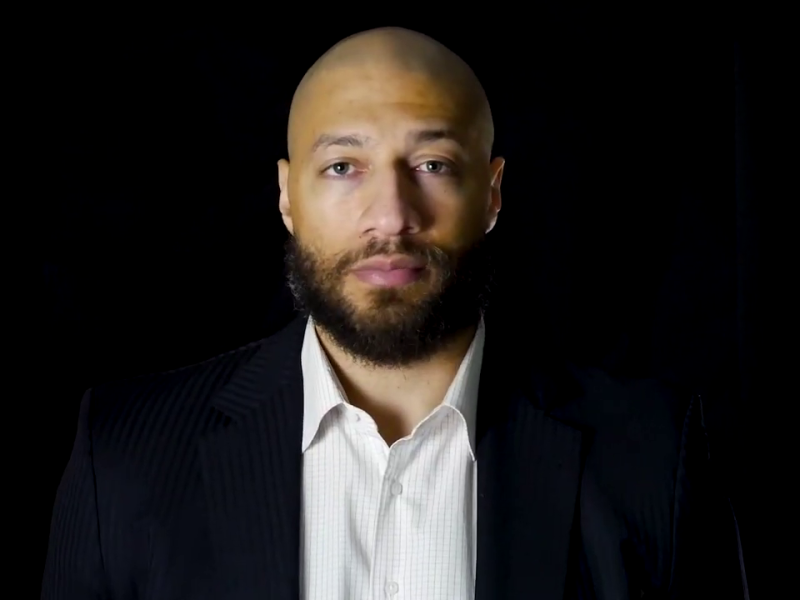
Among the hundreds of quarterly finance reports released by the Federal Election Commission this month, Royce White’s (R) stands out; both for its overabundance of information and its complete lack of it.
While FEC data shows he placed fourth of five candidates in Minnesota’s 5th Congressional District race in total disbursements — and total raised — White placed solidly first in the number of itemized disbursements reported by candidates in the race.
For comparison, Democrat Ilhan Omar, who White is attempting to unseat, reported 286 outgoing transactions, or disbursements, for the quarter. White reported a whopping 745 disbursements.
Craig Holman, a campaign finance reform expert and campaign finance rules lobbyist for Public Citizen, said in an email the White campaign’s report was “unusually specific, listing every cup of coffee bought while on the campaign trail.”
The two-page report (his competitors each only have one) does little to clarify where White’s campaign is spending its money. Most quarterly reports from the other four in White’s district follow the FEC’s form showing who their money went to, where that entity is, when the money went there, why the money went there and how much money it was.
For example, Omar’s campaign finance report shows they paid Owamni By The Sioux Chef, in Minneapolis, $214.41 on May 31 for “Food and Beverage.”
White’s campaign, on the other hand, is listed as paying Royce White for Congress, in Minneapolis, $300.00 on May 31 for “37933 POS PURCHASE 05/27 06:01 SEC OF ST.” Something similar is shown on 738 out of the 745 disbursements listed.
Some of the charges are easily deduced: “Speedway,” “Uber Trip,” and “Delta Air” all make several appearances. Purchases made at places like “SEC OF ST” and “NBS*NEW BA” are murkier. And none of the charges listed in that format identify the campaign’s reasons for spending money.
The campaign does fully lay out their reasoning for spending $395.91 at New Balance, “Shoes for Door Knocking,” and K&G Fashion Superstore, “Clothes for Campaign Videos and Commerci [sic].” Both charges, on the surface, could conflict with what the FEC says automatically constitutes personal use of campaign funds.
Campaigns can pay for clothing of “de minimis value that is used in the campaign, such as T-shirts or caps imprinted with a campaign slogan,” but not attire for political functions, according to the FEC webpage on personal use of campaign funds.
The shoe charge is unusual, Holman said. “I have never seen that type of charge before on a campaign statement.” But White’s campaign having a campaign related reason for the purchase means “the FEC will likely look the other way.”
Scattered throughout the last two weeks in June, White’s campaign made nearly $20,000 in outgoing wire transfers. True to form, the recipient is listed as the campaign committee and no reason is given.
Campaigns frequently use transfers to “cloak the original source of funds, such as from corporations or foreign principals,” Holman said. He stressed, however, from public campaign finance reports it can’t be determined if that’s what a given campaign was using wire transfers for.
“The disclosure law needs to be improved to address ‘dark money,’” Holman said.
Heartland Signal encourages news organizations and content creators to use our content. You're welcome to republish this article for free as long as you follow our republishing guidelines.
Related Articles

With Coleman absent, Kessler presses affordability and health card at Minnesota forum
Minnesota Senate District 48 DFL candidate Dan Kessler says health care is the one cost Minnesota can actually bring down. He made his case at a forum his opponent, Sen. Julia Coleman, didn’t attend.
Huizenga campaign spending at center of McCann’s MI-04 challenge
Democrat Sean McCann is making Rep. Bill Huizenga’s campaign spending, including $400,000 paid to his half-brother’s firm, the core of the MI-04 race.
2026 midterm debates: Why candidates are skipping or stalling them
Election debate scheduling has become increasingly contentious across several midterm races this year. Candidates across the Midwest have had disputes over debate participation, logistics and host selection, with some candidates declining to debate altogether.