
New Minnesota law gives skeletons of buildings a green makeover
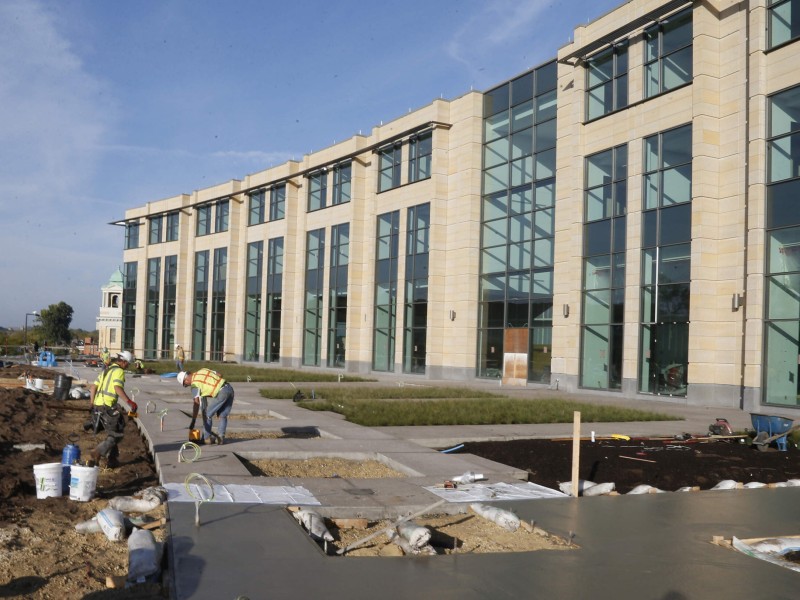
Just like electric vehicles and solar farms, the bare bones of a large building can be environmentally friendly if constructed with certain supplies, and supporters of a new Minnesota law hope it spurs more use of cleaner materials for big projects.
This year, Minnesota adopted the Buy Clean Buy Fair Act. It initiates a process for requiring certain state construction projects, such as a government building larger than 50,000 square feet, to be built or renovated with steel, aluminum and concrete materials leaving less of a carbon footprint.
Justin Fay, senior lead of public affairs and advocacy for the nonprofit Fresh Energy, said it strikes a good balance between cutting pollution and keeping the building sector viable.
“It utterly disproves the notion that it’s a choice between being economically successful or being clean,” Fay contended. “We actually can do both.”
The effort prioritizes buying sustainable building materials produced locally, helping to create demand for regional construction firms submitting bids. While industry researchers note the materials can be more expensive, the costs are offset by operational efficiencies for the structures. Next up, a task force will soon begin the process of phasing in standards under the law.
Abby Hornberger, Minnesota policy organizer for the BlueGreen Alliance, which has pushed for these pilot projects around the country, said the timing is crucial as the effects of climate change are becoming more apparent in the Midwest.
“As we experience more fluctuating temperatures in Minnesota, we’re going to have even more infrastructure fixes that are needed,” Hornberger stressed. “We’re just trying to make sure that the products that we’re buying at the state level are less emitting.”
Hornberger added what stands out with Minnesota’s program is the task force in charge of setting up the procurement standards will include voices speaking for those who have suffered from environmental injustice.
The bill was approved during the recent legislative session with broad support from a range of sectors, including groups tied to the construction industry.
Heartland Signal encourages news organizations and content creators to use our content. You're welcome to republish this article for free as long as you follow our republishing guidelines.
Related Articles
Missouri education board declines to seek $300 million increase in school aid
After a stalemate, the board voted to keep its foundation formula request flat despite rising costs under state law.

December trial date set for South Dakota lawmaker facing election-related felony charges
A judge in Minnehaha County set a December trial date on Tuesday for a South Dakota state senator facing election-related felony charges.

Jackson County GOP names 9/11 golf sponsorships after attack sites
Sponsorship tiers named for the Twin Towers, the Pentagon and Flight 93 are on sale for a “Tee Off in Remembrance” event on the attacks’ 25th anniversary.