Rideshare workers protest, strike across the country for better wages and right to unionize
On Wednesday morning, rideshare workers from across the country gathered in protest at airports in major cities in a strike to demand fair compensation, safety regulations and the right to unionize and collectively bargain.
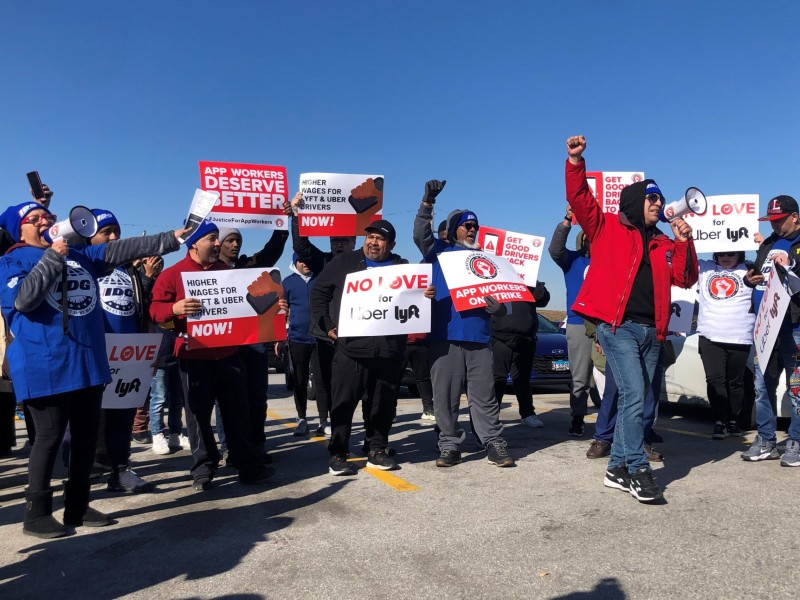
On Wednesday morning, rideshare workers from across the country gathered in protest at airports in major cities in a strike to demand fair compensation, safety regulations and the right to unionize and collectively bargain.
The protests were organized by the Independent Drivers Guild, a branch of Justice for App Workers (JPAW). Justice for App Workers is a national coalition that represents more than 130,000 drivers and delivery workers. Steven Everett, a rideshare driver for more than eight years, organized the Chicago protest at O’Hare International Airport. The rally was held from 11 a.m. to 1 p.m. CST, where hundreds of rideshare workers gathered and turned off their apps in protest. Protests also took place in nine other cities, including Austin, Philadelphia and Miami, according to a JPAW press release.
“Uber, Lyft and delivery drivers are tired of being mistreated by app companies. We are sick of having to work 80 hours per week when we used to only have to work 40 like a normal person,” Everett said to the crowd. “We need our safety; we are getting carjacked. We are getting killed out here on the roads. Some drivers only do rides to and from the airport because they are scared to drive in the city.”
Carjackings and violence against rideshare workers in the city of Chicago has become more prominent in recent years, with drivers urging companies to mandate things like identification and profile pictures for passengers to ensure more accountability.
“If you want to buy a bottle of liquor in a grocery store, you have to show your ID. If you need to drive in somebody’s $30,000 vehicle, I think some ID should be given,” said rideshare worker Chris Liebelt.
JPAW called the strike the largest rideshare strike in American history. Despite the efforts, Uber released a statement downplaying the ramifications the strikes would have on the company’s operations.
“These types of events have rarely had an impact on trips, prices or driver availability, and we expect the same tomorrow,” the company said. “That’s because the vast majority of drivers are satisfied — earnings remain strong, and as of last quarter, drivers in the U.S. were making about $33 per utilized hour. We also continue to act on driver feedback, adding new safety features to the app and improving our account deactivation processes.”
Drivers at the O’Hare rally labeled the $33-an-hour figure a lie, contending that the increased amount of drivers combined with gas and vehicle maintenance expenses put the true figure near or below minimum wage. Lyft recently announced that drivers will be guaranteed weekly earnings moving forward.
The rideshare workers are also urging lawmakers to pass legislation that allows them to unionize. In 2019, the National Labor Relations Board limited the ability for independent contractors to unionize because of their employment status. At the time, the board had a 3-2 Republican majority after two appointments were made by former President Donald Trump. After appointments by President Joe Biden flipped the board liberal, a 2023 ruling reversed some of the restrictions. However, many gig workers are still unable to formally organize a union.
“They don’t want us to talk to each other, but by forming a coalition we all realize that we’re having the same problems,” Liebelt continued. “And it’s time for us to make a stand and make a fight. If we do nothing, we get nothing. Every year, our wages go down and no state legislatures are doing anything to protect the gig economy.”
Legislation known as the PRO Act has been introduced in the U.S. House of Representatives to protect the right to organize. Although a similar bill was passed in the House in 2021 with enough Republican support, Democrats would need 10 GOP Senators to join them if the PRO Act ever reaches the U.S. Senate.
The rideshare demonstrations come just one day after flight attendants from three different Unions gathered at O’Hare and were joined by U.S. Reps. Jesus “Chuy” Garcia (D-IL) and Jan Schakowsky (D-IL). Flight attendants are also demanding higher wages and quality of life benefits, and many have been working without a collective bargaining contract for years.
Heartland Signal encourages news organizations and content creators to use our content. You're welcome to republish this article for free as long as you follow our republishing guidelines.
Related Articles
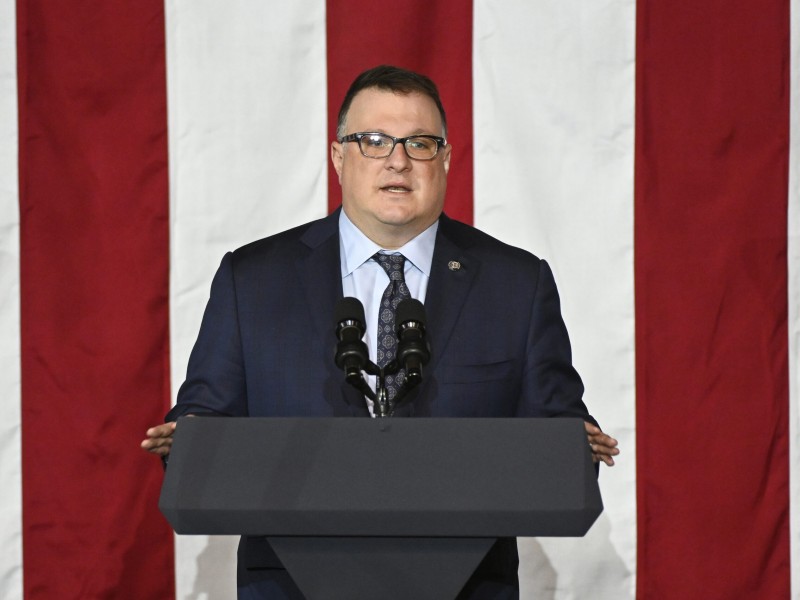
Michigan Speaker Matt Hall defends GOP lawmaker over ‘victim mentality’ comments about colleague’s dead daughter
Michigan House Speaker Matt Hall (R-Richland Township) defended state Rep. Jim DeSana (R-Carleton) Thursday after a Detroit News report revealed DeSana’s controversial comments about one of his colleagues.
Chicago Bears say they will ‘advance’ stadium plans for northwest Indiana site
The Chicago Bears gave a boost Friday to the prospects of building the team’s new stadium in northwest Indiana, which top Indiana officials immediately seized as a sign that the multibillion-dollar deal will happen.
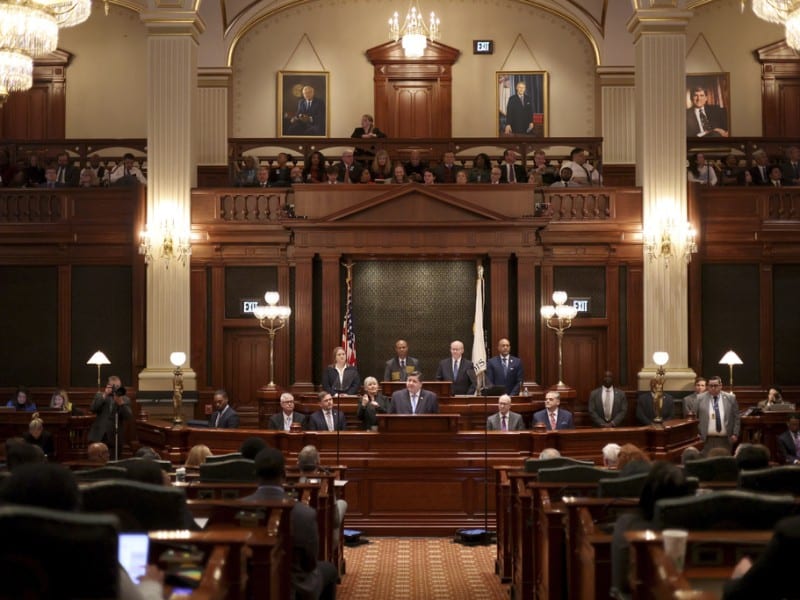
Illinois legislature wraps 2026 with $55.9 billion budget, new corporate taxes and rideshare union rights
The Illinois state legislature sent a record-setting $55.9 billion budget to Gov. J.B. Pritzker at the conclusion of the 2026 legislative session.