
Momentum for abortion rights measures grows in Missouri and South Dakota amid shifting public opinion
Many residents — regardless of their political affiliation — express significant support for these pro-abortion initiatives.
(EDITOR’S NOTE (10/25): This article has been edited to clarify the timeline of Amendment 3’s ballot approval process in Missouri.)
Not too long ago, the Midwest’s political scene was a blend of moderate Democrats and rural Republicans, with Missouri and South Dakota showcasing influential figures like Claire McCaskill and Tom Daschle as key players in the Democratic establishment. Fast forward to 2024, and any chance of competitiveness for Democrats in these states has nearly vanished in most instances — except when being directly asked about reproductive rights.
Outside of races in generally liberal cities St. Louis, Kansas City, and Sioux Falls, Democrats face blistering headwinds statewide, with Democratic candidates facing tough margins. Yet, while Republicans cement their control in those states, voters continue to pass progressive referendums and ballot measures with significant support. In the last several election cycles, both states have approved Medicaid expansion, both have advanced or legalized marijuana (even though recreational marijuana was approved by South Dakota voters, but struck down by the state), and Missouri overwhelmingly rejected a right-to-work law. Now, in 2024, voters in both states are set to decide the fate of abortion bans enacted post-Dobbs.
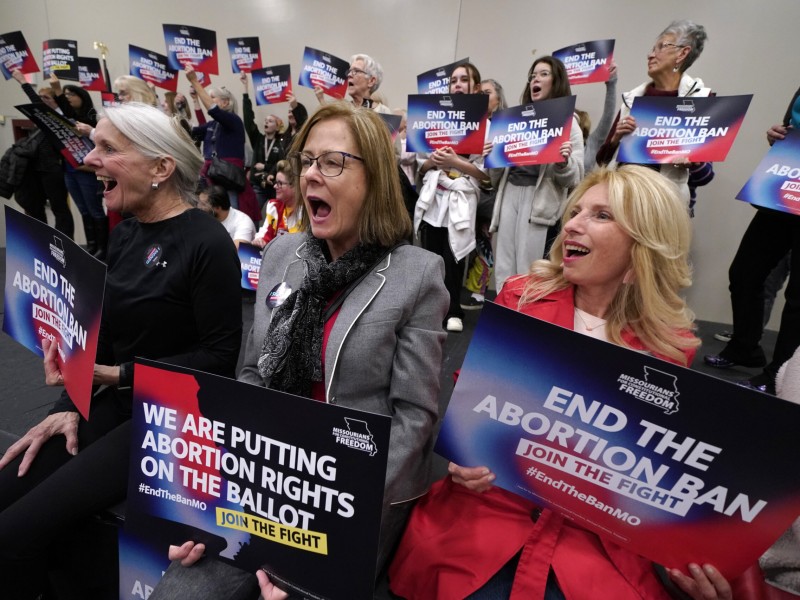
With measures like Amendment 3 in Missouri and Amendment G in South Dakota, both of which would overturn their states abortion bans, there’s a notable shift happening. Many residents — regardless of their political affiliation — express significant support for these pro-abortion initiatives.
Adam Weiland, co-founder of Dakotans for Health, tells Heartland Signal that support for Amendment G has been significant. During the early stage of the petition drive, Weiland says that canvassers were able to collect over 55,000 signatures, with every incorporated city in the state represented.
South Dakota, which was the first state in the nation to implement direct democracy, has a long and successful history of passing issues-based ballot referendums. Weiland indicated that since 2000, South Dakota voters have rejected anti-abortion measures not once but twice. He expects this time to be no different and believes momentum is on their side, but he noted that anti-abortion groups are significantly outspending them.
Since the inception of the petition that ultimately became Amendment G, anti-abortion legislators and special interest groups have attempted to bury the initiative in lawsuits and legal challenges. The campaign has faced significant opposition from anti-abortion politicians and activists, including state Rep. Jon Hansen (R-Dell Rapids) and activist Leslee Unruh, who launched the “Decline to Sign” campaign to disrupt signature gathering. Several other lawsuits which were dismissed or won by Dakotans for Health outright. These efforts failed to prevent Amendment G from making it onto the 2024 ballot. Weiland says that the race in South Dakota is very winnable according to recent polling — and turnout will be key.
In Missouri, the ACLU has been actively preparing for this moment since 2019, when the Republican-controlled state legislature enacted a trigger law.
Tori Schafer, deputy director for policy and campaigns of the ACLU of Missouri, tells Heartland Signal that interference from the state has been immense. Attorney General Andrew Bailey (R), refused to certify the nearly 388,000 signatures collected by canvassers, preventing the SOS from certifying the summary statement which had to be done before signature collection could begin. The ACLU to immediately filed suit. Schafer says that this is the first time in over a century that a seated attorney general in Missouri has refused to approve certify a petition.
Once the courts forced Bailey’s office to certify the fiscal note, the petitions went to Secretary of State Jay Ashcroft for certification. Ashcroft, who controls ballot summary language, provided organizers with ballot summaries that the ACLU viewed as “awful and unfair.” The ACLU filed suit again, which led to the courts striking down the secretary of state’s proposed language and rewriting a fair and unbiased yet another version of the ballot summary.
In September, Amendment 3 made national headlines as a Missouri judge attempted to toss the measure off the November ballot, forcing the ACLU to force the case all the way to the Missouri Supreme Court, which overturned the lower court’s ruling to keep the measure on the ballot.
Despite all of the legal interference, Schafer is convinced that Missourians are set to toss the state’s ban. “Since Michigan overturned their ban in 2022, the energy in Missouri has been electric. We are going to win this.” Schafer said in an interview Thursday. “This is a campaign for Missourians, by Missourians.”
Nationally, abortion rights have increasingly become a unifying issue. Many voters are viewing access to reproductive healthcare not as a partisan concern, but as a fundamental right. Even in states like Missouri and South Dakota, where Democratic candidates have faced steep challenges, the reproductive rights movement is finding significant support among independents and moderate Republicans. This cross-party appeal has the potential to significantly influence the outcomes of these ballot measures, reflecting a broader change in public sentiment.
As the election approaches, turnout will be crucial. While the support for these reproductive rights measures is encouraging, mobilizing voters will be key to their success. If they can harness this momentum and inspire widespread participation, both Amendment 3 and Amendment G have a strong chance of passing, potentially reshaping the political landscape in these states.
Related Articles
Vivek Ramaswamy’s ties to Lutnicks and crypto raise conflict of interest questions in Ohio governor race
Ohio Republican gubernatorial candidate Vivek Ramaswamy’s campaign reported receiving a gift from finance CEO Brandon Lutnick, a fellow crypto backer whose company invested millions in Ramaswamy’s Strive Enterprises financial services company.
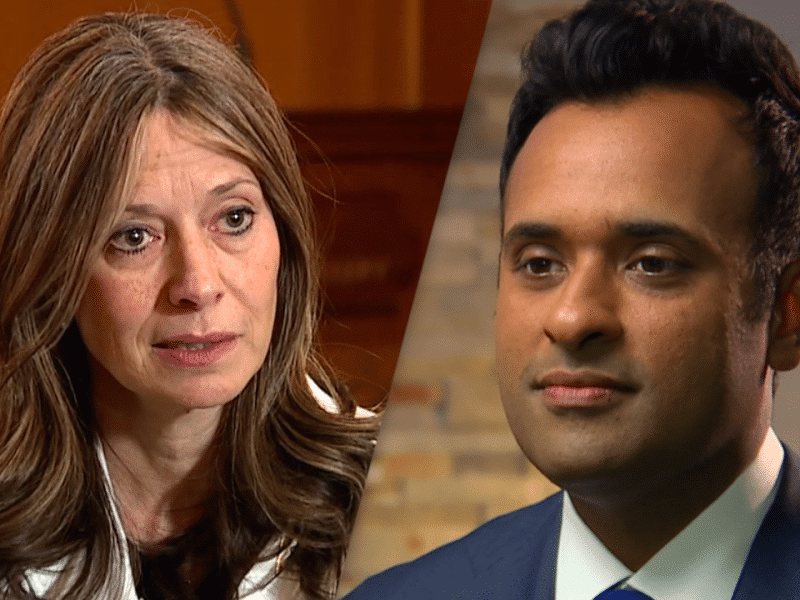
Ohio Republican Vivek Ramaswamy holds big cash lead over Democrat Amy Acton after $25 million loan
The Republican and Democratic frontrunners in the race to be Ohio’s next governor raised similar amounts from donors before Ramaswamy tapped his personal fortune.

DFL lawmaker mocks JD Vance’s ‘losing streak,’ urges him to visit Minnesota
After Viktor Orbán’s landslide loss days after a JD Vance visit, Minnesota Rep. Andy Smith is publicly urging the vice president to bring his “magnetic personality” to campaign for state Republicans in 2026.
