
Democracy
Wisconsin GOP puts strict voter ID amendment on the ballot with no Democratic support
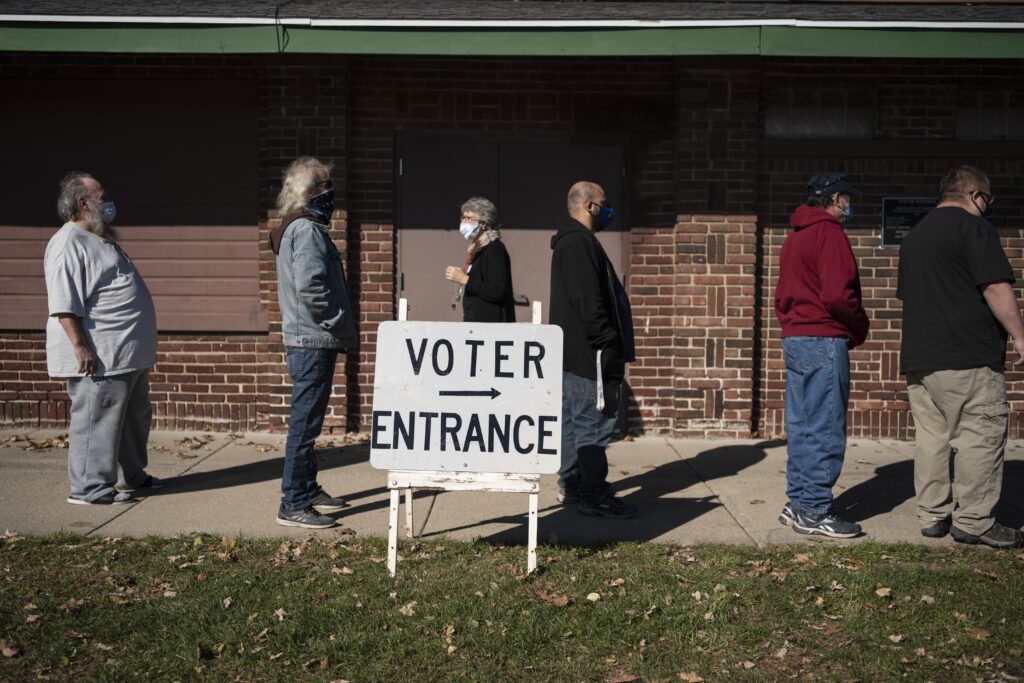
On Tuesday, the Republican-controlled Wisconsin state Assembly approved Senate Joint Resolution 2 (SJR 2), which puts a strict voter ID ballot referendum on the April ballot.
If voters approve SJR 2 with a simple majority, it will enshrine an already existing law requiring stringent photo ID voting requirements into the state constitution, as opposed to possibly having it repealed in the future. Republicans were able to get the measure across the finish line despite Democratic pushback in both the state Senate and Assembly.
While SJR 2 was in committee last week, state Sen. Kelda Roys (D-Madison) spoke critically of the GOP for making the voter ID measure the first move of the 2025 legislative session. Roys cited how the law gives an advantage to conservative candidates and how other issues like gun violence should take priority in wake of the Abundant Life Christian School shooting last month.
Wisconsin State Sen. Kelda Roys (D) rails the GOP’s attempts enshrine a strict voter ID requirement law into the state constitution:
“It is yet another way that the Republican Party in the state has operated our beautiful, wonderful democracy as a kind of banana republic.” pic.twitter.com/CBGWTN9jjg
— Heartland Signal (@HeartlandSignal) January 7, 2025
The voter ID law requires a photo identification for voters to cast a ballot in all elections. To obtain a state ID card, citizens must go through a lengthy DMV application process where they must provide proof of name, birth, Wisconsin residency, U.S. citizenship and their Social Security number.
Assembly Speaker Robin Vos (R-Rochester) chastised Democrats to begin debate on the measure, calling them hypocrites for not introducing any bills yet.
Since Republicans hold majorities in both chambers of the state government, Democratic sponsored bills are typically dead on arrival. Efforts to restore abortion rights, implement gun safety policy, legalize recreational marijuana, expand Medicaid and establish a 12-week paid family leave program have all been met with staunch opposition from Vos and his Republican colleagues.
Rep. Lee Snodgrass (D-Appleton) fired back on Vos for not allowing Democratic-sponsored bills, many that addressed “kitchen-table issues,” to make it to committee let alone the Assembly floor.
Sen. Van Wanggaard (R-Racine) co-authored SJR 2 and said that he is “unwilling” to allow the state Supreme Court to overturn the voter ID requirement.
“This doesn’t deter people from voting,” Wanggaard said. “This actually helps to continue to support the importance of your votes.”
The measure does not need the support of Gov. Tony Evers (D) and it will appear on the April, 1 ballot that also includes a state Supreme Court election. Former Wisconsin Attorney General Brad Schimel is the conservative candidate in the race, which will determine the ideological majority on the court. He previously praised the Wisconsin voter ID law in 2018, saying it likely helped Donald Trump and Sen. Ron Johnson (R) win in 2016.
During a press conference last week, Vos claimed that the law helps suppress voter fraud, despite the Wisconsin Election Commission finding a negligible amount of instances of voter fraud in the state.
In response to the GOP routinely using constitutional amendments to circumvent the governor’s vetoing power, Evers called on lawmakers to implement a citizen-led process to put constitutional amendments on ballots. Twenty-six states currently allow some form of citizen-led process. Vos immediately opposed the proposal, citing worries about the GOP losing further power.