
Wisconsin GOP says free school meals for kids is ‘completely out of touch with reality’
After Wisconsin Democrats announced a slew of bills including a free school meal proposal, state GOP leaders responded with harsh criticism.
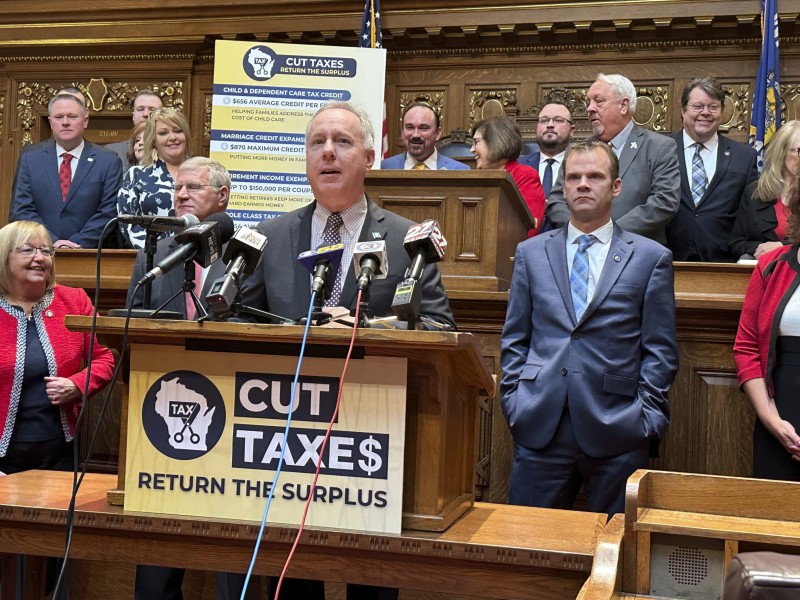
After Wisconsin Democrats announced a slew of bills including a free school meal proposal, state GOP leaders responded with harsh criticism.
During a press conference on Thursday morning, Democratic lawmakers in the state legislature announced an agenda they say will cut costs for working families. In addition to a free school breakfast and lunch program for public schools, the agenda also addresses lowering housing and prescription drug price costs.
Wisconsin Democrats propose a free school meal bill to help lower costs for families:
“If this proposal were implemented … a Wisconsin family could save approximately $154 per month per child.” pic.twitter.com/byuTaBWBc9
— Heartland Signal (@HeartlandSignal) January 16, 2025
The press conference came a day after Assembly Speaker Robin Vos (R-Rochester) chastised Democrats while debating a strict voter ID amendment. Democrats took issue with the fact that Vos and the Republicans’ first item of the 2025 session was to solidify a voter ID law that gives conservatives an edge in elections. Vos called his Democratic colleagues hypocrites for not filing any bills yet, despite his pattern of letting Democrat-written bills die before reaching a floor vote.
Now that Democrats have offered bills, Vos responded to a Heartland Signal request for comment by shutting down the free school lunch proposal.
“Today, the Assembly Democrats followed Governor [Tony] Evers’ (D) lead by introducing a bill that is completely out of touch with reality,” Vos said on Thursday. “Democrats claim they want to lower costs for families, but their proposal to provide free lunch to every student in Wisconsin regardless of their family’s income level would increase state spending by nearly $300 million. Almost half of Wisconsin students already qualify for free or reduced price lunches.”
Last October, Evers and the Wisconsin Department of Administration announced the state would have a $4.6 billion budget surplus. Despite the excess funds, Senate Majority Leader Devin LaMahieu (R-Oostburg) responded to Heartland Signal on Thursday by calling for more tax cuts and labeling the free school meal proposal as a government handout.
“The Democrats’ solution to higher costs is always more government regulation and inflation-inducing government spending,” LaMahieu said. “Senate Republicans’ top priority is to cut taxes for hardworking Wisconsin families so that they can make a life and a living without having to rely on government handouts.”
Senate President Mary Felzkowski (R-Tomahawk) commended Democrats Friday for introducing bills to help Wisconsin families financially, but she blamed the need for them on federal Democratic policies and said any solution would need to be bipartisan.
“Senate Republicans are focused on lowering costs for Wisconsin families through tax cuts and health care reform, and are always willing to work across the aisle on issues that will facilitate learning in Wisconsin schools,” Felzkowski said. “I am pleased to see that Democrats are finally acknowledging that Bidenflation has been a tremendous strain on Wisconsin families. As we move forward with legislation and crafting our state budget this year, I hope that Democrats put their money where their mouths are and come to the table to find solutions that will support those who truly need it.”
Sen. Sarah Keyeski (D-Lodi), the Democrat who introduced the free school meal bill, responded to the GOP leaders’ comments on Friday by saying feeding children should not be a partisan issue entirely focused on cost.
“Making sure children are not hungry at school should not be a political debate,” Keyeski said. “Rather, ensuring students will be fed at school should be a pledge we make to our kids. Ensuring that every child has food in their bellies so their brains can learn is just common sense.”
Vos continued by questioning the legitimacy of savings Wisconsinites would see from the school meal program. He also argued that Wisconsin schools are getting more funding from the state and that local school boards know how to better address funding needs.
“As the Democrats’ constituency becomes increasingly wealthy, this proposal comes as no surprise. Providing free meals to all students, regardless of income level, benefits the most wealthy families in our state at the expense of taxpayers,” Vos continued. “Last session, we made a historic investment in public education and per pupil funding to specifically allow school districts to have the flexibility to spend dollars in a way that best meets the needs of the students in their district. Any funding that we provide to school districts should be in general aid to allow locally elected school boards to have maximum control over the dollars to use as they see fit. Wisconsinites deserve better than new government programs disguised as relief from high costs.”
Keyeski responded that the impact of free school meals is already known in the eight states that have it — including neighboring state Minnesota — and that the impact is largely positive.
“Eight states are already providing Healthy School Meals for All, and we have seen how successful this has been,” Keyeski said. “Minnesota’s school meal program has saved families hundreds of millions of dollars. These dollars saved allow families to allocate their resources to other essential needs, thus growing the local economy.”
The Democrat said the bill would be investing in Wisconsin’s future.
“An investment in our learners is an investment in Wisconsin’s future, and we all benefit from that,” Keyeski said. “Wisconsin legislators should be doing all we can to uplift students and put money back into the pockets of working families across the state.”
Vos has shot down every Democratic proposal of 2025 so far, including Gov. Tony Evers’ (D) “Office of Violence Prevention” and call for a citizen-led ballot measure process. Since Republicans still control both chambers of the Wisconsin legislature, bipartisan support is needed to pass Democrat-written bills. Efforts to restore abortion rights, expand Medicaid, legalize recreational marijuana and establish a paid family leave program have also been terminated by the GOP in recent years.
High costs have been an issue for states that have implemented free school meal programs, like Minnesota, Michigan and Colorado. Last October, Minnesota Lt. Gov. Penny Flanagan (DFL) had to defend the state’s program being projected to go over budget by $176 million by 2027. However, proponents like Keyeski — who was a mental health professional before getting elected to the Wisconsin state Senate last November — argue that the potential benefits outweigh the costs. Some of these benefits can include higher test scores, lower costs for families, improving hunger rates for children and improving learning retention.
Heartland Signal encourages news organizations and content creators to use our content. You're welcome to republish this article for free as long as you follow our republishing guidelines.
Related Articles
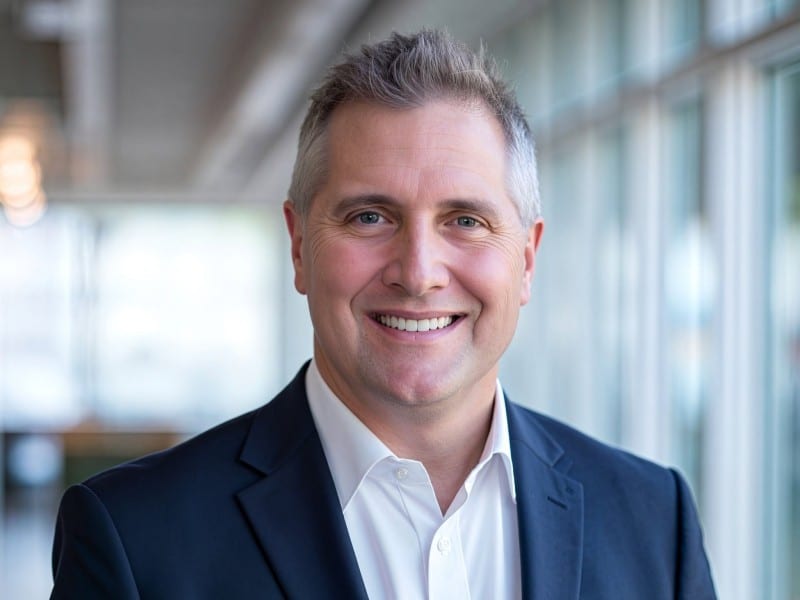
GOP Wisconsin legislator Zimmerman missed 225 votes last session, some to attend AI summit
Reps. Tip McGuire and Shannon Zimmerman were both booked on the same Milwaukee AI panel on June 24, 2025. McGuire withdrew so he could finish voting on the Assembly floor. Zimmerman made the panel, and votes kept being recorded in his name after he left his seat.
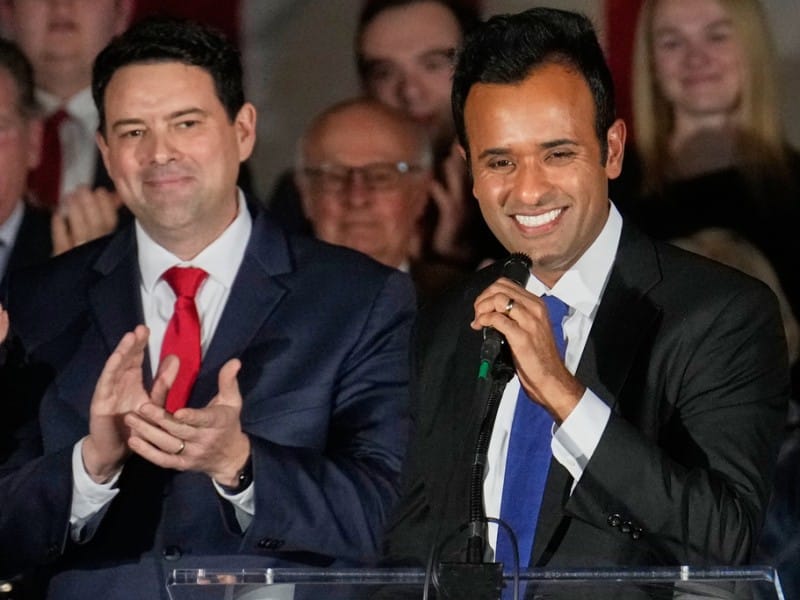
Ohio’s Ramaswamy and McColley have long backed near-total abortion bans
Even after Ohio voters overwhelmingly passed a 2023 constitutional amendment protecting abortion rights, GOP gubernatorial nominee Vivek Ramaswamy and state Senate President Rob McColley remain committed anti-abortion advocates. Audio from a recent rally shows McColley framing the constitutional defeat not as a setback, but as a shift in strategy.
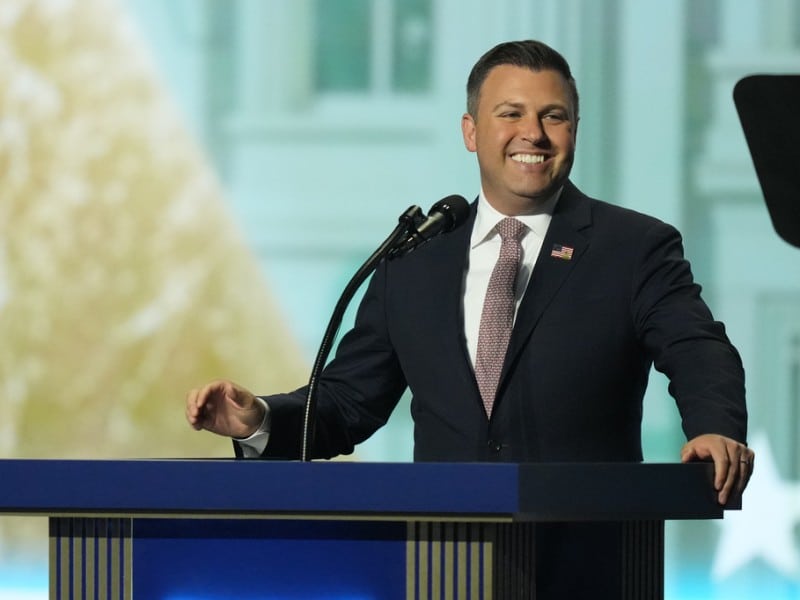
Ryan Mackenzie’s stance on data centers collides with his policy record
Rep. Ryan Mackenzie says data centers should pay their fair share. His record includes a 2021 tax exemption vote and support for limits on local oversight.