
Chicago
Chicago Mayor Brandon Johnson talks Trump’s ICE raids with WCPT’s Richard Chew
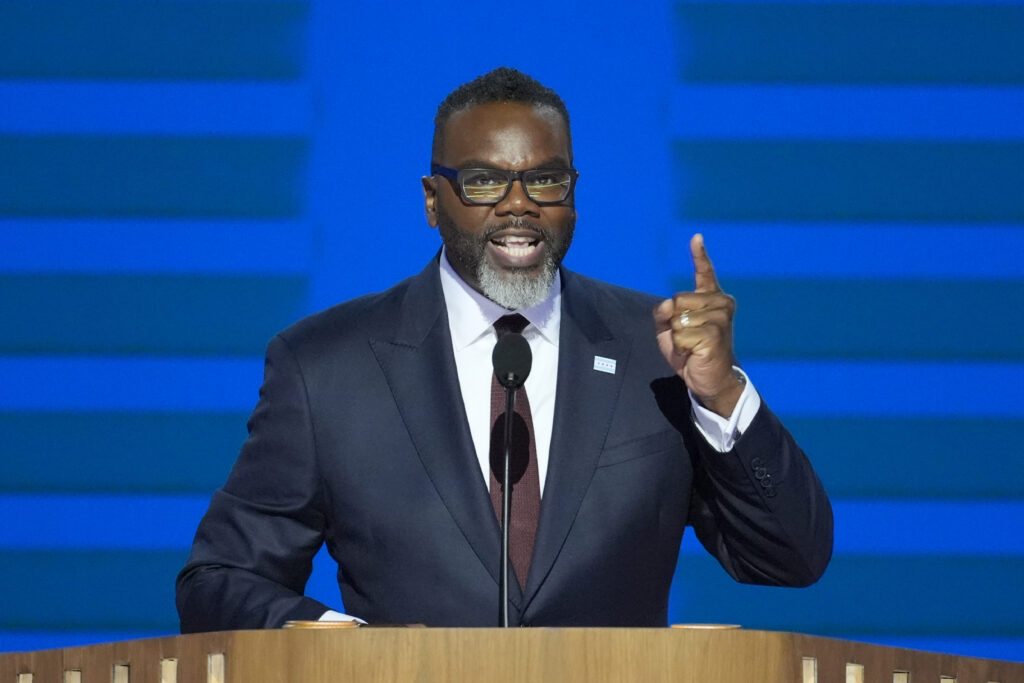
In an interview last Friday, Chicago Mayor Brandon Johnson told WCPT’s Richard Chew that his commitment to keeping Chicago “a welcoming city, a sanctuary city” is unchanged following Monday’s inauguration of Donald Trump as the country’s 47th president. In Trump’s first day in office, he signed a series of immigration and border-related executive orders and vowed to make sanctuary cities like Chicago the first targets of his administration’s mass-deportation program.
“It’s unfortunate that we have a president who is determined to divide this nation and to turn back to the hands of time, but the city of Chicago is strong,” Johnson said. He maintained that Chicago law enforcement personnel “will not behave as federal agents” and called the Trump administration’s early actions on border security a “head fake.”
“This is to stoke fear and to incite division so that this administration can move forward with its agenda to eradicate” the Department of Education and put “a pause on” investigating civil rights violations and pursuing environmental justice, Johnson said.
“We’re going to show up for our immigrant community and our undocumented families to assure them that they do have rights in this city,” the mayor told WCPT, adding that his administration has been working in concert with community-based organizations to give Chicago residents “all the information that they need to know their rights.”
Below is the full transcript of the interview. (Please note: The transcript has been edited for clarity.)
Richard Chew: Welcome to our show, Mayor Brandon Johnson of the city of Chicago, the great city of Chicago. Thank you for being with us this morning.
Mayor Brandon Johnson: You are welcome. Thanks for having me.
Richard Chew: Absolutely. How are you holding up this week? I mean, I’m going to dive right into the deep end of the pool and drag you in with me. But how are you holding up this week? We knew it was coming, so let’s not fool ourselves. We knew that this craziness was coming. But how are you holding up in navigating this first week, if you will?
Mayor Brandon Johnson: We are strong here in Chicago. It’s unfortunate that we have a president who is determined to divide this nation and to turn back to the hands of time, but the city of Chicago is strong. I’m very grateful to have a strong, loving family. We’re good, and my responsibility in this moment is to make sure that we’re protecting all of the families of this city.
Richard Chew: Absolutely, and I appreciate you saying that. As you know, I’m an advocate of you and the work that you’re doing in the administration, and I’m also one that wants to push and encourage you to do the things that you said were important and want to make important to the city and to the region.
We saw Monday, literally within a matter of minutes of — I call him the 34-time ex-felon. That’s a 34-times convicted felon. (Laughs.) I don’t refer to him as President Trump. I know that’s probably some of my ego being in that. But this week we saw that individual, within a matter of hours, minutes, sign a number of executive orders, and they range from DEI to essentially declaring war at the Southern border. And what is it that you are, I’ll say, generally doing to push back on some of these specific areas that Donald Trump has signed into executive order — the DEI, for example, and this taking away some of the rights of people that are trying to properly enter the country?
Mayor Brandon Johnson: Well, the first thing that we did in anticipation of President Trump’s executive orders that we reaffirmed our commitment to the people of this city, that we will always remain a welcoming city, a sanctuary city. Our Welcoming City Ordinance is one that speaks to the humanity of people; there’s a complementary state statute, the Illinois TRUST Act, that provides that level of support for the entire state of Illinois. You are fully aware of the history of our city as a welcoming city, from the very beginning, and I think it’s important that we hold to those values, especially at a time when so many families around the globe are suffering from U.S. foreign policy, to be perfectly frank. And so, the incredible love story of the city of Chicago — established by a Black Haitian immigrant and a Potawatomi woman; both of them understood that the city of Chicago would one day be the global capital of the world, and that’s essentially who we are. We are the heartbeat and the soul of America.
So whether you are immigrant or one seeking asylum or descendants of slaves, like my family who migrated from the South, the city of Chicago has been built on immigrants and asylum seekers and descendants of slaves. It’s what creates the level of diversity and strength of our city. So that is something that I want to just reassure your listeners and the people of Chicago that our welcoming-city status goes well beyond the initial official document, if you will, by Mayor Harold Washington. It goes back from our inception.
As far as the threat to equity and justice: As we come off of the celebration of the life and legacy of Dr. King, who literally put his life on the line and died fighting for equity and justice, our country is one of resilience and frustration, right? And so, you know, the frustration is what many people are expressing because I think deep down inside, a lot of us know that we are a lot closer to the type of equity and security that marginalized families have long desired, how close we have come to realizing that fulfillment of all persons being created equal. And so this concerted effort by this administration to pull apart and disrupt and destroy that which we have stitched together with our blood, sweat and tears and prayers, that’s not something that I believe will be easily broken, and especially here in the city of Chicago. I have one of the most diverse administrations in the history of Chicago. Sixty percent of the folks who serve as civil leaders in my administration are women, 45% of whom are Black; almost 30% are brown. So we have a range of leaders, Black, brown, white, Asian, some with little experience, some with a great deal of experience in my administration; the most diverse City Council that we’ve ever seen in the history of Chicago, where there are more women and people of color in key positions.
Richard Chew: That’s a representation. I mean, this is the thing, and I wanted to give you the space to talk about that. That’s a representation of who we are or who we aspire to be, not only in the city but throughout the rest of the country, and Chicago is continuing the lead in that. (Laughs.) And on the conversation about we’re strong here in Chicago — and I know you probably have had folks reach out to you about this, but I’m going to make you laugh a little bit in this crazy, stressful time. The clip of you this week referencing — and the way in which they want to try to get you to go against people who are native to this land — that’s a clip that we can’t play because of some of the background music that we can’t edit out at this point. But I laughed when I saw that clip because of the way in which you had to manipulate your language so as not to curse when there was a part of you that gave the indication that your “fed-upness” with the craziness had you just about ready to curse on some of these issues of negatively impacting people with this land that we occupy. (Laughs.) So I applaud you for your dexterity with language this week, because I know you were at a tipping point.
Mayor Brandon Johnson: Well, I will say this: I understand that there is a long legacy in history of profane mayors. I’m trying my best to break that cycle. My senior adviser gives me a hard time because that’s not necessarily the vernacular that is front and center, but I will say the frustration that I believe that came across in that video is really just a sentiment that many people in the city of Chicago have. It’s simply because — look, what people are concerned about right now is being able to afford to live in the city that they love, and that’s why we’re building more affordable homes. We’re going to continue to do that. People are concerned about our young people, and will they have access to a fully funded neighborhood school? And obviously, folks are certainly aware that, after the pandemic, that many of our families are still struggling and suffering with our own mental health. And to be the first administration since Mayor Harold Washington to reopen a mental health clinic, and we did that on the far South Side in the Roseland community — I’m proud that we are delivering for working people. And so when you have these politicians and others who are seeking intentionally to stoke division between people groups, you know, groups that have all been impacted by colonization, it’s incumbent upon me, as a former public school teacher, to help remind people that, again, this is a city that has been built on the creativity and the diversity of groups all over the planet. And, yeah, I mean — (laughs) — I have to keep in mind that at some point, my son, who is in AP government, I don’t want him to be in class one day and one of his classmates does the presentation, and there is his father, not necessarily reflecting the best parts of my Judeo-Christian lifestyle.
Richard Chew: (Laughs.) Well, listen, I think that the beauty of that is a couple things. One, you spoke to the issue of, why would I, as a Black man, turn on others? That’s an incredibly important thing for people to hear, coming from an African American mayor of the third largest city in the country, one, and the issue of us working together. The other thing: It showed restraint, which a lot of our politicians seem to be incapable of doing, but you still got your message across. And the third thing, which I find is important, is that you weren’t afraid to step into that and take that on. That, to me, is part of the components of being a good leader, is you recognize the responsibility to talk about the issue, speak to some of the specifics, but also show a level of restraint and getting your point across. And that’s why I found it humorous. I laughed at it, but I also understood that you were trying to meet the moment in that conversation.
Let’s talk about another moment that we may have to meet. And we know the impending raids. We know that there — this took place in Rhode Island, in Newark, New Jersey, and your brother mayor in Baltimore has said, essentially, bring it on. So my question is this: How will we deal with this, if the doors get knocked on? And that’s a big, broad question, Mayor Johnson; I understand that. But what are your anticipations, if any, of anything coming our way in the near future?
Mayor Brandon Johnson: Well, first and foremost, let me just reiterate my commitment to protect the residents of the city of Chicago. We have a Welcoming City Ordinance, it’s the law, and we will uphold that law. And I’m grateful that our partners at the state — again, a complementary statute that declares the entire state of Illinois as sanctuary. And all that simply calls for is that our local law enforcement will not behave as federal agents. It’s just that simple. Our local law enforcement has worked hard over these last couple of years, in particular, working to restore confidence and trust in policing and constitutional policing. My [police] superintendent, Larry Snelling, has done an incredible job of challenging our rank-and-file officers, our women and men who serve this city, to show up in a way that, again, garners that trust and protects that trust. Anything that would disrupt that operation I am vehemently opposed to that, and that’s why I’m grateful that we have reaffirmed our status. Same thing as a welcoming city. Same applies for our sister agencies and all of our departments. We will not interfere, aid or assist in any way with the federal agents.
Now, as far as how we are preparing, we are continuously giving people all the information that they need to know their rights, and that work is being done, not just with my administration but in concert with community-based organizations.
Let me just say this last part: Deportation has been a part of executive function for a very long time. Every administration has deported individuals. I mean, I don’t think there’s a secret, not on this station, the progressive talk radio station, where President Obama deported millions of undocumented individuals — in fact, more in his first term than the first term of President Trump. So this is not breaking news. This is what I call a head fake. This is to stoke fear and to incite division so that this administration can move forward with its agenda to eradicate the department of public education. You saw another executive order where they are putting a pause on civil rights violations and investigations. I mean, these are all real, real, severe threats. Same thing with environmental justice. I reinstituted the Department of the Environment in my administration; this administration, President Trump, does not believe in in science and climate change. So we’re going to show up for our immigrant community and our undocumented families to assure them that they do have rights in this city, and the ones in particular who have violated the law and have been convicted and not just charged, there are federal laws that gives this president the authority to go after those individuals, and he is not the first to do that. And so I just want to make sure that people understand that this hyperbolic presentation of undocumented individuals in this country is one, again, to incite fear and division.
If this President — my final note on this — if this president was really serious about immigration in this country, he would work with the legislative branch and move in the democratic formation in which this country was designed. There’s already a bipartisan bill that Senate Republicans and Senate Democrats agreed upon: more judges to move asylum cases, more support along the border, a clear pathway to citizenship. This is something that was passed in the Senate, was moved to the House. The president, before he was elected, blocked it. We could have real, comprehensive, substantive immigration-reform policy enacted in this country if this president was actually serious in working with people.
Richard Chew: What’s so powerful about what you just said is understanding the rules, understanding what people — have already said yes, let’s go forward with this. And to your point, Mayor Johnson, a lot of this — and I said this earlier in the show — just everybody be prepared and be aware that a lot of this is theater, shock and awe, to distract folks from things that are happening that are equally, if not more important when it comes to other executive orders, like you said about civil rights and economic issues.
So, respectfully, I say this not to you, Mayor Johnson, but to people who are listening: You kind of have to slow down and look at what’s really going on in front of and behind the curtain, so that you understand that some of this is shock and awe. That’s not to take away from the pain that people will feel from these deportation efforts and raids. But we all have a responsibility, I believe, to pay attention to all that’s happening on the windshield, not just one corner of it.
To that end, are you talking to businesses about the impact? Because a lot of folks have said, and have been saying, they’re worried about how this will impact our economy and economies, but what’s been your relationship with some of the businesses on the impact of Trump’s deportation efforts, if you will?
Mayor Brandon Johnson: Thank you for that question. That’s something that I don’t believe we spend enough time discussing. We’re talking about the billions of dollars of contributions that immigrant families and even undocumented individuals contribute to our overall GDP. When we think about many of the jobs that immigrant families sign up for, these are the jobs that move a significant portion of our GDP, particularly around our food industry, hospitality, labor and construction. I mean, there are a host of aspects of our economy in Chicago that the immigrant community — their contributions are not just obvious but are necessary, quite frankly. I’ve had conversations with mayors around the state of Illinois, and some of these mayors represent red spaces, if you will, far more conservative constituencies than we have in the city of Chicago, and they are desperately looking for workers. And we’re talking about, again, hospitality, agriculture, construction. These are jobs that can help sustain communities, and so I’ve had multiple conversations with business leaders, and we’ve had joint press conferences, going back to the early part of my administration, looking for temporary work authorization, because these individuals that are seeking asylum in this country, they are not coming here to just kick it. I can tell you that. They’re coming to work, and they want to work, and there are industries that our immigrant community could help accelerate its growth.
When I think about what we have attracted in the city of Chicago my first 20 months, talking about $20 billion of new investments over these first 20 months in office, from the Southeast Side of Chicago, the investment at the old steel site, no investment there in over 30 years, first administration to actually bring development to the Southeast Side; the 1901 Project, that’s the one on the West Side, where the Wirtz family, as well as the Reindsdorfs, are working to expand the footprint around the United Center, building more affordable homes. These are opportunities to really strengthen and grow our economy, and as I work to build more affordable homes, that’s why we’re doing that. As we look to strengthen our transportation system so that we can create communities alongside of our public transportation infrastructure to help move people along and to eliminate congestion — all of that is connected, quite frankly, to how we show up for undocumented families, immigrants who want to find a better life here.
I think the last note is this: We have to be honest, as a nation, how our foreign policy has disrupted local economies around the globe. And I know this is not a very popular position and there are folks that probably would advise me against speaking this type of truth. But I was not elected to simply comply with the status quo. I was elected to challenge the status quo and stand up for working families, and when you have foreign policy that has destabilized nations like Venezuela, where 58% of their economy is run on their oil supply, if we’re not honest about how those sanctions have forced people out to seek refuge in other places, then we’re not serious about truly being the type of empire that we claim that that gives us the right to behave in the way we behave. We have to accept the consequences of foreign policy and how that has disrupted the population around the globe. And that’s why the city of Chicago — I’m helping not just to create more opportunities for working people, but let’s tell the truth about policy, that people were quick to criticize Venezuelans from seeking asylum based upon foreign policy that has disrupted their economy. But people didn’t have an issue going to Citgo to get gas, which is fueled by the oil from Venezuela.
Richard Chew: Listen, Mayor Johnson, people know that listen to this show that I’m a supporter of what you just said. Let’s get our heads out of the sand and tell the doggone truth. Let’s deal with that just like a surgeon. A surgeon, he or she cannot fix the problem until they get to the core of how that problem originated, because all you’re doing is just patchwork, patchwork, patchwork bandages over it without going, oh, that’s how we got here; oh, I see now. And that’s one of the criticisms I have of our wonderful, wonderful country. We have to stop doing that. And it takes the willingness and the courage of what you just did to say no, part of the reason that those folks are coming this way is because we had a hand in the destabilization of where they were born, in their origin country. So I applaud you for saying that, because we have to collectively speak to that more frequently and more regularly.
As we wrap up, Mayor Johnson, I have a question for you, before we get together again in a couple of weeks: What are some of your top issues these next couple of weeks? What are you leaning into? What’s on your dartboard?
Mayor Brandon Johnson: Well, first of all, thank you for that question. I thought you were going to ask if the rumors were true, if I was in contention to be the next head coach of the Chicago Bears.
Richard Chew: I heard it. But you got pushed aside, I heard! (Laughs.)
Mayor Brandon Johnson: What happened was there’s this conflation of how many Johnsons and relatives I have out there. It wasn’t Brandon Johnson. It was Ben Johnson. But congratulations to the Bears in their new endeavor.
Look, over the next couple of weeks I think there are three things that we’re going to be focused in on: one, continuing to strengthen our efforts around Chicago, maintaining our status as a welcoming city. The second thing is I’ve had great conversations with the leadership in Springfield, had a great conversation with the speaker of the House yesterday and his team around our priorities as a city; those priorities are pretty straightforward. We need more support in our education system, particularly our special education, bilingual education, and transportation within our public schools. The second thing that we talked to the speaker of the House about, and his team, was our public transportation system. CTA is woefully underfunded. The region benefits from the CTA and all of the residents of Chicago who rely upon the CTA. So that’s the second thing. The third thing: just generally speaking about revenue. There’s a real strong desire for my administration to place strong regulations on hemp and keep our young people safe. And so that was a conversation that we had just yesterday. I’m speaking with the Senate president this morning — in fact, that’s my next call — the Senate president and his team, to talk about, again, our priorities for Chicago.
The third thing that I will be focusing in on this week is really bringing people together around what I have always called the soul of who we are, the diversity of our city. And there are a number of stops that I’m going to make over the next couple of weeks, just to reassure families that as we continue to see these critical investments take hold in our communities, and as we work to continue to drive down violence in this city that I’m counting on every single Chicagoan to stand shoulder to shoulder in this moment. Let’s not point at our neighbors as if they are our enemies. These are the people who want what you want in this city, and that’s the opportunity to live freely, to afford and to be safe. So those are the three things — again, making sure that people know that this city will be always welcoming and, again, giving our agenda and making our agenda very clear to the Senate and to House leadership, and then just moving around the community to reaffirm our commitment to build vibrant communities so that we all can feel safe and prosperous in the beloved city, the greatest city in the world, Chicago.
Richard Chew: That’s right. Mayor Brandon Johnson, y’all. This is always a pleasure. I’m so happy that we were able to have you on this morning. Good to hear about your vision in the next couple of weeks until we talk again. Be safe out there, Mayor Johnson, and we look forward to having you back in a couple of weeks.
Mayor Brandon Johnson: Very well. Thank you very much.
Richard Chew: All right. Have a great day.