
Rep. Mark Pocan talks bill to block Elon Musk with WCPT’s Joan Esposito
U.S. Rep. Mark Pocan (D-WI) joined Joan Esposito on Wednesday to talk about the bill he introduced last week, the Eliminate Looting of Our Nation by Mitigating Unethical State Kleptocracy (ELON MUSK) Act.
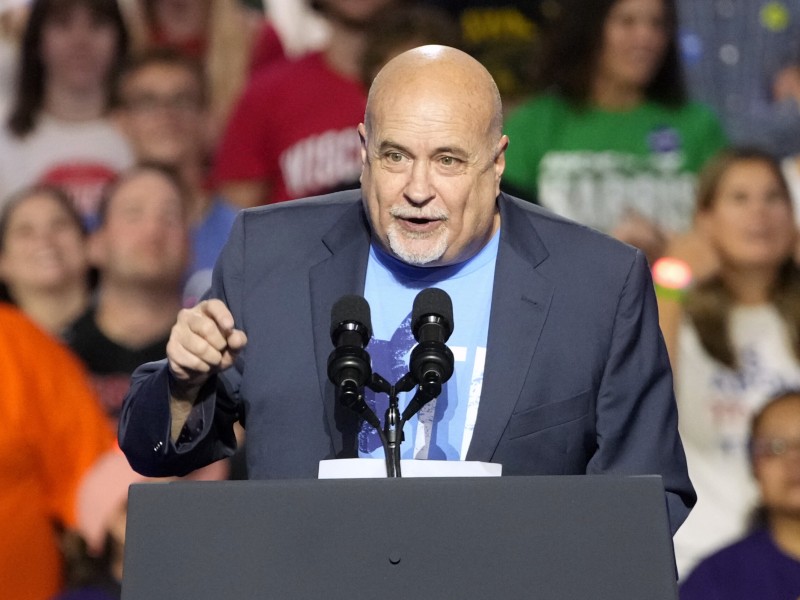
U.S. Rep. Mark Pocan (D-WI) joined Joan Esposito on Wednesday to talk about the bill he introduced last week, the Eliminate Looting of Our Nation by Mitigating Unethical State Kleptocracy (ELON MUSK) Act.
“An unelected, unaccountable person shouldn’t be in the position [Elon Musk] is in,” Pocan told Esposito, referring to the sweeping power President Donald Trump has granted Musk to remake the federal government. “He’s been put in charge of essentially every federal agency, turning on and off the spigots of money, and this is a guy who is receiving money from those spigots through federal contracts — $20 billion disclosed, plus more undisclosed.”
“So the bill basically says either he can keep his contracts … or he can have the federal job that he’s got. But you can’t have both, because certainly that does lead to corruption.”
The seven-term Democrat conceded that House Republicans are unlikely to move the bill forward for a vote but framed it as “one small step” in a multiprong effort to combat Trump administration overreach, along with legal action and the marshalling of public opposition.
“Because at the end of the day, I think there are many people who voted for Donald Trump that didn’t realize they were going to get this,” Pocan said. “And the more we can do that, quite honestly, it’ll help us looking at getting the majority next year in the House, which I think we can do, and it’ll help us put a more permanent stop to some of these ideas.”
While Pocan noted that nationwide mass protest has been absent during the early days of the second Trump administration, he said his office received an impressive 4,000 calls last week. “And when you see that, then you know what people are talking about and it helps to connect folks to knowing what you want us to fight for,” Pocan said, adding that “it does matter. It does show where the public is at. And it only takes a couple minutes of most people’s time, but it is important.”
Below is the full transcript of the interview. (Please note: The transcript has been edited for clarity.)
Joan Esposito: John Lewis was a civil rights activist before he went to Capitol Hill, and he really put his life on the line a few times, to point out things that he thought should be different, mostly to do with civil rights. And he told people that they should cause trouble, but it should be good trouble. Good trouble. The kind of trouble that makes the world a better place. The kind of trouble that points out something that’s going wrong. The kind of trouble that you would get in if you put out a bill in the House of Representatives called the Eliminating Looting of Our Nation by Mitigating Unethical State Kleptocracy, also known as the ELON MUSK Act. Yeah, that’s good trouble, and that is the good trouble that a veteran House Democrat — (laughs) — has decided to get into. We’re joined by Congressman Mark Pocan from Wisconsin’s 2nd District.
Thank you so much for being here, Mark.
Rep. Mark Pocan: Yeah, thanks so much for having me. Appreciate it.
Joan Esposito: So what made you decide to put the ELON MUSK Act together and put it out there?
Rep. Mark Pocan: Because our democracy’s at risk right now. This unelected billionaire who spent ($)277 million, minimum, to elect Donald Trump and Republicans now is, rightfully so, thinking he owns them, and he’s been put in charge of essentially every federal agency, turning on and off the spigots of money. And this is a guy who is receiving money from those spigots through federal contracts — $20 billion disclosed, plus more undisclosed. And one, an unelected, unaccountable person shouldn’t be in the position he’s in, but two, he also shouldn’t be getting federal dollars. As a member of Congress, as a federal employee, you can’t get contracts, clearly, because that’s corruption. But for Elon Musk, I guess it’s another day in Washington.
Joan Esposito: We used to call that a conflict of interest. That used to be something that was frowned upon, in the olden days (laughs) — in the olden days, when I was young.
Rep. Mark Pocan: Yeah, well, I think, Donald Trump probably has, like, a high school degree in grifting. I think Elon Musk has a Ph.D. in it. This guy has every trigger right now, and if you’re a federal agency and you don’t want to be tore apart, guess what. You come up with a contract for SpaceX or Starlink or one of his other companies.
So the bill basically says either he can keep his contracts and throw dollar bills on him while he’s in bed, or he can have the federal job that he’s got. But you can’t have both, because certainly that does lead to corruption.
And I don’t know if the Republicans are going to move forward. I’m certain they will not, but they should because it’s the same rules that apply to us, for good reason. But what’s happening right now is pretty horrendous.
Thankfully, there’s a lot of good litigation. Lawsuits are our friends right now. That’s what’s going to help us. And then we have to just be fighting. And this is one small step in that fight, but all of us have to be ready to share this information and let those independent, truly independent folks understand what kind of grifting is going on, because I think that’s what we need to do.
Joan Esposito: Well, that’s what at least my audience keeps asking, is, why aren’t Democrats doing the kinds of things that Republicans would be doing? If we had a Democrat in the White House and we had a majority in the House and in the Senate, Republicans would simply be doing things to slow things down. They’d be throwing stones. They’d be writing up bills like this to get media attention and focus, again, a very distracted media on what’s important. And my audience has been a little bit frustrated, because I feel like I can name on the fingers of one hand the people in Congress, the Democrats in Congress and the Democrats in the Senate, who seem to be doing anything to fight back against what’s happening. And I when I saw what you were doing, I thought, you know, I’ve never talked to this man before; he’s a congressman from Wisconsin. But he’s doing something. He came up with this idea that he doesn’t have probably a chance of getting anywhere with this bill, but it is going to, for a few minutes, remind us that this is not normal, what Elon Musk is doing is not normal, and that we should not be just going along with this.
Why do you think we’re not getting more protest and pushback from your colleagues?
Rep. Mark Pocan: Well, I am seeing it. Part of the problem is, if it doesn’t get picked up, it didn’t happen, right, if it happens in a vacuum, and I think that’s been a little bit of difficulty. Plus, we’re not in the majority. So even on lawsuits, we often don’t have standing to file a lawsuit. So we’re working with groups that then are doing the lawsuits, and we’re supporting them and helping them. But because Mike Johnson — because they’re in the majority, even if it is only by three seats, or even one seat right now, while we’re waiting for these special elections — he won’t agree to any of the suits. So we have litigation and communication. So the lawsuits — it’s really important for people to support the groups that are doing the lawsuits, because that’s the best way we stop things right now. But then we’re doing lots of stuff. We’re trying to talk about Elon Musk’s contracts. We’re trying to talk about the illegality of these actions. We’re trying to fight them — there are other bills introduced that are doing the same thing; just sometimes they’re not getting the coverage. And we’re all trying to figure out how to work together, work with influencers, work with media to get the message out, but then we need people to help circulate that message, because at the end of the day, I think there are many people who voted for Donald Trump that didn’t realize they were going to get this. And the more we can do that, quite honestly, it’ll help us looking at getting the majority next year in the House, which I think we can do, and it’ll help us put a more permanent stop to some of these ideas.
Joan Esposito: The protests that took place last week across the country seemed to have lighted a fire under a lot of elected officials. And I had forgotten about this, but Rachel Maddow was talking to one of the founders of Indivisible, and he pointed out that when Trump was elected the first time, it was like Democrats were paralyzed, and it wasn’t until there were massive demonstrations, grassroots activism, protests, marches that Democrats kind of found their voice and started resisting. He said, so this has happened before, but he really believed that a lot of the grassroots activism that took place last week would wake up some of the Democrats who had not been real vocal. It certainly seems to be that way. I mean, Hakeem Jeffries putting out that 10-point plan for how we’re going to fight this and requiring members of Congress to hold town halls and find out about what their voters are saying and thinking. Do you think maybe we’re turning a corner here?
Rep. Mark Pocan: Yeah, I’ll tell you, I do think there’s something to that, because I have to admit, I was looking for the women’s march this time. Last time we had one of the biggest winter marches in Madison, Wisconsin, and across the country. I think there were 200 of them. But there hasn’t been that this time. So I think somewhat — the national groups being able to organize and put that together does help tremendously, because it’s a way for us to connect with folks and get the information out, show the enthusiasm on the ground. And my biggest town hall I ever had was when Trump first got elected. My second biggest was the one we had a couple weeks ago when —
Joan Esposito: Really?
Rep. Mark Pocan: Yeah. But it’s still the second biggest. Now, our calls last week, though, were off the charts. We set a record for one-day calls. So people are doing that. But I do think in other ways of having organization does help everyone get more organized in the opposition, and I hope we soon have a lot more of that.
Joan Esposito: I’m always — well, I have been encouraging members of my audience to go to these websites where you put in your address or your zip code and it tells you all of the people who represent you, whether it’s at the local level or the county level or the state level or the federal level, and there’s always contact information. Sometimes there’s an email address, but almost always there’s a phone number. And I tell people that it really matters. But I’d like you to tell people, when your office receives calls, what is the process for taking down what that person says, or how does that information get to you?
Rep. Mark Pocan: Yeah, that’s a great question, and it’s really important to let people know. Even if you think someone agrees with you, call their office and leave that message, because the way it works for me, and I’m sure it works for most elected officials, is we get a weekly report of everyone who called or sent an email or sent a letter by the main subject areas, and we can see the volume and the intensity. I know that I got 4,000 calls last week because it was in my weekly report. And when you see that, then you know what people are talking about and it helps to connect folks to knowing what you want us to fight for, right, because our job is to be the voice of our district. And then I also see my job as trying to explain Washington back to the district, which is a little harder these days. But it is really important that whether you think someone’s never going to agree with you or always going to agree with you, both of those people still need a phone call, because it does matter. It does show where the public is at. And it only takes a couple minutes of most people’s time, but it is important.
Joan Esposito: And you made a really good point that I have not made recently, which is, don’t just — if there’s something going on you don’t like, of course you’re going to say, I really hope my representative votes no on this, or here’s why I think this is a bad bill; let me tell you about my life. But it’s also important to call up and say, you know what? The fact that Congressman Mark Pocan did that ELON MUSK Act, I really liked that; that’s the kind of spunk I want to see from Democrats in Congress. The praise isn’t probably — somebody doesn’t wake up going, oh, you know, I really like my congressperson; I think I’ll give him a call today just [to] tell them what a great person they are! Sometimes when you’re ticked about something, you’re a little more motivated to pick up the phone, but those calls of, hey, you did the right thing, you did the brave thing and I’m proud of you — those are important too, aren’t they?
Rep. Mark Pocan: Yeah, and I’ll tell you, a lot of times it’s interns or some of the entry-level staffers who are answering those phones, and we get calls from the other folks. I was at a rally yesterday and I might have got a little — a lot of energy going through me, and I might have suggested that we “F” Donald Trump and Elon Musk, and a lot of conservatives were calling this morning quite mad. But this is the moment we’ve got to be pissed off, and I’m pissed off, and we all should be, but not necessarily at our friends, because, I’ll tell you, when I introduced that bill, the next day, for those folks taking the calls, to get some of the nice calls, as opposed to people who are just, you know, their hair’s on fire and they’re concerned, they want us to do more — we all can do more. We all have to work together on this. There’s inside and outside of the building. That’s why supporting those groups doing the lawsuits is really, really important right now, because that’s our best path to victory. And then we’re going to help with communication. There’s so many lies and misinformation and outright disinformation that’s put out there that we can get people that and then recirculate it. And let’s all work together on this inside/outside strategy to defeat Elon Musk and Donald Trump. And unfortunately, I have to say it in that order, because these days Elon Musk seems to be getting the return on his investment, but we just can’t let them get away with it ultimately,
Joan Esposito: Well, I hope that you get more good calls than bad calls.
AOC [Rep. Alexandria Ocasio-Cortez] posted a video, I think yesterday, where she said for at least the first two years she was in Congress she said her phone lines were lit up by the Republicans in her district. They wanted her to know that they were not happy. And she said talking to her colleagues, Republicans are more likely to call than Democrats — whoever — you know, whether it’s a Republican in a Democratic district, or vice versa, they just seem more likely to call. And I’d like to personally change that.
Rep. Mark Pocan: Well, good. I appreciate.
I have to run to a vote or I’m going to miss the vote.
Joan Esposito: Yes. Go, go go, go!
Rep. Mark Pocan: Thank you so much for having me.
Joan Esposito: Thank you for taking time with us.
Heartland Signal encourages news organizations and content creators to use our content. You're welcome to republish this article for free as long as you follow our republishing guidelines.
Related Articles

Nunn vs. Trone Garriott: Where Iowa’s 3rd District candidates stand
Rep. Zach Nunn voted for Medicaid cuts that shuttered health clinics and backed tariffs that raised costs for Iowans. State Sen. Sarah Trone Garriott is challenging the Iowa Republican, campaigning on lowering health care expenses and ending tariffs.

Data centers investments, personal finances take center stage at Michigan governor debate
Michigan gubernatorial candidates Jocelyn Benson and John James faced off over rising living costs, government reform and data center developments. While both candidates agreed on a couple issues, they clashed over transparency and who is best equipped to lead the state.
FACT CHECK: Ryan Mackenzie parrots misleading claim denying Iran War is spiking fuel prices
U.S. Rep. Ryan Mackenzie (R-PA) is repeating misleading claims that recent high fuel prices aren’t driven by the war with Iran. Experts say even with sea passages open, risk premiums and lost oil supply from ongoing Middle East conflict continue to keep prices inflated.