
GOP-controlled states across Heartland set to put more tax burden on middle class
Republican state legislatures across the Heartland are working to slash taxes for the rich, while shifting more financial burden to the middle class.
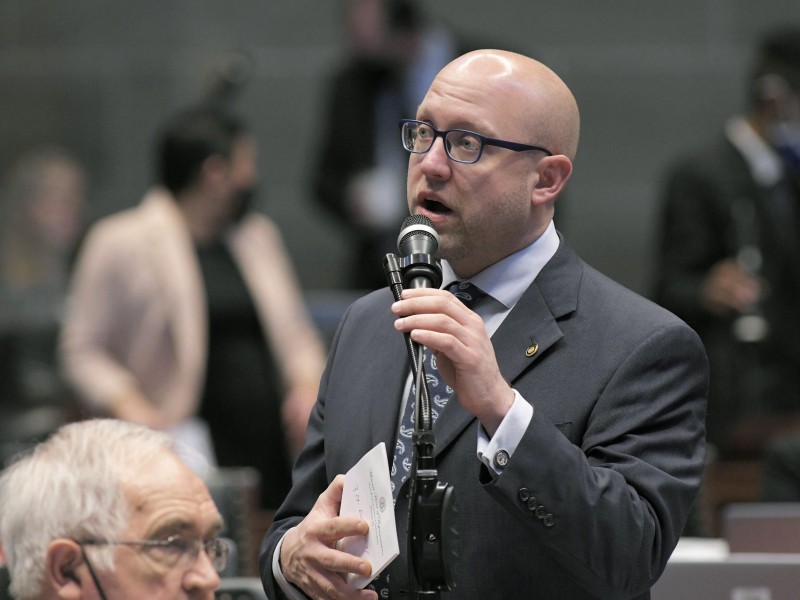
Republican state legislatures across the Heartland are working to slash taxes for the rich, while shifting more financial burden to the middle class.
Missouri
Missouri Speaker Pro-Tem Chad Perkins (R-Bowling) introduced House Bill 594, legislation that would slash taxes for the rich. If passed into law, the bill would eliminate all state taxes on capital gains, stocks sales, real estate and antiques. Republicans are also attempting to reduce the corporate tax rate in Missouri from 4% to 3.75%.
In a press release introducing HB 594 in February, Perkins argued that his bill would stimulate Missouri’s economy and attract business interests.
“This bill is intended to energize Missouri’s economy,” Perkins added. “By eliminating state taxes on federal capital gains, we’re making Missouri a more attractive place to invest, grow a business, and raise a family.”
Members of the Missouri GOP, led by Gov. Mike Kehoe (R), are attempting to eliminate all state income taxes, a sentiment borrowed from Trump’s rhetoric. However, experts say HB 594 would alleviate a large tax burden from the wealthiest people in Missouri, while the state continues to tax the middle and working class.
David Cooper, an analyst for the think tank Economic Policy Institute, told Stateline that the measure would give money away to the wealthiest people in Missouri.
“It is so egregious in just how grossly concentrated the benefits of the [Missouri] proposal would go to the richest people in the state and shift the state’s tax system to really privilege the owners of wealth over people who are earning a regular paycheck,” Cooper said.
Eliminating capital gains taxes could reportedly reduce Missouri’s revenue by up to $600 million annually.
HB 594 passed in the state House of Representatives on Monday and has been sent to the state Senate. Just three House Republicans voted with Democrats against the bill, with Rep. Mike Cierpiot (R-Lee’s Summit) arguing that it benefits the wealthy too much.
“It’s just very skewed to the most wealthy people,” Cierpiot said. “The 8,000 wealthiest families (in Missouri) will get more than half of the benefit.”
Kansas
Last month, Kansas Republicans overrode a veto from Gov. Laura Kelly (D) on Senate Bill 269, which establishes a flat income tax rate in the state. The flat income tax rate has been a priority for the Kansas GOP for several years, but Kelly argued that the state could lose up to $1.3 billion in annual revenue while the tax benefits would reportedly be negligible and mostly benefit the state’s highest earners.
“Make no mistake, should this bill become law, it will put the state back on the path toward the failed Brownback tax experiment: the four-day school weeks, the budget cuts, and the crumbling roads and bridges that came with it,” Kelly said in her veto message. “The income tax cuts made possible by this bill could cost the state up to $1.3 billion annually. The triggers for those tax cuts are such that as soon as the state sees an uptick in revenue, taxes will be automatically cut regardless of any other economic factors or policy and budgetary considerations.”
In addition to possibly limiting future legislatures from increasing funding for things like education, the flat income tax could put property tax relief in jeopardy, which was a policy Kansans were expecting this session, according to the Topeka Capital-Journal.
Wisconsin
The Republican-controlled state legislature is currently in negotiations with Gov. Tony Evers (D) on a tax cut plan. Evers has proposed cutting taxes for middle-class workers while raising taxes for the wealthiest individuals with a new tax bracket. Wisconsin Republicans, including Assembly Speaker Robin Vos (R-Rochester), have routinely rejected these plans in favor of cutting taxes across the board.
“I think the governor realizes we’re not going to spend any more money unless we have the opportunity to reduce taxes and help folks deal with inflation,” Vos told CBS 58. “And I think we realize we are never going to get a tax cut if we don’t talk to the governor and see where his priorities are as well.”
The GOP has also indicated they want a separate bill for tax relief, but Evers wants tax cuts to be included in the state budget.
Iowa
Iowa Republicans are advancing House File 980, a bill that would cut unemployment taxes for businesses by an estimated $1 billion over five years. Republicans in the state legislature argued there is too much money in the state’s unemployment trust fund, and that lowering it would be fiscally responsible.
The bill is opposed by state Sen. Thomas Townsend (D-Dubuque), who previously voiced concerns about slashing employee unemployment benefits while economists are projecting a recession.
“If they do get laid off and that fund starts going down, is that going to be cutting benefits, or is that going to be increasing that premium again for employers?” Townsend asked during a subcommittee hearing in March, according to Iowa Public Radio. “And I would argue that, when the economy is going down and they’re laying people off, [that] would not be the right time to increase the insurance premium on their unemployment.”
HF 980 and its sister bill in the Senate have both advanced in their respective committees.
Heartland Signal encourages news organizations and content creators to use our content. You're welcome to republish this article for free as long as you follow our republishing guidelines.
Related Articles
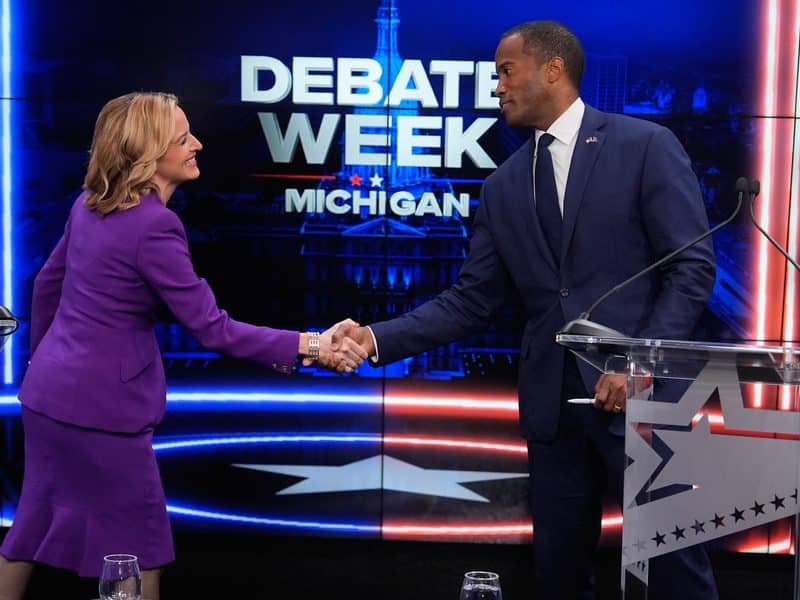
Data centers investments, personal finances take center stage at Michigan governor debate
Michigan gubernatorial candidates Jocelyn Benson and John James faced off over rising living costs, government reform and data center developments. While both candidates agreed on a couple issues, they clashed over transparency and who is best equipped to lead the state.
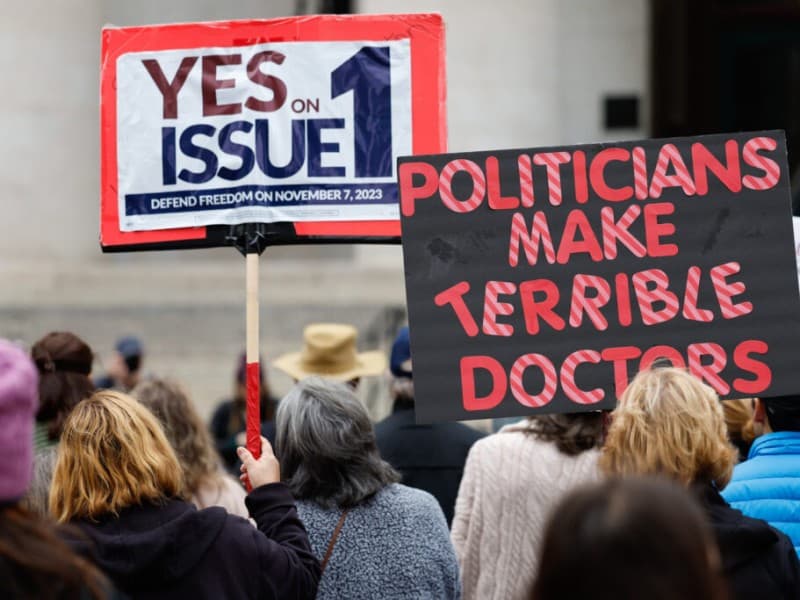
Access to abortion care is improving in Ohio, but abortion opponents continue efforts against it
As studies show improvements in access to abortion care in Ohio, abortion opponents both in and outside of the state legislature are attempting to bring more regulations against it.

Bill to end Pennsylvania’s closed primary elections passes state House
A bill to allow independent and third-party voters to cast ballots in Pennsylvania primary elections passed Tuesday in the state House.