
How Medicaid cuts will impact Heartland states
Millions of people in Heartland States are projected to lose jobs, health care coverage, financial security and access to prescription drugs and treatment options when President Donald Trump is expected to sign Medicaid cuts into law.
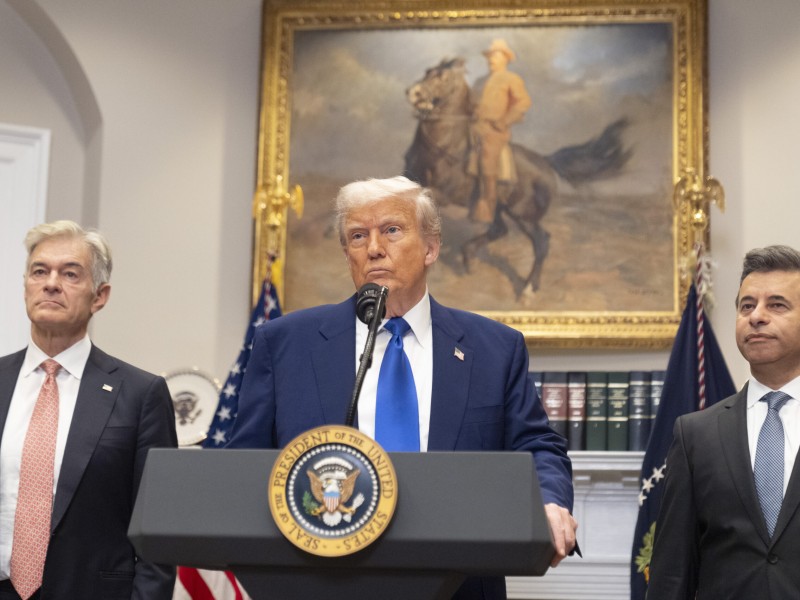
Millions of people in Heartland States are projected to lose jobs, health care coverage, financial security and access to prescription drugs and treatment options when President Donald Trump is expected to sign Medicaid cuts into law.
The Republican-controlled House of Representatives and U.S. Senate are set to implement major spending cuts to Medicaid in an effort to extend Trump’s tax cuts for billionaires. Trump is expected to sign the cuts into law before July 4. A recent partial analysis by House Energy and Commerce Committee Democrats of a Congressional Budget Office report showed that 8.6 million Americans would lose their health insurance under these cuts.
Medicaid is a government program first implemented during President Lyndon Johnson’s administration in 1965. The program provides health insurance to more than 71 million low-income families and children in America. In February, despite several lawmakers promising to vote against any bill that would harm benefits programs like Medicaid, nearly all GOP members of Congress passed a budget resolution that proposes $880 billion in cuts from the Standing Committee for Energy and Commerce, which oversees Medicaid funding.
Michigan
A reported 37% of Michigan’s rural residents are covered by Medicaid, and the federal government provides 76.6% of the state’s funds for the program. In April, Gov. Gretchen Whitmer (D) signed an executive directive to identify the scope of the Republican Medicaid cuts, as more than 2.5 million Michiganders are enrolled in the program.
In this district alone, 124,500 people get their insurance through Medicaid. Under these proposed cuts, Michigan’s uninsured rate would soar and our health would suffer. It’s unacceptable.
Thank you @RepDebDingell for your leadership on this issue. Michiganders deserve better. pic.twitter.com/LbpSEhQCNr
— Governor Gretchen Whitmer (@GovWhitmer) March 19, 2025
Rural areas of northern Michigan, which overwhelmingly supported Trump in the 2024 election, would see the most impact from the cuts.
Indiana
The Indiana state legislature, which features Republican supermajorities, passed a bill that implements enrollment limits, work requirements and eligibility checks for Healthy Indiana Plan (HIP), the state’s Medicaid program. Gov. Mike Braun (R) signed Senate Bill 2 into law last week, joining other state Republicans in claiming it will root out fraud and people who shouldn’t be on the program.
Under the new law, Indiana residents who want health insurance through HIP need to prove they work or volunteer at least 20 hours a week. All Democrats in the state legislature opposed the bill, and Senate Minority Leader Shelli Yoder (D-Bloomington) said overcomplicating the program would make the program less financially sustainable.
“My concern is Senate Bill 2 will eventually continue to drive up the costs of administering Indiana’s Medicaid program. So while we’re trying to save money, the way the language sits now … will drive up costs, administrative costs, bureaucracy,” said Yoder. “Making Indiana’s Medicaid program more complicated will only increase the likelihood of eligible Medicaid members losing their coverage.”
A previous version of the bill featured a hard cap on Medicaid recipients in Indiana at 500,000, down from the current 700,000 enrollees. A House committee amended the provision out of the bill before final passage, but it still limits enrolment based on funding. Since 77.4% of the state’s Medicaid funds are covered by the federal government, the upcoming cuts could still see tens of thousands of Hoosiers lose coverage.
The work requirement and enrollment limits reportedly need federal approval to be implemented.
Wisconsin
After voting for the budget resolution calling for Medicaid cuts, U.S. Rep. Bryan Steil (R-WI) accused the media of fearmongering about the program and that people the focus should be lifting people out of poverty. U.S. Rep. Derrick Van Orden (R-WI) gave a similar sentiment; he claimed that no American citizens would see their benefits cut and that waste, fraud and abuse are the only things on the chopping block.
However, Wisconsin Medicaid Director Bill Hanna claims that federal cuts would weaken the Wisconsin program’s ability to identify fraud as the state already has a robust verification process, according to Wisconsin Public Radio.
A report from Wisconsin Department of Health Services (DHS) suggested that adults without dependent children would be most at risk of losing coverage in Wisconsin, especially if Congress implements a proposed work requirement for Medicaid recipients.
The state legislature, which is controlled by Republicans, could offset the impact by dedicating more state dollars to the program. But the Wisconsin GOP has repeatedly refused to dedicate more money to benefits programs, and thousands of people in the state would still likely lose coverage even if the state legislature helped.
Heartland Signal encourages news organizations and content creators to use our content. You're welcome to republish this article for free as long as you follow our republishing guidelines.
Related Articles
GOP Wisconsin legislator Zimmerman missed 225 votes last session, some to attend AI summit
Reps. Tip McGuire and Shannon Zimmerman were both booked on the same Milwaukee AI panel on June 24, 2025. McGuire withdrew so he could finish voting on the Assembly floor. Zimmerman made the panel, and votes kept being recorded in his name after he left his seat.
Ohio’s Ramaswamy and McColley have long backed near-total abortion bans
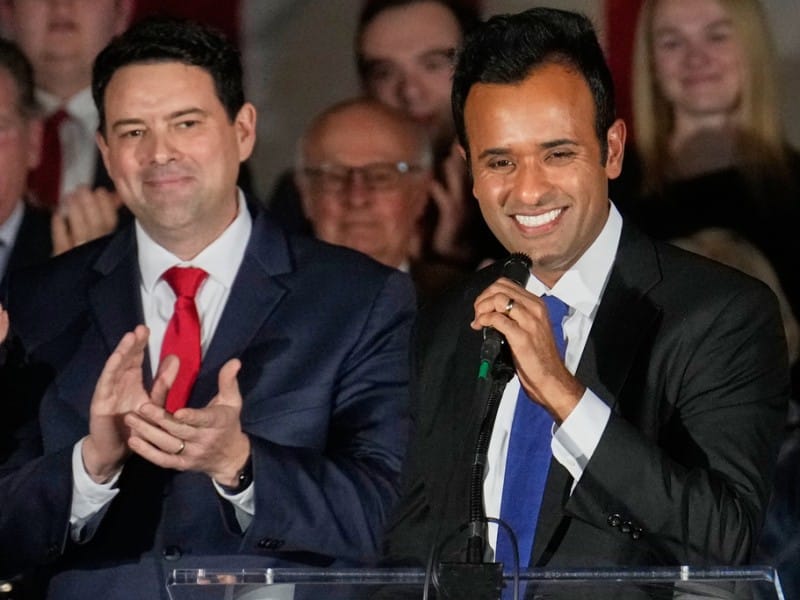
Even after Ohio voters overwhelmingly passed a 2023 constitutional amendment protecting abortion rights, GOP gubernatorial nominee Vivek Ramaswamy and state Senate President Rob McColley remain committed anti-abortion advocates. Audio from a recent rally shows McColley framing the constitutional defeat not as a setback, but as a shift in strategy.
Ryan Mackenzie’s stance on data centers collides with his policy record
Rep. Ryan Mackenzie says data centers should pay their fair share. His record includes a 2021 tax exemption vote and support for limits on local oversight.