
Democracy
Ohio lawmakers latest to try to prohibit ranked choice voting
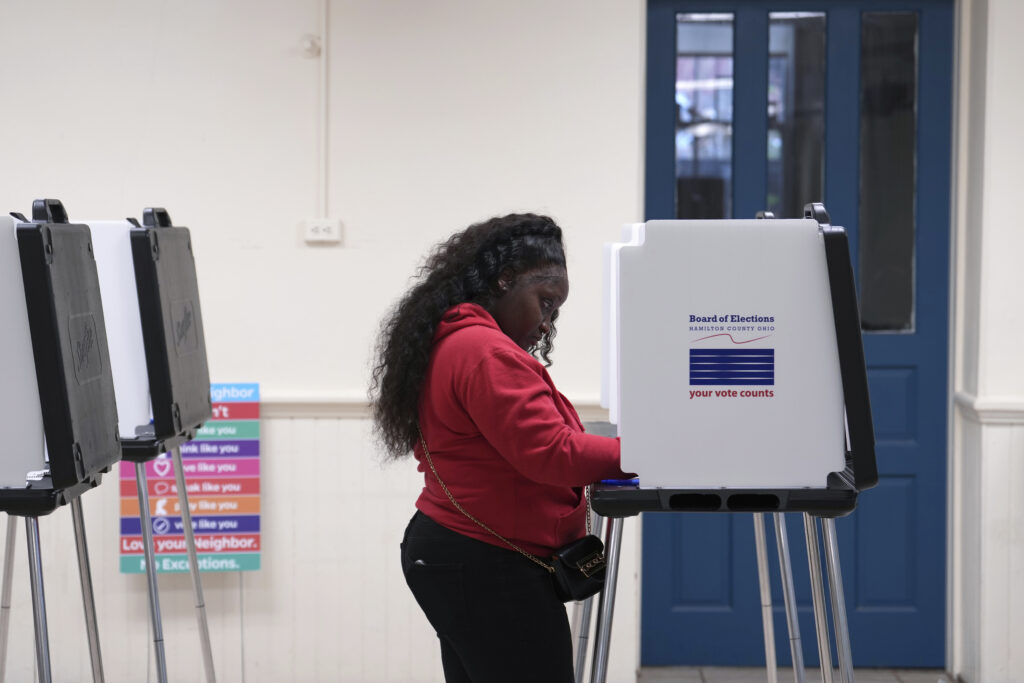
Last week, the Ohio state Senate passed Senate Bill 63, a bill that makes it more difficult to implement ranked choice voting in the state.
Although SB 63 does not outright ban the practice of ranked choice voting, it threatens to withhold funding from local governments or municipalities that use the system. SB 63 was co-sponsored by Sens. Theresa Gavarone (R-Bowling Green) and Bill DeMora (D-Columbus), who argue that ranked choice voting is too confusing and can cause delays in election results.
“Ranked choice voting flies in the face of that commonsense work by causing greater uncertainty and delayed election results that can take days or even weeks to settle,” Gavarone reportedly said.
Rank the Vote Ohio has pushed back on these claims, citing positive exit poll results from voters who used the system in Minnesota, Alaska and Utah. The organization also argues the results can be calculated just as fast as plurality, first-past-the-post voting. Still, ranked choice voting came under fire in 2021 after it took 14 days for the Associated Press to declare Eric Adams the winner of the Democratic primary for New York City mayor, stemming from a tabulation error by the New York City Board of Elections.
SB 63 passed in the Ohio Senate with bipartisan support, with four Democrats joining 23 Republicans in favor. The bill will need to be approved in the Ohio House of Representatives before it goes to Gov. Mike DeWine’s (R) desk.
The Better Government Association (BGA), a nonpartisan advocacy organization and proponent of ranked choice voting, argues that the alternative system gives voters more choice at the ballot box and could promote more third party or independent candidates. Ranked choice supporters also say it could lead to less contentious political campaigning and advertisements.
“Without the stigma of supporting a ‘spoiler,’ voters can feel free to vote based on their true intentions instead of on a calculation of who has the best likelihood of winning,” the BGA wrote in 2021. “In that same vein, fewer candidates would be discouraged from running for fear of splitting voters, allowing more third party, independent, and minority candidates to enter the fray. Supporters also believe that more choices that may speak to more voters could boost voter turnout and engagement.”
Ranked choice voting is currently used statewide for federal and local elections in Alaska, Hawaii and Maine. Since 2022, ranked choice voting has been banned in 16 states, including Kentucky, Missouri, Tennessee and the Dakotas.