
Democracy
Michigan state Sen. Mallory McMorrow talks Senate campaign and book tour with WCPT’s Richard Chew
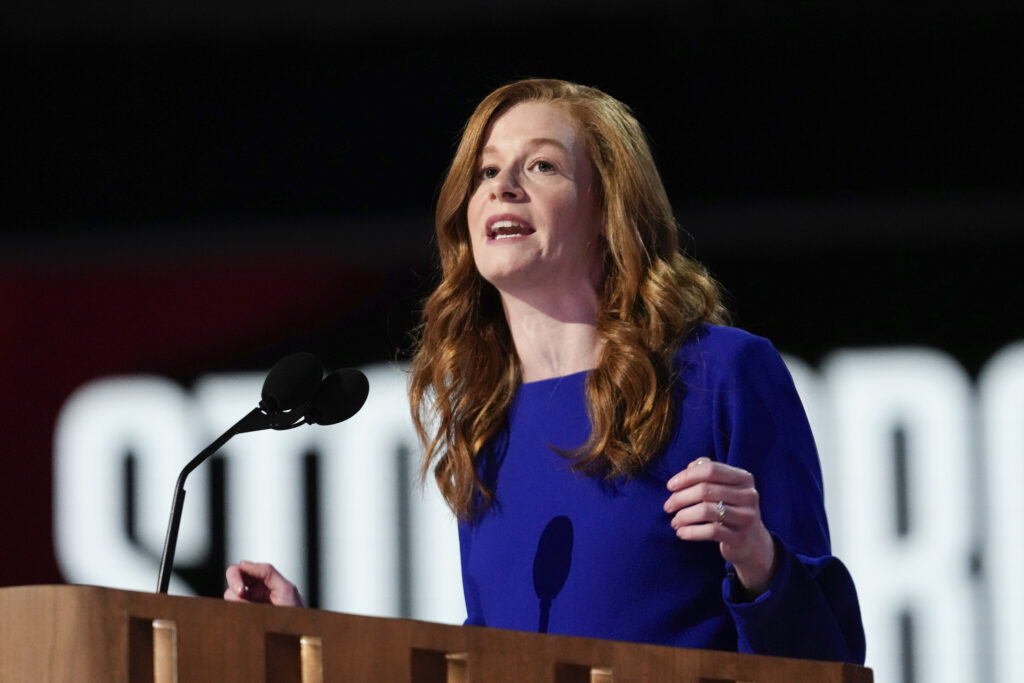
On May 22, Michigan state Sen. Mallory McMorrow (D) joined WCPT’s Richard Chew for a conversation that focused on her newly launched Senate campaign and book tour.
In the prior 60 days, McMorrow launched a campaign for U.S. Senate, hoping to fill the seat being vacated next year by Michigan Democrat Gary Peters. She also released a book, “Hate Won’t Win: Find Your Power and Leave This Place Better Than You Found It.”
The book’s title makes reference to the speech McMorrow delivered on the Michigan Senate floor in 2022, when she responded to a Republican Senate colleague’s baseless charges that she was seeking to “groom” and “sexualize” kindergartners and teach “that 8-year-olds are responsible for slavery.”
McMorrow told WCPT that since flipping a Republican state Senate district in 2018, she had become “used to being a [GOP] punching bag” and “had gotten to this place where I felt like I had let everybody down who had donated to my campaign, who had knocked doors for me, everybody who gave up their time and energy to help us do what a lot of people thought was impossible, taking on a Republican incumbent.”
“And I decided, if I’m going down, I might as well go down swinging,” she continued. “I was convinced this was going to be the last speech that I would ever give. And you know what? I write about this in my book, about kind of what was going through my head in that moment, and I was in a place I was like, ‘To hell with these people and this place.’ I came in thinking, finally, I was going to have a title, I was going to have the power to make the changes that would benefit my constituents in the state of Michigan, not to be shoved into a corner and painted as a ditzy little girl and, now, abuser of kids. So, there was something very freeing about that. I was in this head space of, I’m not going to run for reelection; let’s just go for it.”
The speech quickly went viral and brought McMorrow to national political prominence. “Even to this day,” she said, “people tell me how they still listen to it, they cue it up when they’re having a bad day, how much it meant to them. I got letters from all over the country. It pulled me back into this work and it showed me, it’s not just about the title; it’s about using your voice and how you use it and how you stand up for people.”
During the current President Donald Trump administration, McMorrow said she thinks it’s important that people who oppose the president’s actions “think about the one issue that really motivates you,” and not get burned out responding to every single issue.
“And if you do that and trust that everybody else is going to find their one issue and go deep, instead of being shallow and trying to make an impact on every single issue, I believe we’re actually going to make change and you’re going to be able to see the power that you really have,” McMorrow said.
Looking ahead to the U.S. Senate race, McMorrow conceded that November 2026 is “a long ways away” but said she wants to build a campaign “that isn’t just transactional, which I think is why so many people are so burned out and so frustrated with politics, where it feels like there’s all of this pomp and circumstance and events and pressure leading up to November, and then everybody goes away.”
She continued: “We want this to be about something that we are actually building together, so that you are a part of this campaign and you are a part of the policies that we push forward.”
Three other Michigan Democrats have also declared their candidacies in the Senate contest. The primary date is August 4, 2026.
Below is the full transcript of the interview. (Please note: The transcript has been edited for clarity.)
Richard Chew: Madame Senator, welcome to “Chew’s Views.” (Laughs.)
Sen. Mallory McMorrow: I appreciate that. I’m thrilled to be here. Thank you.
Richard Chew: Absolutely. Well, there’s so much that we can talk about. I’ll do my very best and keep my promise to keep it on the rails and keep it tight. But probably the two biggest things right now that are happening in your world is your new book, “Hate Won’t Win: Find Your Power and Leave This Place Better Than You Found It,” which came out back in March, and then the other big piece, which is national news and incredibly important, is that you have announced that you are running for the U.S. Senate seat in the state of Michigan.
Tell us a little bit about what’s been happening in your world the last 60 to 90 days.
Sen. Mallory McMorrow: It has been a whirlwind. But Richard, I have to tell you, it feels incredible. We’re waking up the morning after Republicans in Congress voted to pass a big disaster of a bill — I’m not going to call it beautiful — that’s going to cut Medicaid for tens of thousands of Michiganders. And by the way, this includes half of the kids in the state of Michigan and 90 percent of foster care kids. So it’s just unfathomable how cruel what we’re seeing come out of Congress is.
And it just feels like a moment where we need somebody new, somebody who knows how to stand up, to fight back, not just fighting for fighting’s sake, but fighting for people. And as I get across this state, since we’ve kicked off our campaign, people are ready and they’re excited. And what feels different to me about this moment is that people are not just showing up at events to demand to know what I am going to do for them; they want to know what they can do too. They’re asking, how do I contact members of Congress? Do letters work? Do emails work? Does protest work? How do I actually be a part of getting us out of this? And that is going to be the type of campaign we are going to mount, where it is on us, it’s what we can do together.
Because I am, frankly, sick and tired of a Democratic Party that pretends like, if you just vote hard enough and this is “the most important election of our lifetimes,” that everything’s going to be fixed, and then all these texts that you’ve gotten all the way up until Election Day, you get ghosted the day after. People are pissed by that and want a very different type of politics.
Richard Chew: Yeah, I say this on my show pretty much every day: I’m going to criticize Democrats in a in a way that pushes them forward — Democratic elected officials, on whatever level, state, local, our mayor here in Chicago, and our federal officials — to push harder, to work harder, to do more, because that’s what the country is asking for, whether you’re in a rural, urban, suburban community.
One of the questions I want to ask you is: That moment that sort of lit the fire that was burning or rumbling inside of you a couple of years ago, when you came to the microphone at the statehouse and made it clear of what you stood for — what was that like when you were accused of something and you said, no, we’re not going to let this happen? What was that like for you?
Sen. Mallory McMorrow: So, I want to just put it into context for your listeners who may not be from Michigan. I know Chicago — pretty short jump away. But to put it into context, I had flipped a Republican district when I first ran for office in 2018. I came into the minority in the state Senate. The Senate here in Michigan had been controlled by Republicans since 1984, so my entire lifetime has been one-party rule.
And this was a few years into my first term. I had introduced dozens of bills. The Republicans ostracized me. I had never even gotten a single hearing on any of my bills, let alone passed anything into law. I had been sexually harassed by a colleague. I had been targeted. There were mailers that went out about me in my first campaign that had a picture of me drinking a margarita by a pool with a curling iron on it, and the curling iron said, “Vote No on McMorrow.”
So I was used to being a punching bag, but it had gotten to this place where when I woke up one morning to the news that a colleague had accused me, by name, of wanting to groom and sexualize kindergarteners — and let’s just say what grooming is. This is befriending children for the purpose of molesting them.
It is heinous that — I was done. I had gotten to this place where I felt like I had let everybody down who had donated to my campaign, who had knocked doors for me, everybody who gave up their time and energy to help us do what a lot of people thought was impossible, taking on a Republican incumbent. And I decided, if I’m going down, I might as well go down swinging. I was convinced this was going to be the last speech that I would ever give. And you know what? I write about this in my book, about kind of what was going through my head in that moment, and I was in a place [where] I was like, to hell with these people and this place. I came in thinking, finally, I was going to have a title, I was going to have the power to make the changes that would benefit my constituents in the state of Michigan, not to be shoved into a corner and painted as a ditzy little girl and, now, abuser of kids. So, there was something very freeing about that. I was in this head space of, I’m not going to run for reelection; let’s just go for it.
And the response to that speech — I mean, even to this day; it’s years later, and people tell me how they still listen to it, they cue it up when they’re having a bad day, how much it meant to them. I got letters from all over the country. It pulled me back into this work and it showed me, it’s not just about the title; it’s about using your voice and how you use it and how you stand up for people. And I made it a point to identify myself as a straight, white Christian, married suburban mom who knows that all of this hatred is on people like me who are not going to stand by, even if we’re not necessarily the ones under attack.
Richard Chew: And that’s one of the things that people are asking for — one of the things. It’s the big question: How are Dems going to fight and fight differently as we go forward? I’m a few years older than you, but I was raised in a political family that we were taught to fight all the time, take on the hard fight as best you can, and bring some people with you.
So, Senator, how are you fighting differently that people can buy into and say, yeah, I want to be part of that? Because folks all over the country that listen to our station, our shows, they understand the importance of progressive fighters, and you are one of those voices that’s leading the charge, and you have been for a few years now. But how did people tap into what you’ve tapped into to be able to apply it? I’m talking everyday folk — not folks who are necessarily running for office but the ones that you’re going to need, all of us are going to need, to be there to support you and other fighters. What can individuals tap into?
Sen. Mallory McMorrow: So, first of all, I want every single person to realize how powerful you and your voice actually are. It is a strategy of Donald Trump and this administration to just pummel us, every single day, with so much bad news and so many wildly offensive actions that we get overwhelmed. I talk to people all over Michigan who say, I’m trying to respond, I’m trying to send an email, I’m trying to do a phone call on every single one of these executive orders, on accepting a plane from the Qataris, on this Medicaid bill, everything that’s happening, and I’m already burned out. So my advice to everybody is you don’t have to respond on every single issue. And I know that that can feel really uncomfortable because we care about people and we want to be there, but if you do that, you’re going to get burned out and you’re going to get burned out very quickly.
So my challenge to everybody is, think about the one issue that really motivates you. Maybe it’s something that personally impacts you or something that you just know deep in your heart is going to keep you motivated every single day and give yourself permission to kind of tune out the rest of the noise and focus on that issue. So, if you can go deep in your advocacy on — something that is really important to me is gun violence prevention. I lost a friend in the Virginia Tech shooting. I talk to people who make that their singular issue. Join a group like Moms Demand Action. Learn how to advocate and build relationships with your legislator, your member of Congress, your senator, in a way where you will actually see the impact of the change that you can make. And if you do that and trust that everybody else is going to find their one issue and go deep, instead of being shallow and trying to make an impact on every single issue, I believe we’re actually going to make change and you’re going to be able to see the power that you really have.
Richard Chew: That is so inspiring, and it comes from you, because that’s what you have actually done. You took the position that enough is enough and I’m going to fight for this that I believe in.
We’re talking with State Senator Mallory McMorrow, who has said it and made it clear she is running for that Senate seat in Michigan, and man, oh man, what power that’s going to bring to the table.
This is kind of a two-part question: Who are your allies that you go and say these are the people that I’m turning to that know me, that have my back, are supporting me? And in that same conversation, there’s some changes going on in Michigan at the top with Governor Whitmer. And how is that impacting you? How is that going to impact the state? So two-part question: Who are your allies, and how are you navigating the change that’s going to take place at the top of the state?
Sen. Mallory McMorrow: Sure. So something that’s important to me is to build allies with people who you wouldn’t necessarily expect. So it’s really easy to find people who agree with us and have our backs always, but when I ran for office and got elected the first time, running in a Republican district against a Republican incumbent, it required reaching out to maybe small-business owners who considered themselves lifelong Republicans but looked at what’s happening with Donald Trump and they say: “I want it to be easier to start and run my small business. I don’t want to attack the LGBTQ community. I don’t want to whitewash our history. I don’t want to demonize immigrants.” There are allies there where, if you can reach out and say, “Hey, I’m with you; we may not agree on every single issue but what is happening right now is unacceptable and we have to get through this together.”
My election in the first time around was largely won by retired teachers who volunteered and came out for me in a big way, and high school kids, youth, who looked at what was happening around them on issues like equality and women’s rights and gun violence prevention, and knowing that even though they couldn’t vote yet, they still have a voice and they matter, and that their future is on the line, based on the decisions that people in these powerful position make.
Have to shout out my family, always. My husband is my biggest supporter. One of his first jobs, he worked for Jennifer Granholm, who became the governor of Michigan. He has a book in his mom’s house; it’s a printed book of MapQuest maps that was labeled “the do not get Jennifer lost book.” So he didn’t get her lost. He kept the job and is just a wonderful dad to our daughter and really helps out so that I can be at events, I can be at rallies, I can be with people, and that is critical.
As to where we are: Everything is on the ballot in Michigan in 2026 — the governor’s race, the attorney general’s race, the secretary of state race, the U.S. Senate, every congressional seat, all of the statehouse seats. It’s going to be a big, big year with a lot of change. And I think a state like Michigan, we now have two cycles in a row with Senator Stabenow and Senator Peters both deciding they could have stayed in, they could have continued to run, but I think they have recognized that part of leadership is knowing that we’ve built such a great bench in Michigan of Democrats that there is a time to step back and bring up the next generation. And my hope is that the rest of the country looks at a state like Michigan, thinking about the future of our party, of the Democratic Party, and uses us as a model. So, it’s a big opportunity ahead of us.
Richard Chew: We’ve got some similar potentialities here in Illinois, of course, with [U.S. Sen. Dick] Durbin and [U.S. Rep. Jan] Schakowsky stepping aside. How do we get the folks off the couch? Last year, Bakari Sellers was here in Chicago, and he said, it’s Trump, at the time Biden — because it was May when he was here — or the couch. The couch won this last election when 36 percent of folks didn’t show up to vote. How do we reinspire and get those people back in the game and back in the stadium?
Sen. Mallory McMorrow: Part of the reason that we started this campaign as early as we did — November 2026 is a long ways away, but building up a campaign that isn’t just transactional, which I think is why so many people are so burned out and so frustrated with politics, where it feels like there’s all of this pomp and circumstance and events and pressure leading up to November, and then everybody goes away. I remember the memes on Twitter of, like, “It’s been seven days, and I haven’t gotten a text from Kamala. Where is she? Is she OK?” And some of that is humorous, but it’s also just, I think, the real way that people feel like politicians use them when they need votes or donations and then ghost them. And we want to flip the script on that.
We want this to be about something that we are actually building together, so that you are a part of this campaign, and you are a part of the policies that we push forward. We’re going to be doing a brewery tour across the state of Michigan. We’re working on, in my team right now, where this early it’s not about committing to voting or putting your voting plan together, because that’s a long way away. Let’s just get to know each other so that you feel like politics is you, that it’s not this intimidating thing, it’s not something that’s done by people in an ivory tower far away; it’s something that happens in your backyard, in your neighborhood, with your friends, so that maybe that apathetic person who was on the couch last cycle, or the 18-year-old who just got the ability to vote wants to do it and doesn’t feel like they have to do it. It’s a small nuance, but I think shifting it from a “have to” to a “want to” is what we really need to get to.
Richard Chew: Yeah, wow. And that is why we’re going to have you back because we want to create a space for that conversation to be had, more and more people across the country.
You talked earlier in the segment, discussing and explaining what happened to you early on, and in that is the word sexism and misogyny. How do you deal with that? And [it has] impacted all elections where there’s been a strong woman running for office. How are you navigating through that now as you step into this next phase of running for office, as you look back at what happened to Hillary Clinton, what happened to Kamala Harris?
Sen. Mallory McMorrow: (Inaudible) — pick your battles and we all go into this knowing that people judge women very differently. I think for the vice president, she had not only the challenges of being a woman but being a Black woman and what that means. And that was a hurdle that — she mounted a damn good campaign for 100 days, but sometimes hurdles are just too big to overcome. I think a beautiful thing about a place like Michigan is we are now at a place where there are so many women in office. Right now, we are a state run by women, with Gretchen Whitmer, Dana Nessel, Jocelyn Benson, many of our members of Congress, all the way down to the local level.
And that allows a climate where I don’t feel the pressure that I think Kamala and Hillary did, to have to be everything to every woman. I can be myself, and I can be very different than Gretchen Whitmer. I can be very different than Sarah Anthony, who’s the Appropriations [Committee] chair here in the state Senate and one of my closest friends. And the authenticity and the freedom to be yourself is something that I don’t take for granted.
It also means that — I was sexually harassed, I mentioned up top, by a Senate colleague, actually, on my first day, in new-senator orientation, and at the time, I didn’t say anything about it because, in my mind, frankly, it was B.S. that it happened to me. I had worked my butt off to get into office and I was just going to suck it up and bury it down. He went on later to do the same thing to a young reporter. He made, effectively, a rape joke about her in front of a group of boys in our capitol and then he tried to smear her and drag her through the mud. And I realized that it was my duty to come forward and back her up by saying that something similar had happened to me, because, looking at it, in my own kind of protective instinct to look out for myself and realize that if I came forward there was a lot to lose but very little to gain as I was trying to get into office, I left the door open for him to carry out a similar abuse on a young reporter in her first job. So it’s not easy. You look around; you could, I’m sure, call out sexism or racism every single day in these positions. So, I think it’s really important to not only know how to fight but when to fight, and when to stick your nose down to the grindstone and get back to work for people.
Richard Chew: Yeah. I mean, that’s good measure for so many people.
As we wrap up, Senator, and senator-to-be, again, on a national and federal level: How can we be a resource? How can our show, my show, Chew’s Views,” how can WCPT, as a progressive talk station, be a resource to you in the work that you’re going to be taking on as you go forward?
Sen. Mallory McMorrow: Yeah, so, first of all, I’m grateful for you for having me on for all of your listeners. We love our neighbors in Chicago over here in Michigan. Stay in touch with us. I mean, Michigan is one of the biggest battleground states in the entire country. This Senate race is very likely going to be one of the most expensive, one of the most watched races in the nation. So even though we’re in a different state, I would ask listeners to check in with us. We’re at mcmorrowformichigan.com. You can follow me on social media. Come on out, if you want; knock some doors with us, come have a beer, chip in a few dollars, if you’re able to. This is going to be, I think, a race that is going to help us write a new blueprint for not only the state of Michigan but for our party on how we get out of the wilderness and get through this moment.
Richard Chew: Absolutely. And our listeners here in Chicago, but throughout the rest of the country, are very proud of you. They love your fight. And there’s seminal moments — and there may be more than one in some in a person’s life, but you’ve had a couple, and you literally stepped to the mic and stepped to the moment. And we’re proud of that which you’ve done and excited about what your future is going to be. We look forward to being a part of that.
Thanks, Senator Mallory McMorrow, for being with us this morning on “Chew’s Views.” It’s really been a pleasure.
Sen. Mallory McMorrow: Thank you.