
New federal budget bill threatens access to caregiver services in Tennessee

Nationwide, more than 4 million people rely on Medicaid for home health services.
Megan Schwalm, president and CEO of the Tennessee Caregiver Coalition, said earlier cuts already forced closure of an outreach program serving 7,000 mostly Black, brown and rural caregivers. She argued the new round of cuts will further strain families caring for loved ones with dementia and other serious conditions, in a state already near the bottom for access to caregiver services.
“We currently have a waitlist of over 200 people waiting for respite vouchers from us, and we anticipate that waitlist is going to increase exponentially,” Schwalm explained. “What we’re seeing already is fewer and fewer grant opportunities available to apply for.”
Medicaid is jointly funded by states and the federal government but federal cuts would slash spending by $880 billion over 10 years. Tennessee already ranks poorly among states for its lack of supports and services for caregivers and people with disabilities, according to AARP.
Schwalm is worried about new Medicaid work requirements, particularly in Tennessee, where lawmakers did not vote to expand Medicaid. She pointed out the state already has a severe shortage of direct care workers and reliable help is hard to find even with Medicaid waivers. She warned the rules could make the shortage worse, and even force more people into expensive institutional care.
“When work requirements come into play, and caregivers have to go to work and can’t find anyone to care for their loved ones, we anticipate that we will see more older adults going into nursing homes, more children with disabilities going into institutions,” Schwalm outlined.
Although some changes will not take effect until 2027, Schwalm thinks the law could backfire, ultimately costing the state more in institutional care if home-based supports are reduced. She added for her, this issue is personal. Her son with disabilities relies on what’s known as a “Katie Beckett waiver” for expensive medication and therapies not covered by private insurance, and losing Medicaid would be devastating for their family.
Heartland Signal encourages news organizations and content creators to use our content. You're welcome to republish this article for free as long as you follow our republishing guidelines.
Related Articles

GOP Wisconsin legislator Zimmerman missed 225 votes last session, some to attend AI summit
Reps. Tip McGuire and Shannon Zimmerman were both booked on the same Milwaukee AI panel on June 24, 2025. McGuire withdrew so he could finish voting on the Assembly floor. Zimmerman made the panel, and votes kept being recorded in his name after he left his seat.
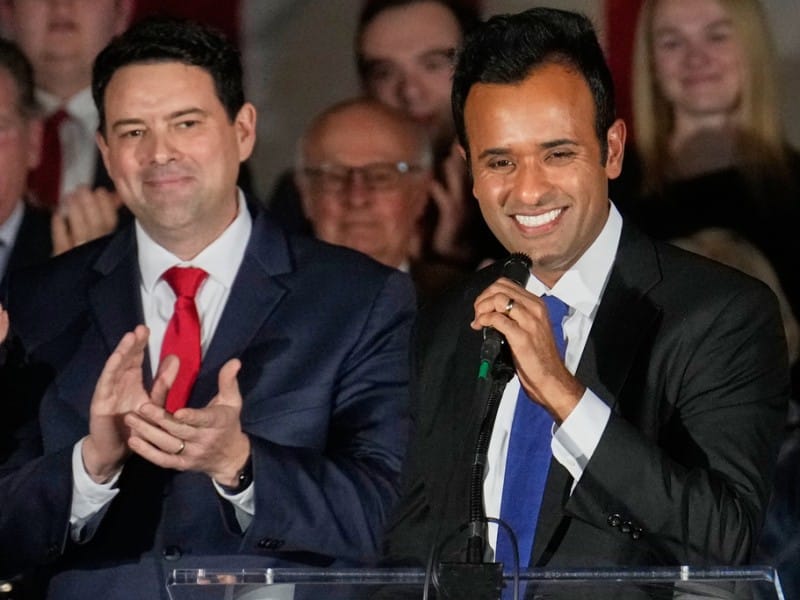
Ohio’s Ramaswamy and McColley have long backed near-total abortion bans
Even after Ohio voters overwhelmingly passed a 2023 constitutional amendment protecting abortion rights, GOP gubernatorial nominee Vivek Ramaswamy and state Senate President Rob McColley remain committed anti-abortion advocates. Audio from a recent rally shows McColley framing the constitutional defeat not as a setback, but as a shift in strategy.
Ryan Mackenzie’s stance on data centers collides with his policy record
Rep. Ryan Mackenzie says data centers should pay their fair share. His record includes a 2021 tax exemption vote and support for limits on local oversight.