
Wisconsin Democrats look to ease abortion restrictions as Planned Parenthood halts procedures
After Planned Parenthood clinics in Wisconsin were forced to pause abortion procedures, state Democrats introduced legislation to remove restrictions for the two remaining independent clinics in the state.
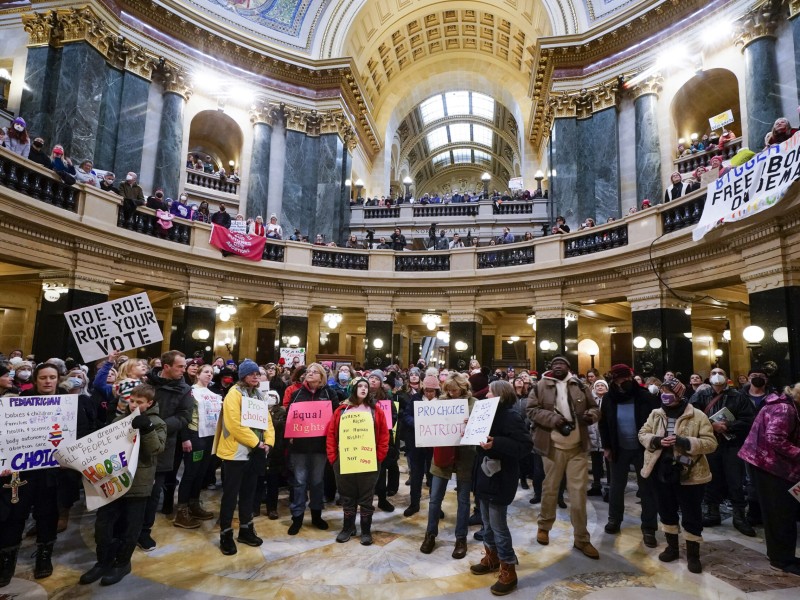
After Planned Parenthood clinics in Wisconsin were forced to pause abortion procedures, state Democrats introduced legislation to remove restrictions for the two remaining independent clinics in the state.
Planned Parenthood announced the pause last week which went into effect on Oct. 1. The pause was a direct result of President Donald Trump’s One Big Beautiful Bill, which includes a provision that takes away federal Medicaid funding from clinics that provide abortion care.
The pause will allow Planned Parenthood clinics to continue receiving funding and providing other vital services, such as cancer screenings, birth control, pregnancy testing, counseling and testing for sexually transmitted infections. However, the Republican bill will leave women in nearly every county in Wisconsin with limited options for abortion services.
Dr. Kristin Lyerly, a practicing obstetrician and gynecologist in Wisconsin and former congressional candidate, said the loss of abortion care will be profoundly harmful to the overall health of women in the state.
“The problem is that you can’t take abortion care out of women’s health care,” Lyerly said. “It’s a part of miscarriage management and infertility treatment and helping people with complicated pregnancies. So here we are, once again, stuck in a situation where women in Wisconsin do not have access to full scope reproductive health care and we know that that means that we will have worse outcomes for the women of Wisconsin.”
Women seeking abortion care in Wisconsin will be forced to either seek treatment at one of the two independent clinics located in Milwaukee or travel across state lines to clinics in Minnesota, Michigan or Illinois.
In response to the news, state Sen. Kelda Roys (D-Madison) and Rep. Lisa Subeck (D-Madison) introduced legislation last week to loosen what they described as “politically motivated” abortion restrictions in Wisconsin. According to the lawmakers, the bill is designed to prevent the two remaining clinics from being overwhelmed by patients and ensure access to reproductive care.
“I think it is really important to understand the purpose of these restrictions,” Roys said during the press conference last Wednesday. “It has always been to make abortion as onerous and as difficult for people to access as possible.”
Below are some of the restrictions Roys and Subeck mentioned would be repealed if their bill was made law:
- Current law requiring two appointments with the same physician, with a 24-waiting period in between each appointment
- Abortion providers being forced to read a script that contains medically inaccurate information
- Mandatory ultrasound before receiving an abortion
- Telehealth restrictions
The bill would also allow nurse practitioners, physician assistants and advanced practice registered nurses to provide abortion care.
These restrictions were put in place by Republicans in the state legislature, who have routinely attempted to restrict or outright ban access to reproductive care in Wisconsin.
“None of these provisions are required, and many of them are frankly harmful to our patients,” Lyerly continued. “It’s financially burdensome; it is burdensome on people’s lives and their families. It is unconscionable that lawmakers in Wisconsin are forcing people to do this for no medical reason whatsoever.”
With Republican majorities in both chambers of the Wisconsin State Legislature, the bill is unlikely to become law.
“Ultimately, what we need to do is elect legislators who will serve the people who elected them,” Lyerly said.
Heartland Signal encourages news organizations and content creators to use our content. You're welcome to republish this article for free as long as you follow our republishing guidelines.
Related Articles
Missouri education board declines to seek $300 million increase in school aid
After a stalemate, the board voted to keep its foundation formula request flat despite rising costs under state law.
December trial date set for South Dakota lawmaker facing election-related felony charges
A judge in Minnehaha County set a December trial date on Tuesday for a South Dakota state senator facing election-related felony charges.

Jackson County GOP names 9/11 golf sponsorships after attack sites
Sponsorship tiers named for the Twin Towers, the Pentagon and Flight 93 are on sale for a “Tee Off in Remembrance” event on the attacks’ 25th anniversary.