
Heartland states where conversion therapy bans could be reversed depending on SCOTUS ruling
The Supreme Court of the United States heard arguments last week in a case that could see the court restrict the ability for states to prohibit conversion therapy.
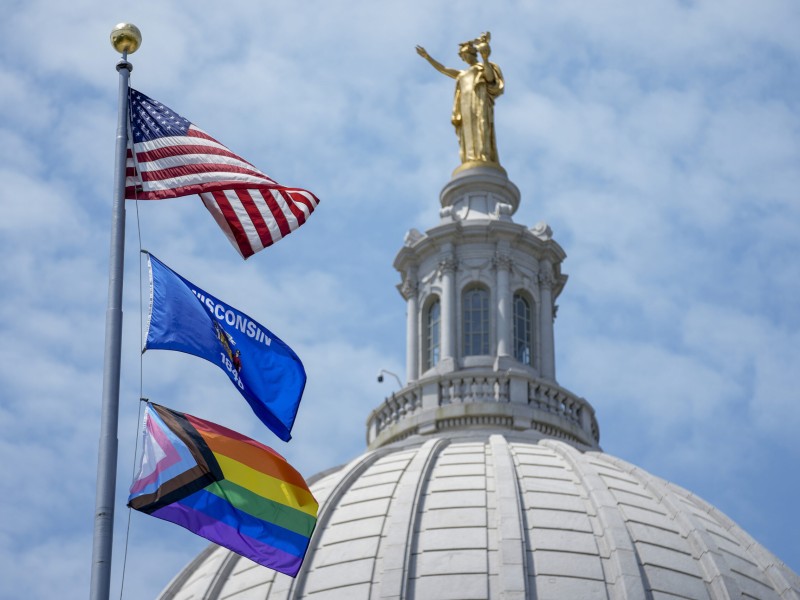
The Supreme Court of the United States heard arguments last week in a case that could see the court restrict the ability for states to prohibit conversion therapy.
Last week, the court heard oral arguments in the Chiles v. Salazar case, which challenges a 2019 Colorado law that bans conversion therapy for children in the state. Conversion therapy is an umbrella term that refers to the practice of attempting to change an individual’s sexual orientation or gender identity. The methods involved can include talk therapy, electric shocks, emotional suppression, food deprivation, and physical isolation among others.
Twenty-three states and Washington D.C. currently prohibit licensed healthcare providers from subjecting minors to conversion therapy. Depending on the scope of the Supreme Court’s ruling next summer, these bans could be rendered useless next year.
The Heartland states with conversion therapy bans currently include Minnesota, Wisconsin, Illinois, Michigan and Pennsylvania. The SCOTUS case stems from a 2022 lawsuit filed by counselor Kaley Chiles against the state of Colorado. Chiles argued that the 2019 ban on conversion therapy violates her First Amendment right to free speech and infringes her ability to provide counseling in a way that aligns with her religious beliefs.
Chiles is being represented by the conservative legal advocacy group Alliance Defending Freedom (ADF), which opposes LGBTQ+ rights and same-sex marriage. The Southern Poverty Law Center designates the ADF as an anti-LGBTQ+ hate group.
“The government has no business censoring private conversations between clients and counselors,” said ADF chief legal counsel Jim Campbell. “There is a growing consensus around the world that adolescents experiencing gender dysphoria need love and an opportunity to talk through their struggles and feelings. Colorado’s law harms these young people by depriving them of caring and compassionate conversations with a counselor who helps them pursue the goals they desire.”
Medical experts widely and highly discredit conversion therapy, as it usually leads to significant damage to the victim’s mental health. Some who have experienced conversion therapy have described it as torture, since it relies on the false notion that sexual orientation is a choice and that homosexuality is a mental disorder.
“Underlying these techniques is the assumption that any non-heterosexual, non-cisgender identities are mental disorders, and that sexual orientation and gender identity can and should be changed,” reads an issue brief from the American Medical Association. “This assumption is not based on medical and scientific evidence. Professional consensus rejects pathologizing sexual and gender identities.”
The Supreme Court is scheduled to decide the case next summer, which could have broad impact on the legality of conversion therapy across the United States. During oral arguments, Justice Samuel Alito referred to the Colorado conversion therapy ban a “blatant viewpoint discrimination.”
Wisconsin’s ban recently went into effect over the summer, after the liberal majority on the state Supreme Court ruled with Gov. Tony Evers’ (D) administration. Republicans in the State Legislature attempted to reverse a conversion therapy ban implemented by the Wisconsin Department of Safety and Professional Services (DSPS) board. Without passing legislation, Republicans struck down the ban in a committee hearing, an action which was ruled unconstitutional by the state Supreme Court.
Evers’ office and the Wisconsin DSPS did not immediately respond on an inquiry to comment.
Heartland Signal encourages news organizations and content creators to use our content. You're welcome to republish this article for free as long as you follow our republishing guidelines.
Related Articles
Skinner brags about failed Lake Altoona project in campaign ad
The Wisconsin Senate candidate’s ad brags about a project she says cleaned up Lake Altoona for free. County records — and Skinner’s own voting record — tell a different story.
Minnesota State Fair crop art sprouts political creativity
From MAGA Kool-Aid Man to Antifa Waldo, Minnesota artists drew huge lines to see their “seedy” creations
Pillen memo calling for 5% cut across Nebraska agencies raises questions about governor’s authority
For the University of Nebraska, a 5% cut could subtract $36 million from its newly approved operating budget