
Freedom of speech violations piling up nationally under Trump’s second term
First Amendment violations have become a defining feature of President Donald Trump’s second term in the White House, with the administration and people sympathetic to it ignoring free speech laws and precedent.
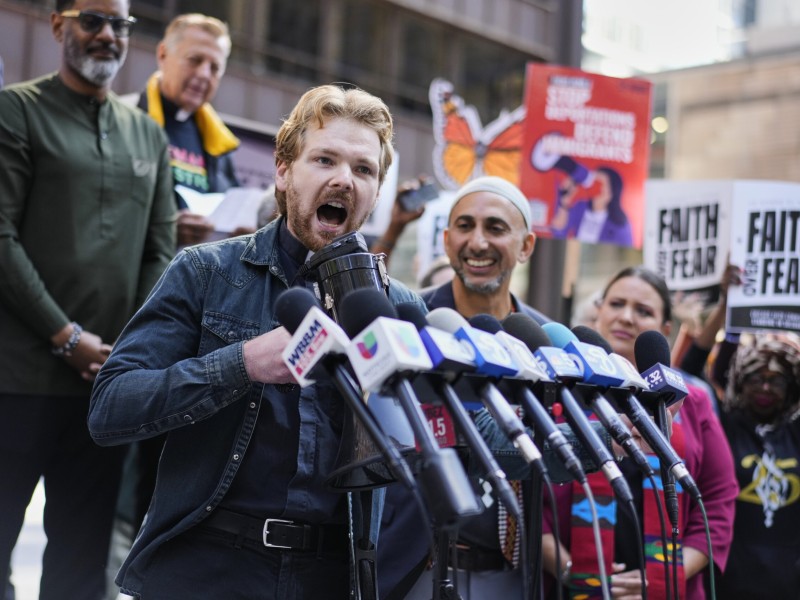
First Amendment violations have become a defining feature of President Donald Trump’s second term in the White House, with the administration and people sympathetic to it ignoring free speech laws and precedent.
The result is a growing sense of alarm among civil liberties groups who fear that the country’s foundational right to free speech is being tested like never before.
Tennessee man jailed for a meme
Local police jailed Tennessee resident Larry Bushart for over a month after posting a meme online after the death of Charlie Kirk. The meme features a quote from President Donald Trump he made after a school shooting at Perry High School in Iowa last year.
Bushart, a former law enforcement officer who is locally known for posting liberal memes online, posted the meme after Kirk’s murder with the caption “This seems relevant today…,” referencing Trump’s stance on gun violence.
Bushart was arrested in his Lexington, Tenn. home on Sept. 21 by the neighboring Perry County Sheriff’s Department. He was charged with threatening mass violence at a school, and his bail was set at $2 million.
During an interview with NewsChannel 5 Nashville’s Phil Williams, Perry County Sheriff Nick Weems said members of his community interpreted the meme as a mass shooting threat on Perry County High School, while not producing evidence of any complaints. Weems defended the arrest, saying Bushart stoked fear in his community. He also admitted that he knew of the meme’s existence before the incident and does not believe it contained threatening words. Weems had contacted District Attorney Hans Schwendimann’s office, which signed off on Bushart’s arrest.
On Wednesday, prosecutors dropped the charges against Bushart after he spent 36 days in a jail cell and the local authorities faced a wave of backlash from free speech advocates.
Georgia teacher fired over Charlie Kirk social media comments
On Oct. 20, Georgia high school teacher Michelle Mickens filed a lawsuit against her former district after she was terminated for Facebook comments about Charlie Kirk. On the day he was killed, Mickens wrote that she was critical of Kirk’s politics, but she condemned violence of any kind. She claims that the posts were made on a private Facebook page only viewable to close friends.
In response to pushback from her friends, Mickens made the following post:
“I don’t condone violence of any kind, and I certainly don’t condone this, but he was a horrible person, a fascist full of hate for anyone who was different. While I’m sad that we live in a country where gun violence is an epidemic, the world is a bit safer without him. I didn’t respect him at all, and he’s part of the hatred and vitriolic language we hear so much now. I pray that without him, people can be kinder and more tolerant to one another.”
Mickens claims she was then asked by the school to delete the posts and issue an apology, and she expressed that she wanted to contact a lawyer before moving forward. The school responded by placing her on indefinite paid suspension with intention to terminate her. The suit claims that several teachers at Mickens’ school expressed pro-Charlie Kirk views, including social media posts and wearing T-shirts to work, and those teachers were not disciplined for their expression.
The Oglethorpe County School System and Superintendent Beverly Levine were named as defendants in the case, which claims that her termination violates her First Amendment right to free speech and her 14th Amendment right to due process. Levine did not respond to a request to comment for this story.
Mickens is one of numerous examples of people being fired for comments after Kirk’s assassination.
Wisconsin’s ‘free speech’ bill
Last month, Wisconsin Republicans introduced Senate Bill 498, which they argue would expand free speech and academic freedom on college campuses in the state. Notably, universities found to be violating the law would face financial penalties and possibly even be forced to freeze tuition prices, according to the Wisconsin Examiner.
State Sen. Chris Larson (D-Milwaukee) said the bill is “DEI for Republican viewpoints” during a committee hearing earlier this month because of how it platforms hateful, usually far-right speech. When Larson asked bill co-author Amanda Nedweski (R-Pleasant Prairie) if her bill would promote hateful speech like the one found by Politico in Young Republican chat groups, Nedweski effectively dismissed the story.
“I have no association with the group that you’re talking about,” Nedweski said. “I don’t agree with the things that they said. It’s unfortunate that that happened. We hear it from both sides all the time.”
In a statement to The Badger Herald, Universities of Wisconsin Interim Vice President for University Relations Chris Patton said that many of the provisions in the bill are already in practice and that the additional requirements are unnecessary.
“We believe that our adherence to constitutional law and current board policy best serves to uphold this commitment [academic freedom and freedom of expression],” Patton said in the statement.
While testifying against SB 498, a representative from the University of Wisconsin-Madison argued that the bill features vague language and would produce inconsistencies in the schools’ constitutional protections, potentially leading to “unintended adverse claims” and abuse.
During a committee hearing on the bill, state Rep. Dave Murphy (R-Hortonville) seemingly defended white supremacist professors as people being discriminated against based on “some ideology they have.”
Speaking in favor of a right-wing campus free speech bill, Wisconsin State Rep. David Murphy (R-Hortonville) defends white supremacist professors.
STATE SEN. CHRIS LARSON (D): “Do you think we should be encouraging white supremacist professors and white supremacists to be… pic.twitter.com/Ihi2s9g1KE
— Heartland Signal (@HeartlandSignal) October 16, 2025
Media outlets, protesters, and members of the clergy sue over ICE First Amendment violations
On Oct. 6, the Illinois branch of the American Civil Liberties Union filed a lawsuit on behalf of protesters, members of the press and members of the clergy challenging the conduct exhibited by the Immigration and Customs Enforcement (ICE). Numerous instances of violent and illegal behavior have been reported, including not issuing arrest warrants, escalating tensions, deploying tear gas without warning and getting into physical altercations with peaceful protesters and detainees.
One instance saw First Presbyterian Church Reverend David Black engage in prayer at the Broadview, Ill. ICE facility in front of a group of ICE agents, who proceeded to shoot him in the head with pepper ball projectiles.
CW: protester being struck in the head by a pepper ball
Footage I took earlier of the moment Reverend David Black, a regular protester outside of the Broadview Detention Center, was shot in the head with a pepper ball by ICE agents on the roof of the facility.
— Preorder Read This When Things Fall Apart (@mskellymhayes.bsky.social) September 19, 2025 at 9:22 PM
Black later signed on as a plaintiff in the ACLU’s lawsuit, which argues that ICE’s “intentional and escalating violence” suppresses the rights enshrined in the First Amendment of the U.S. Constitution.
According to U.S. Customs and Border Patrol Commander Gregory Bovino, ICE has made over 3,000 arrests across Illinois since Operation Midway Blitz was launched on Sept. 8.
Heartland Signal encourages news organizations and content creators to use our content. You're welcome to republish this article for free as long as you follow our republishing guidelines.
Related Articles
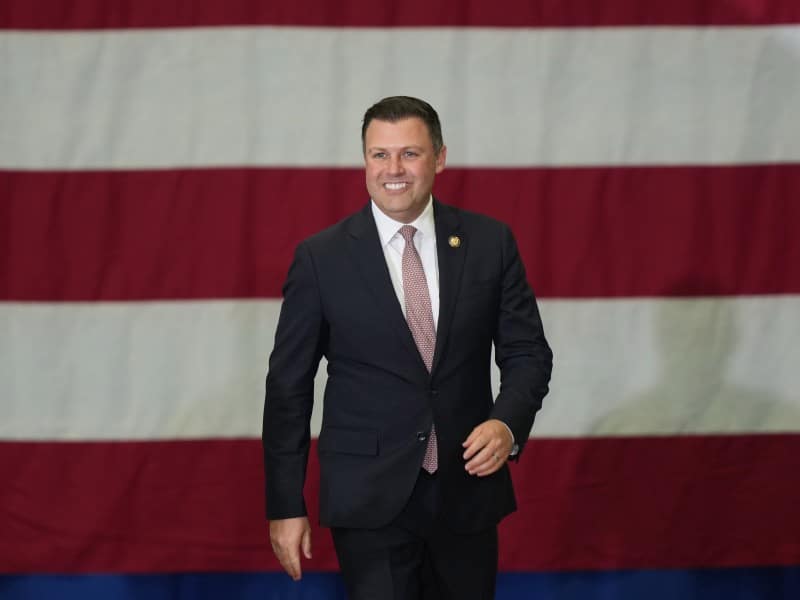
Mackenzie aide was in 2018 chat that shared racist, antisemitic memes
Pennsylvania Rep. Ryan Mackenzie voted for House resolutions condemning antisemitism, but his communications director, Arnaud Armstrong, was part of a college group chat that shared racist and antisemitic memes, including fabricated quotes from Adolf Hitler.
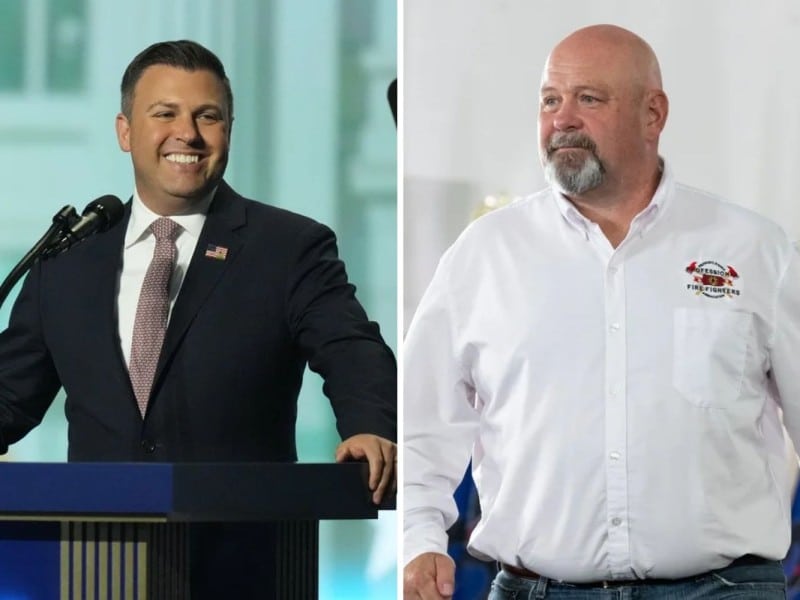
Mackenzie vs. Brooks: What’s at stake in Pennsylvania’s 7th Congressional District
Voters in Pennsylvania’s 7th Congressional District are weighing two vastly different visions on healthcare and rising costs. Republican Rep. Ryan Mackenzie backed federal Medicaid cuts, while Democratic challenger Bob Brooks, a local firefighter, is centering his campaign on expanded coverage and corporate accountability.
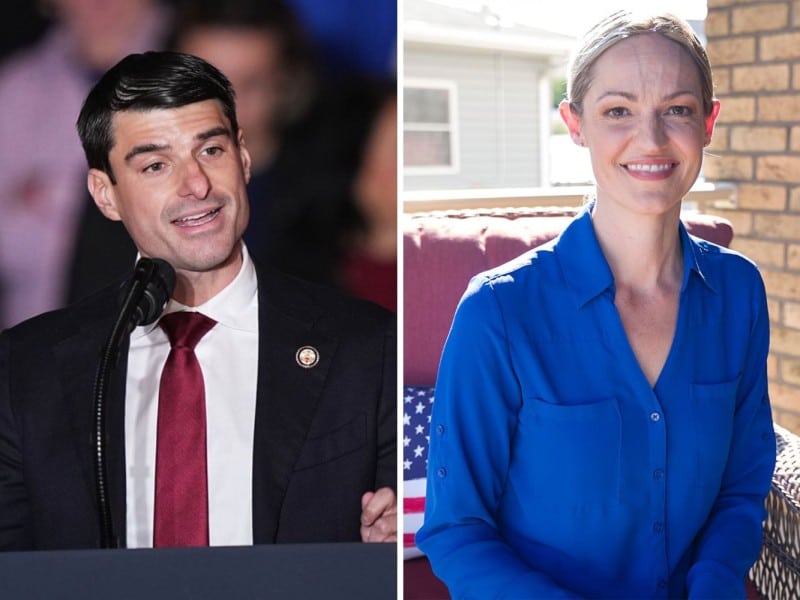
Bresnahan vs. Cognetti: What’s at stake in Pennsylvania’s 8th Congressional District
Voters in Pennsylvania’s 8th Congressional District are facing higher health care and living costs. Rep. Rob Bresnahan voted for legislation that slashed Medicaid and supported tariffs that raised prices on everyday goods. Scranton Mayor Paige Cognetti says it’s time to stop politicians from enriching themselves at the public’s expense.