Economy
How one nonprofit kept over 236,000 families afloat when SNAP benefits disappeared
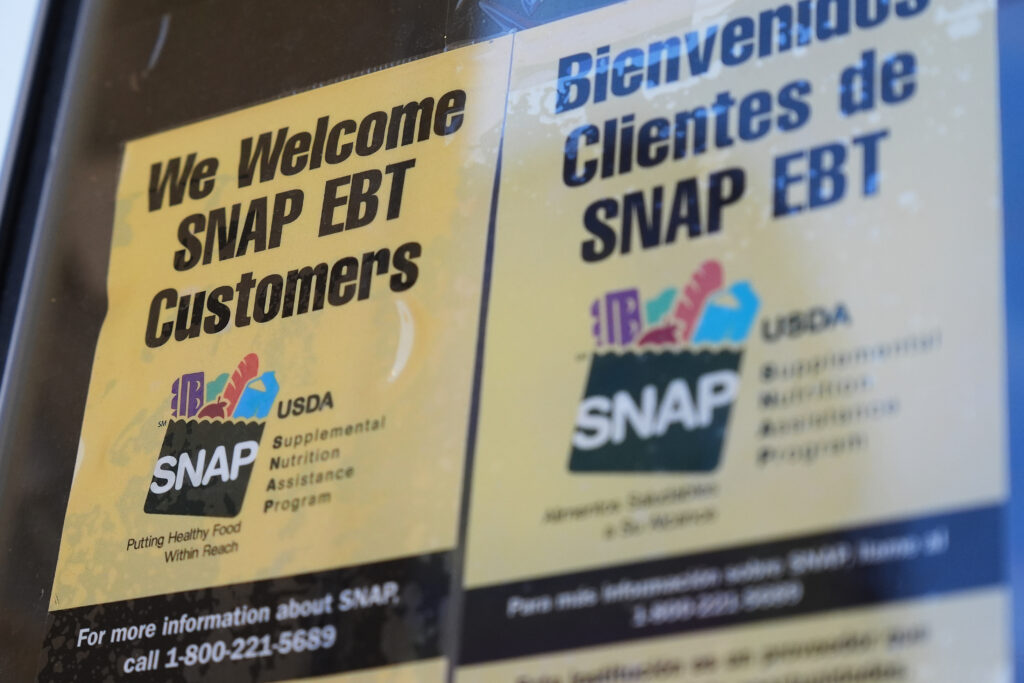
When benefits for the Supplemental Nutrition Assistance Program (SNAP) were unavailable due to the recent government shutdown, a nonprofit called GiveDirectly stepped in to deliver cash payments to the families most in need.
Founded in 2008, GiveDirectly allows donors to send direct cash payments to people living in extreme poverty around the world through ongoing efforts.
The organization typically sets up emergency campaigns to respond to natural disasters, like hurricanes, wildfires, and the Texas Floods earlier this year. GiveDirectly quickly set up a new campaign when it became clear that the government shutdown would result in 42 million SNAP recipients missing out on their November payments. The U.S. director for GiveDirectly, Dustin Palmer, said this was the first time his organization adapted its model to a “man-made” disaster.
“We have this great playbook and we were able to adapt that to, essentially, what I call a man-made disaster in the pause of SNAP benefits, which were really devastating for our families nationwide” Palmer said. “About one in eight people use those benefits, they’re this critical plank of family safety net and home budget. And those paused and people were left without that support. So we were kind of able to adapt the model and support people with $50 payments.”

Headshot of Dustin Turner, the U.S. director for GiveDirectly (Photo provided by Turner)
GiveDirectly partnered with Propel to tackle the crisis, a free mobile app that roughly one-fourth of SNAP recipients use to receive their Electronic Balance Transfer (EBT) payments. Within the app, SNAP enrollees were shown a banner to sign up for GiveDirectly’s campaign and receive a one-time donation of $50.
The $50 payments did not equal the value of the benefits lost, but they were meant as a bridge until the full benefits were restored.
“We really focused on larger families and families who normally get the maximum SNAP benefit, meaning they have the lowest income,” Palmer said.
GiveDirectly initially narrowed their offer to families of three or more.
According to the Center on Budget and Policy Priorities, the maximum SNAP benefits are given to families with no monthly income. For a family of three with no income, that maximum monthly benefit is estimated to be $785.
In many cases, particularly in states that did not use emergency funds to help bridge the funding gap during the shutdown, families with no income were left without those SNAP benefits. The $50 payment from GiveDirectly was all they had at a time when it was unclear when the shutdown would end and benefits would return.
Palmer also noted that the partnership with Propel allowed them to have payments ready for verified SNAP enrollees on Nov. 3, the first business day that SNAP benefits were absent. The priority was to avoid administrative burden and make it as simple as possible for users to sign up.
“What we love about it is that we know these are active SNAP users and we can really rapidly, since they’re kind of already verified, we can really rapidly onboard them to a program,” Palmer said. “It takes about 60 seconds to enroll, and you’re basically saying, ‘I am who you think I am already,’ and you tell us how you’d like to receive the payment, whether as a virtual debit card or we can mail you a debit card.”
By the end of the campaign, GiveDirectly’s efforts garnered $14,263,436 from 4,805 individual donors, making it the largest emergency response for the organization this year. GiveDirectly delivered payments to 236,869 of the most vulnerable families in the country.

Photo collage of Deairra Tracey’s family (Photo provided by Tracey)
One of those recipients included Deairra Tracey, a single mother of three (all under the age of seven) from New Jersey. Tracey relies on government programs like SNAP to help feed her children after a diagnosis with a rare blood condition ended her career as an emergency room specialist and nurse.
The shutdown, and subsequent federal failure to fund SNAP, put her in a hopeless situation which saw her scrambling to find a food bank and consider skipping meals to ensure her children were fed. That was until she saw GiveDirectly’s banner in her Propel app. Although she was skeptical it was a scam at first, Tracey was able to verify the offer was legitimate and take advantage of the opportunity to feed her children in a desperate time. The cash also allowed Tracey to get her children a hot meal and other household essentials, which is not possible with ordinary SNAP payments.
“It was really helpful because I was able to get the children some McDonalds, you know they get a little excited about that, so it was a treat for them and then I was also able to buy like some little essentials like toilet paper, you know, things that you need,” Tracey said. “I would say thank you for the opportunity to help me and my family. It has pulled us out of a small little hole. It has helped a lot.”
Tracey said she also wants Congress to realize that people like her are put in impossible situations when benefits are not available.
“A person like me, I rely on these benefits. You have some people that can get up to go to work to provide for their family, unfortunately I’m not that person,” Tracey said.
“So it’s like, they really don’t understand what it’s like until you’re put in a position like me. You know, someone who could get up to go to work before, but now things changed in the blink of an eye, and now I have to depend on the government for certain things.”
The shutdown new deal will keep the government open until Jan. 30, giving Congress two months to negotiate another extension. Palmer said he is hopeful there will not be another funding gap, but that GiveDirectly is prepared to implement another campaign if necessary.
“I hope we can get stronger and avoid that,” Palmer said. “We’re ready and on standby for the next response we need to be there for.”
EDITOR’S NOTE (12/1): A previous version of this story incorrectly had GiveDirectly as “Give Directly.” This has since been fixed.