Report: Significant increases in LGBTQ+ equality across Midwest cities in 2021
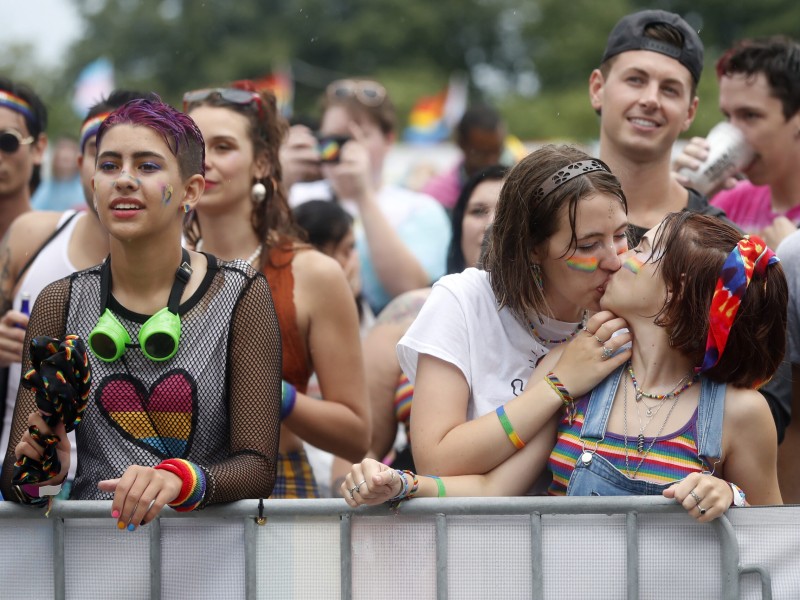
An annual report from the Human Rights Campaign released last week pointed to a widespread increase in LGBTQ+ equality across the nation, including the Midwest.
The 2021 Municipal Equality Index ranked 100 Midwestern cities on a scale of one to 100 based on municipal laws and efforts for LGBTQ+ equality and inclusion. Of them, 37 cities earned improved scores compared to 2020, 57 kept the same score they had in 2020 and just six collected decreased scores.
Of the 57 scores that stayed the same, 19 of them maintained a perfect 100 rating, including cities like Chicago, Detroit, Mich. and St. Louis, Mo. Three other cities, Wes Des Moines, Iowa, Kansas City, Mo. and Akron, Ohio, also increased their scores in 2021 to 100, making the total count of Midwestern cities with perfect MEI scores to 22.
“I’m a native Iowan, and I know that equality isn’t just about people in New York and California,” JoDee Winterhof, HRC’s senior vice president of policy and political affairs, said in a live-streamed news conference last Thursday. “It’s about making sure we are working to improve the laws and the lives for LGBTQ+ people everywhere they live, which is everywhere. [LGBTQ+] people live in every county in America, every city in America.”
The increases of LGBTQ+ equality and inclusion in American cities throughout the nation come during a year where state legislatures passed laws restricting LGBTQ+ rights. Last month, Texas Gov. Greg Abbott signed a law that restricted public high school student-athletes to only compete based on the gender on their original birth certificates, chilling transgender athletes’ participation.
“This year, state-wide lawmakers have zeroed in on attacking transgender and non-binary children—for no reason other than in an effort to harm and erase them,” Winterhof said in a press release. “Local leaders, however, have continued to move the needle of progress forward, and by doing so, they have spurred economic growth by signaling to residents, visitors and employers that their city is open to everyone.”
The MEI ranks over 500 U.S. cities on municipal laws and actions for LGBTQ+ equality and inclusion on a scale of one to 100. The report looks at a city’s non-discrimination laws and the protections and opportunities a city provides to the LGBTQ+ community through workplace laws, city leadership, law enforcement and municipal services. HRC says an easy-to-understand scale helped inspire many cities and municipalities across the country to improve their LGBTQ+ protections.
“I’m from Alabama, and I’ve been able to see the Municipal Equality Index [affect] cities like Birmingham, where I grew up, and Montevallo, where I went to college,” said Fran Hutchins, Executive Director of the Equality Federation Institute, which partners with HRC to create the MEI.
This year’s edition marks the tenth anniversary of the MEI. Cities and municipalities across the nation with perfect 100 scores increased ten-fold over the decade, from 11 cities in the inaugural 2012 edition to 110 in the 2021 edition.
“For 10 incredible years, the MEI has helped guide, shape and inspire more inclusive laws and policies in cities of all sizes in all parts of the country,” Cathryn Oakley, state legislative director and senior counsel for HRC as well as one of the founding authors of the MEI, said in a press release. “Being able to personally witness these communities continue to push themselves to better serve their LGBTQ+ communities over the years has been one of my greatest joys.”
Heartland Signal encourages news organizations and content creators to use our content. You're welcome to republish this article for free as long as you follow our republishing guidelines.
Related Articles
Bill to end Pennsylvania’s closed primary elections passes state House
A bill to allow independent and third-party voters to cast ballots in Pennsylvania primary elections passed Tuesday in the state House.
Minnesota Truth Council concludes public testimony on Operation Metro Surge
A council tasked with documenting the harms of — and resistance to — the federal government’s immigration crackdown held its final public meeting Tuesday in Rochester.
Missouri education board declines to seek $300 million increase in school aid
After a stalemate, the board voted to keep its foundation formula request flat despite rising costs under state law.