
Republican obstructionism intensifies ahead of 2022 midterms
Since the Democratic party has majorities in both chambers of Congress and a president in the White House, the Republican party has either voted against or attempted to block many major pieces of legislation since Jan. 2021.
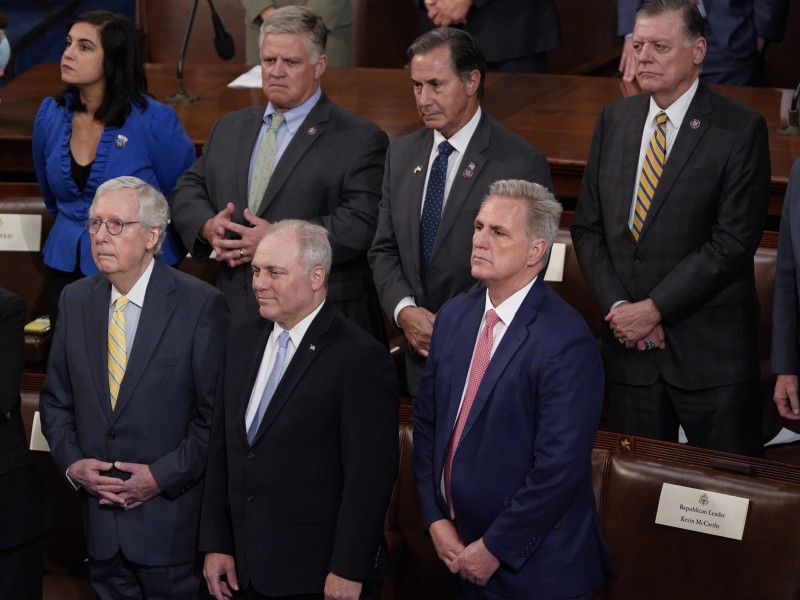
Since the Democratic party has majorities in both chambers of Congress and a president in the White House, the Republican party has either voted against or attempted to block many major pieces of legislation since Jan. 2021.
Blocking an attempt to cap insulin prices
The Affordable Insulin Now Act was originally a part of President Joe Biden’s Build Back Better plan. It would financially relieve diabetics from having to pay high prices for insulin, a medication they need to survive. The estimated yearly cost of insulin in the U.S. is close to $6,000 and has been increasing steadily for decades. The bill would cap insulin prices for consumers at $35 monthly, a significant decrease. In May, The House of Representatives passed the Affordable Insulin Now Act by a vote of 232-193, with all Republicans voting against it.
The 50 Senate Democrats have been working to pass a version of the insulin cap sponsored by Sen. Raphael Warnock (D-GA). However, the Senate parliamentarian ruled that the cap can only apply to people covered by Medicare. To overrule this and cap insulin at $35 for everyone, Senate Democrats needed 60 votes to avoid a filibuster and invoke cloture. But nearly all of the 50 Senate Republicans struck it down. After voting down a popular policy that would help millions of people, Republicans gave no reasoning behind their decision other than seemingly not wanting to give Democrats a political win.
Voting against same-sex marriage protections
House Democrats introduced the Respect for Marriage Act in the House of Representatives in July, with the body passing it by a vote of 267-157. This bill codifies gay and interracial marriage into law, making it illegal for states to deny marital status to couples in this category. It would also make it impossible for the Supreme Court to overturn gay marriage the way it overturned the federal right to abortion care.
All 157 no votes in the House were from Republicans, and only a few GOP senators have yet to pledge any support to pass the bill. Wisconsin Sen. Ron Johnson (R-WI), who is up for reelection in November, has walked back his support of the bill.
“I said at the time I had no reason to oppose it,” Johnson told the Milwaukee Journal-Sentinel. “I think there are a lot of people with reasons and very legitimate issues in terms of religious freedom.”
Voting against access to contraception
Just eight Republicans in the House joined the Democrats in passing the Right to Contraception Act at the end of July. This bill is heading to the Senate, where it will likely die as Republicans have taken a far-right approach to social and personal issues lately. The bill sets protections for contraception and prohibits measures to impede access to them.
Just like gay marriage, the right to contraception is one of several issues Democrats are trying to enshrine in law following the Supreme Court’s decision to overturn Roe v. Wade. Supreme Court Justice Clarence Thomas suggested the reversal of many social issues in his concurring opinion, saying that the court should revisit the decisions in Griswold, Obergefell and Lawrence v. Texas.
Blocking climate crisis action and deficit reduction
In July, the Democratic leaders in the Senate announced their agreement on the Inflation Reduction Act. Included in the bill is money intended to address the climate crisis, a 15% tax on companies making over a billion dollars and $290 billion in deficit reduction. Democrats needed all 50 Senators to pass the bill through reconciliation, as every Republican in the Senate opposed the measure.
Blocking health care for veterans
In response to Senate Democrats passing the Inflation Reduction Act through reconciliation, Republicans decided to vote down aid for veterans after pledging their support for it. The PACT Act is a measure to expand healthcare for veterans exposed to toxic burn pits while serving in the Middle East. These burn pits are linked to various chronic illnesses and cancers that veterans develop after exposure.
Only after facing backlash for voting against this bill, especially because no text in the bill had changed, Republicans eventually switched back to avoid blowback.