
Republican-led state legislatures working to limit the ballot initiative process
Each state in the U.S. has its own process for putting ballot initiatives in front of citizens to directly vote on policy. Many Republican-controlled state legislatures are working to limit these processes and make it harder for everyday people to have a say in their government.
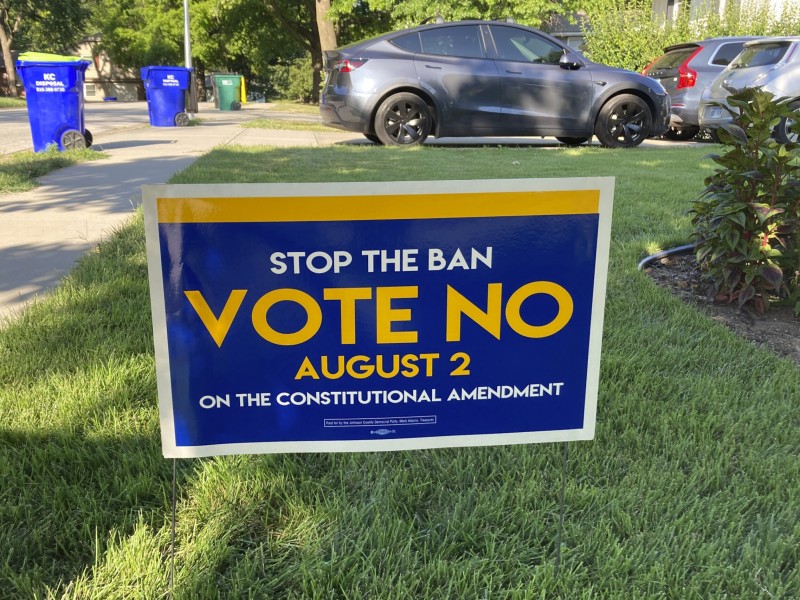
Each state in the U.S. has its own process for putting ballot initiatives in front of citizens to directly vote on policy. Many Republican-controlled state legislatures are working to limit these processes and make it harder for everyday people to have a say in their government.
In general, ballot measures are a way for individuals in the community to directly influence how their government works, instead of through their elected representatives. Ballot initiatives can appear in front of voters in each state, but how they get there varies, according to the Ballot Initiative Strategy Center (BISC). Many southern and northeast states only allow ballot initiatives to be introduced by referrals from the state legislature, while others allow non-legislators to introduce ballot measures through a citizen led process, usually by gathering a certain number of signatures from registered voters.
In recent years, the ballot initiative process has seen many traditional progressive policy ideas pass, even in red or purple states. According to the Fairness Project, a nonprofit organization that helps support progressive ballot measures, dozens of initiatives have passed with bipartisan support in recent years.
Notable policies passed through the ballot measure process:
Healthcare/Medicaid expansion: Maine (2017), Idaho, Utah, Nebraska (2018), Missouri (2020), South Dakota (2022)
Increase in minimum wage: California, Colorado, Maine and Washington (2016), Arkansas, Massachusetts and Missouri (2018), Florida (2020), Nebraska and Nevada (2022)
Recreational marijuana legalization: Colorado and Washington (2012), Alaska and Oregon (2014), Maine, Massachusetts, California, Nevada (2016), Michigan (2018), Arizona, Montana, New Jersey (2020), Maryland and Missouri (2022)
The passage of these progressive policies has prompted GOP-controlled legislatures to ramp up their efforts against the ballot initiative process by introducing numerous bills to make it harder for referendums to get on the ballot.
“It started in 2016 with minimum wage, then in 2018 and 2020, we started to see a lot of these issues pass at the ballot, and often in most cases requiring folks from all political stripes to pass these measures,” explained BISC’s executive director Chris Melody Fields Figueredo. “And as the people took the power into their own hands to pass these really important laws that would fundamentally give them opportunity — like wages and benefits, or access to health care, or giving people the right to vote — we have seen state legislatures start to limit that.”
According to BISC’s data, six “ballot measure attacks” were slated in the 2022 elections, with most of them being shot down by voters. One notable exception was in Arizona, where a measure to increase the vote requirement from a simple majority to 60% on tax-related issues passed.
After the Supreme Court struck down Roe v. Wade last year, the preservation of abortion rights began to see passage through the ballot initiative process even in traditionally Republican states like Kansas and Kentucky. These victories for abortion rights seemed to have stirred anti-ballot measure efforts, as more than 20 bills to limit direct democracy have already been introduced in state legislatures in 2023, according to Alexis Magnan-Callaway, the Communications and Digital Strategy Director for the Fairness Project.
“Unfortunately, 2023 is poised to be a further acceleration of an already rapidly and dramatically alarming trend that is conservative and generally extremist legislatures trying to make the ballot initiative process harder for regular citizens to use,” Magnan-Callaway explained. “And that’s taken a couple of different forms. It’s usually a death by a thousand cuts approach, that includes several different ways to restrict the process, but most of the attacks we’ve seen fall into two buckets. The first is making it a lot harder to actually qualify something to appear on the ballot.”
There are several ways lawmakers are trying to make the process harder, including everything from geographic requirements and limits on who can collect signatures, to minute details like font size and what the forms can look like.
Magnan-Callaway also said the other main form for restriction is by increasing the votes needed from a simple majority (50%) to a supermajority (60% or more).
“Not only does it make it much harder for voters to pass policy themselves, but the people who want to do this and are pushing these things were themselves happy to take office after being elected by a simple majority and sometimes by a razor-thin margin.”
Although combating these efforts is difficult in states with GOP supermajorities, it is not impossible. Figueredo pointed to Missouri as an example, which has had Republican trifecta for many years and routinely sees bills to limit direct democracy every legislative session.
“It has been the power of community organizations and people lobbying their state legislators to say no that has stopped this from passing over the last couple years,” Figueredo said. “I would say it isn’t necessarily that just because there is a Republican trifecta in a state that we can’t stop this; actually, we can. And that means we’re building coalitions with folks of all walks of life to really hammer home why we need a democracy that’s of, for and by the people.”
There are little to no proposed pieces of legislation introduced by Democratic lawmakers to restrict the ballot measure process.
“This isn’t necessarily happening in a state like Michigan, which recently secured a Democratic trifecta. Really, in these ‘red states’ or ‘conservative states’ we’re seeing these legislatures and these elected officials are out of step and out of touch with their communities on issues like abortion. Right, we know that over 70% of the country supports access in some way to reproductive health.”
Figueredo also said many states that do not have the citizen-led pathway for ballot initiatives are revisiting to possibly revise their stance.
“There are a growing number of states that don’t have the citizen led process that are seeing what’s happening across the country and are wanting to maybe look at the opportunity of adding direct democracy. Last year in 2022, in Wisconsin they introduced a bill in the state legislature to bring the citizen-led process to Wisconsin. There are a number of states this year, like Connecticut, Hawaii, New Jersey and Texas where those bills have been introduced.”
Heartland Signal encourages news organizations and content creators to use our content. You're welcome to republish this article for free as long as you follow our republishing guidelines.
Related Articles

GOP Wisconsin legislator Zimmerman missed 225 votes last session, some to attend AI summit
Reps. Tip McGuire and Shannon Zimmerman were both booked on the same Milwaukee AI panel on June 24, 2025. McGuire withdrew so he could finish voting on the Assembly floor. Zimmerman made the panel, and votes kept being recorded in his name after he left his seat.
Ohio’s Ramaswamy and McColley have long backed near-total abortion bans
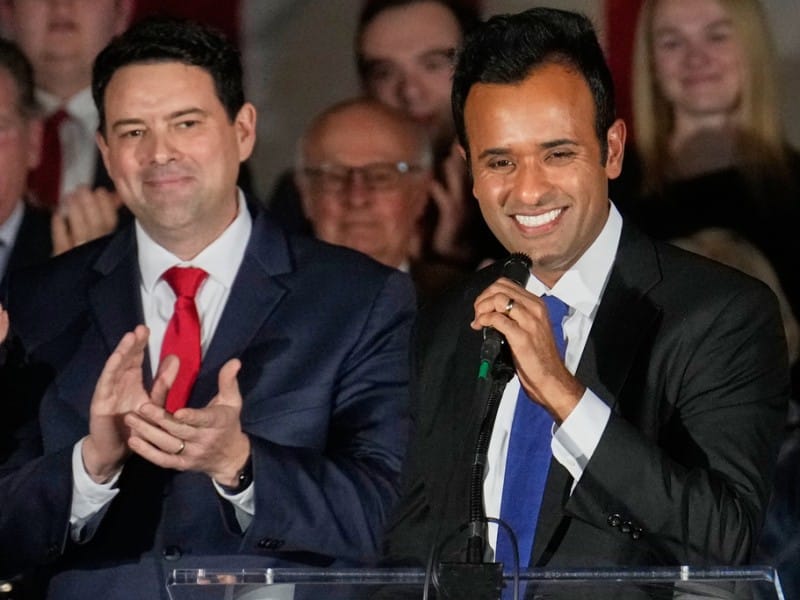
Even after Ohio voters overwhelmingly passed a 2023 constitutional amendment protecting abortion rights, GOP gubernatorial nominee Vivek Ramaswamy and state Senate President Rob McColley remain committed anti-abortion advocates. Audio from a recent rally shows McColley framing the constitutional defeat not as a setback, but as a shift in strategy.
Ryan Mackenzie’s stance on data centers collides with his policy record
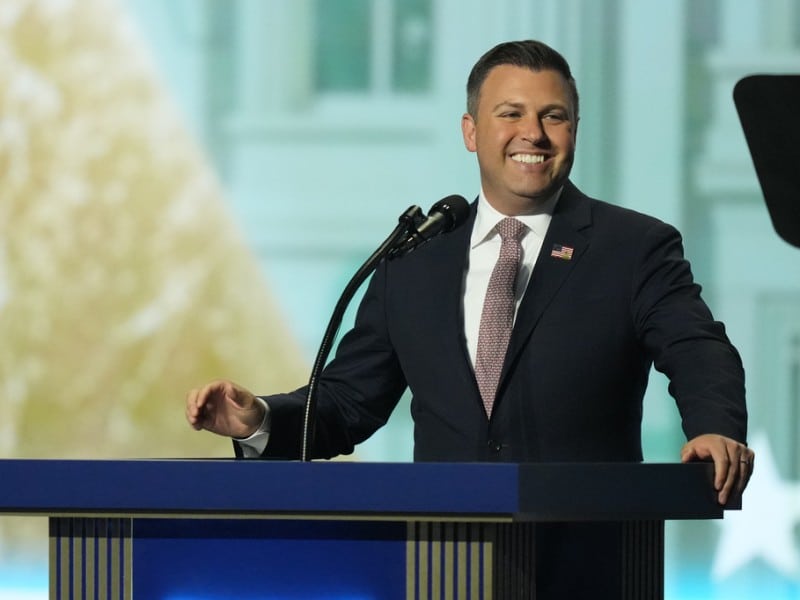
Rep. Ryan Mackenzie says data centers should pay their fair share. His record includes a 2021 tax exemption vote and support for limits on local oversight.