
Barnes to Tiffany: Do you represent Packer fans or out-of-state billionaires?
The Green Bay Packers’ survival in the NFL’s smallest market is partially a product of federal law — a legal shield that Wisconsin Democratic gubernatorial candidate Mandela Barnes claims is now under threat from Congress and his potential opponent this November, U.S. Rep. Tom Tiffany (R-WI).
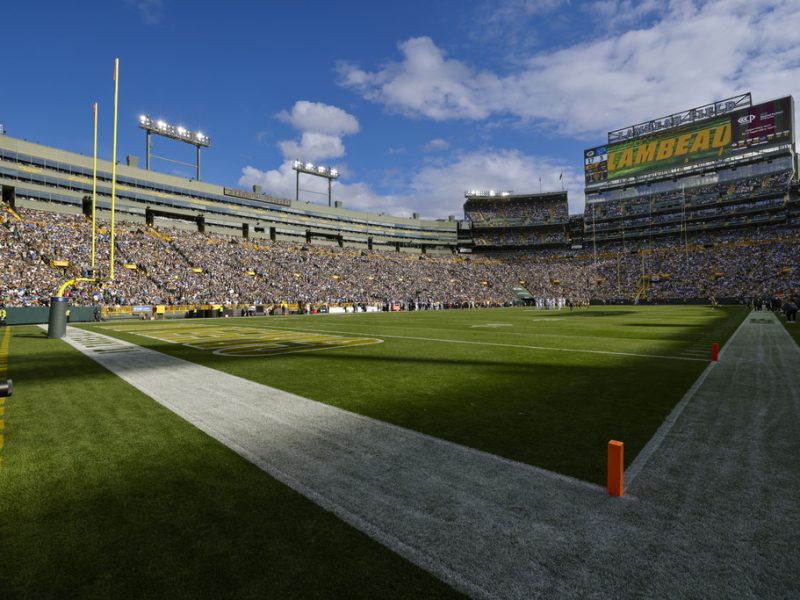
The Green Bay Packers’ survival in the NFL’s smallest market is partially a product of federal law — a legal shield that Wisconsin Democratic gubernatorial candidate Mandela Barnes claims is now under threat from Congress and his potential opponent this November, U.S. Rep. Tom Tiffany (R-WI).
The law under consideration is the 1961 Sports Broadcasting Act, or SBA, which ensures that all 32 NFL teams equally share revenue from national sources, mostly broadcast deals. The Packers sent a letter to Wisconsin’s congressional delegation last month sounding the alarm on how potential changes to the SBA, which are being considered by the House Judiciary Committee and the Subcommittee on the Administrative State, Regulatory Reform and Antitrust, could threaten the team’s future.
“Put simply, any disruption to the current SBA model eliminating our ability to negotiate as the NFL writ large, would pose an existential threat to the Green Bay Packers and their existence in Green Bay as we know it,” said Packers director of public affairs Aaron Popkey in the letter.
Last year, $432.6 million of the Packers’ $719.1 million in total revenue came from national sources. If the SBA is fully repealed without safeguards, the team contends that major markets will benefit while they would struggle to compete financially. Green Bay is the smallest market in the NFL, with roughly 476,000 people in the media market. The Packers are one of the few teams that do not have a billionaire owner, because the team is publicly owned.
Barnes attacks Tiffany
Barnes, who served as Wisconsin’s lieutenant governor from 2019-23, criticized Tiffany for not taking a stance on SBA changes in a statement to Heartland Signal. He says the Wisconsin congressman should have spoken out by now since he’s on the House Judiciary Committee, which is overseeing the issue.
“Tom Tiffany is working on the very committee that could kill the Green Bay Packers — and he chooses to say nothing,” Barnes said. “He and his MAGA allies are working to gut the very law that keeps small market teams like the Packers in cities like Green Bay. Even though the Packers themselves have called on him for help — he has stayed silent.”
In response, Tiffany’s communications director Caroline Briscoe said she doesn’t think Barnes “has any idea what he is talking about” and that the congressman is meeting with the Packers this week. She also said Tiffany has not spoken up yet because the relevant commissioners have not testified in front of the full committee yet.
“The Judiciary Subcommittee on the Administrative State, Regulatory Reform, and Antitrust is leading this matter, and Rep. Tiffany does not serve on that subcommittee,” Briscoe said. “The commissioners have not officially briefed or appeared before the full House Judiciary Committee. Tom’s goal is to keep the Packers in Green Bay and lower the cost for Wisconsinites trying to watch Packer games.”
Typically, a member of a full congressional committee would not be briefed on a topic until it clears the more specific subcommittee, according to the Congressional Research Service.
Barnes also accused Tiffany of prioritizing billionaire NFL donors.
“Tom, Packer fans want one answer: whose side are you on? Ours — or your billionaire NFL donors who’d love nothing more than to move our team?” Barnes asked.
During the 2024 election cycle, NFL owners contributed roughly $28 million to political candidates, PACs and causes, with $23.3 million of it going to Republicans.
According to OpenSecrets, the NFL’s Gridiron PAC donated $1.9 million to Democrats and $1.7 million to Republicans from 2010-24. The league also spent a record $1.97 million on lobbying in 2025.
Republicans take aim at SBA
The SBA also protects sports leagues from antitrust laws, something lawmakers have expressed the willingness to change. In a press release from last August, the Judiciary Committee said, “Most of the distribution agreements that a sports league enters into are subject to antitrust challenges, while a narrow subset are not, creating legal uncertainty, distorting the market, and effectively expanding the blind spot for potential antitrust violations.”
The release also said that the SBA may have made sense in the 1960’s but that it no longer does amid the “massive changes in the video competition marketplace.”
In a statement to Fox 11, U.S. Rep. Scott Fitzgerald (R-WI), who chairs the subcommittee, also said he is committed to ensuring Wisconsin fans have access to their teams without paying for multiple subscriptions.
“The Judiciary Committee is examining how the Sports Broadcasting Act of 1961 affects fan viewership options, particularly as college NIL issues continue to evolve,” Fitzgerald said. “I am committed to ensuring Wisconsin sports fans have access to their teams’ games without having to pay for multiple cable and streaming packages.”
The Federal Communications Commission (FCC) and lawmakers on both sides of the aisle have also expressed concerns over high sports viewing costs and the SBA still allowing blackout restrictions. On Wednesday, Sen. Tammy Baldwin (D-WI) announced her intention to introduce the For the Fans Act, which she says would remove blackouts, lower costs and make local games easier to view.
“It is leveling the playing field for fans,” Baldwin told The Athletic’s Andrew Marchand. “Sports leagues and teams of all sizes will continue to be able to make money from advertising and media rights. We just want to have some basic ground rules to bring down costs for fans.”
Heartland Signal encourages news organizations and content creators to use our content. You're welcome to republish this article for free as long as you follow our republishing guidelines.
Related Articles
Bill to end Pennsylvania’s closed primary elections passes state House
A bill to allow independent and third-party voters to cast ballots in Pennsylvania primary elections passed Tuesday in the state House.
Minnesota Truth Council concludes public testimony on Operation Metro Surge
A council tasked with documenting the harms of — and resistance to — the federal government’s immigration crackdown held its final public meeting Tuesday in Rochester.
Missouri education board declines to seek $300 million increase in school aid
After a stalemate, the board voted to keep its foundation formula request flat despite rising costs under state law.