
OPINION: The end of the independent editorial board
Zach Shaw writes, “The recent decisions by prominent newspapers like the Times and the Post — mainly from their owners — signal a broader trend of retreating from accountability.”
Earlier this month, turmoil erupted at the Los Angeles Times as the paper’s owner blocked the editorial board from coming out with a planned endorsement of Kamala Harris. The decision prompted high-profile defections and called into question the editorial direction of one of the nation’s largest papers. Yet another heavily influential paper of record, the Washington Post, announced last Friday morning that they’ll no longer endorse candidates, breaking a 48-year standard.
The decisions by both papers to muzzle their editorial boards reeks of ownership interference. Semafor reported that executive editor Terry Tang told editorial board staff at the Times earlier this month that the paper would not be endorsing a candidate in the presidential election this cycle. The decision came from the paper’s owner Dr. Patrick Soon-Shiong, a doctor who made his fortune in the health care industry. This is not the first time Soon-Shiong has interfered in the functionality of his newsroom; in 2018, he barred the paper from coming out with an endorsement of Elizabeth Warren during the Democratic primary.
In Washington, the story runs deeper. A few years back, Amazon filed suit against the Department of Defense alleging that then-President Donald Trump had encouraged the government to scrap a $10 billion contract. Sources close to the suit believed the administration took the action in response to Post coverage of Trump. Amazon and the Washington Post are both owned by Jeff Bezos, long seen as a thorn in Trump’s side.
Will Lewis, the current CEO of the Post who was appointed by Bezos, has drastically altered the newsroom. Lewis is no stranger to controversy, as he was linked to the infamous British tabloid phone hacking scandal of the 2010s. As The New York Times pointed out in June, the sudden rise in British journalists helming major U.S. outlets has raised questions, notably, surrounding ethics.
In an op-ed posted on Friday morning, Lewis said the paper would be returning to its roots of not endorsing candidates, citing a need for “nonpartisan news for all Americans.” It’s been widely reported that as of Friday afternoon, Lewis and Bezos personally ordered the editorial board’s endorsement of Harris that was approved by editor David Shipley to be killed.
Which begs the question: Why now?
Historically, editorial boards have served as the moral compass of newspapers, offering reasoned perspectives and endorsements that reflect the collective judgment of experienced journalists. These endorsements are not merely opinions; they carry the weight of credibility built over decades. They guide readers through the often murky waters of political discourse, providing clarity on which candidates align with the values and interests of the public. When a respected editorial board endorses a candidate, it signals to the community that the choice has undergone thorough scrutiny, inviting readers to engage more deeply with the political process.
Endorsements have long been influential because they encapsulate the spirit of journalistic integrity. They act as a signal of trust, encouraging voters to align their decisions with informed, thoughtful analysis. In an era marked by sensationalism and misinformation, editorial endorsements represent a commitment to the truth.
Trust in the media is at record lows. According to recent studies, a significant portion of the American public views news organizations as biased, misleading or unreliable. This skepticism has fostered a dangerous environment in which misinformation thrives, making it even more critical for reputable institutions to stand firm in their values. When respected publications abandon endorsements, they forfeit an essential tool for establishing credibility and guiding public discourse.
In the face of this national crisis of conscience, editorial boards must reaffirm their commitment to providing independent, unbiased endorsements that reflect their thorough investigative efforts. These endorsements not only inform readers but also hold candidates accountable, encouraging them to engage with pressing issues in a meaningful way. When editorial boards retreat from this responsibility, they undermine their own authority and contribute to the perception of an already fractured media landscape.
The recent decisions by prominent newspapers like the Times and the Post — mainly from their owners — signal a broader trend of retreating from accountability. Rather than sidestepping controversy, editorial boards should embrace it. Endorsing candidates is not just about endorsing individuals: It’s about endorsing the principles that govern our democracy. It’s about demonstrating to the public that journalism is not just a business but a vital institution in the health of a democracy.
Readers rely on these publications to provide a voice that cuts through the noise of partisan politics. If editorial boards continue to shy away from making clear endorsements, they risk alienating the very readers they seek to serve.
Heartland Signal encourages news organizations and content creators to use our content. You're welcome to republish this article for free as long as you follow our republishing guidelines.
Related Articles
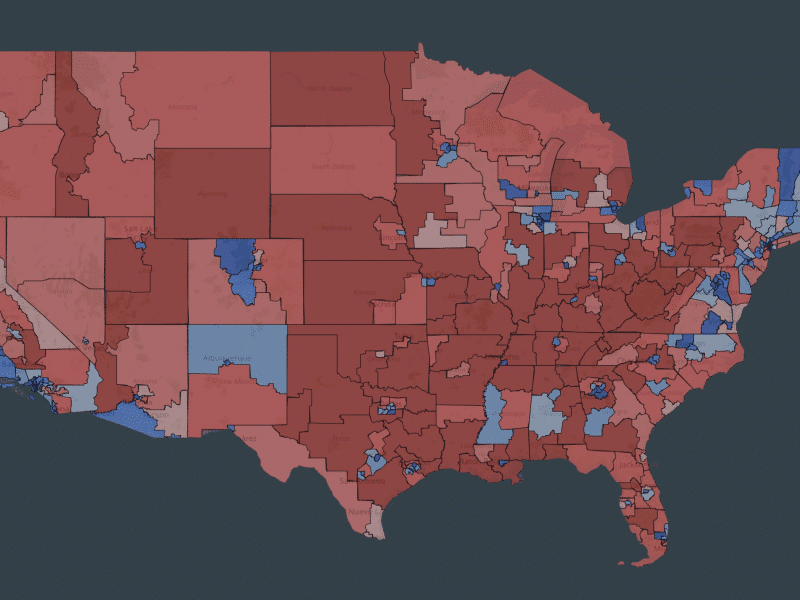
What Congress would look like without gerrymandering
A 435-district map drawn without partisan favoritism shows what fair districts would look like nationwide — more representative, more competitive, and close to guaranteeing that whichever party wins the popular vote wins the House.

UAW endorsement of Benson, El-Sayed shakes up gubernatorial, U.S. Senate races in final stretch
After a year’s worth of bolstering their labor support in their respective races for Michigan’s governor and the U.S. Senate, the powerful United Auto Workers organization sent a strong message when it on Friday endorsed Secretary of State Jocelyn Benson and former health official Dr. Abdul El-Sayed.

Crawford County Supervisor Dave Muhlbauer picked as Rob Sand’s gubernatorial running mate
Crawford County Supervisor Dave Muhlbauer will be Iowa Auditor Rob Sand’s running mate on the Democratic ticket in the 2026 Iowa gubernatorial race, Sand’s campaign announced Monday.