
Mariannette Miller-Meeks defends NIH cuts, which could slash University of Iowa research she previously supported
U.S. Rep. Mariannette Miller-Meeks (R-IA) has seemingly gone back on her previous support for university research funding in her state that is being threatened by the Elon Musk-led Department of Government Efficiency (DOGE).
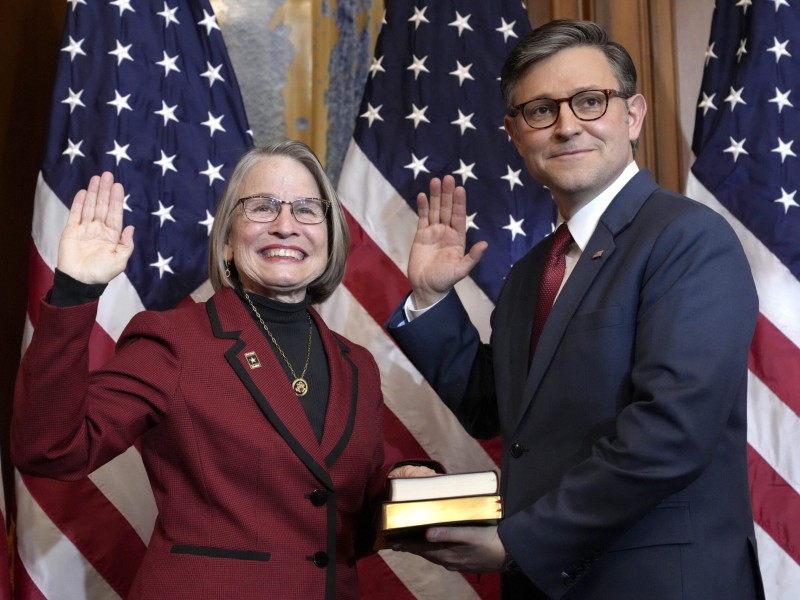
U.S. Rep. Mariannette Miller-Meeks (R-IA) has seemingly gone back on her previous support for university research funding in her state that is being threatened by the Elon Musk-led Department of Government Efficiency (DOGE).
Miller-Meeks joined the new government efficiency caucus last month, claiming she was thrilled to tackle ongoing waste and fraud.
“Vivek Ramaswamy and Elon Musk are successful businessmen who will bring a fresh set of eyes to make government more efficient and effective. I look forward to working with them,” Miller-Meeks reportedly said.
Earlier this month, the DOGE and President Donald Trump’s administration announced a $4 billion cut to funding provided through the National Institute of Health (NIH), which reportedly equates to 11% of the department’s 2023 budget. If enacted, these cuts would slash funding for vital medical research, including at the University of Iowa (UI), which is located in Miller-Meeks’ district.
According to the U.S. Department of Health and Human Services, the University of Iowa received over $190 million of NIH funding last year. Although the cuts have been temporarily paused by a federal judge, UI could lose an estimated $33 million in funding. UI health care reportedly has over 1,000 active clinical research and trials studies that could be impacted, including 459 focused on cancer research. The NIH also announced a 15% cap on existing grants, prompting UI to pause new grant applications and stop hiring new research assistants.
Miller-Meeks did not immediately respond to a request to comment for this article, but she has dismissed concerns about the NIH cuts on X, doubling down on the claim that the Trump administration and Musk are simply eliminating waste.
The same people who are furious about @POTUS working to eliminate waste, fraud, and abuse in our government are the same ones who had no problem hiring 87,000 IRS agents to monitor your every transaction.
— Rep. Mariannette Miller-Meeks, M.D. (@RepMMM) February 10, 2025
Last March, Miller-Meeks visited UI’s Department of Microbiology, iterating the “importance of continued NIH funding for biomedical research.”
It was a pleasure to host Dr. Emma Hornick from @uiowa’s Dept. of Microbiology and Immunology to discuss the importance of continued NIH funding for biomedical research.
It’s always a great day when “Hawks” are on the Hill! pic.twitter.com/gApCdCozjA
— Rep. Mariannette Miller-Meeks, M.D. (@RepMMM) March 20, 2024
Last week, Miller-Meeks said on the House floor that outrage over Musk’s role in the government was rooted in fear about exposing corruption.
The outrage over @ElonMusk’s role in government isn’t about accountability but fear of exposing corruption. Where was the outrage when unelected Fauci imposed mandates on over 300 million Americans? @POTUS promised to rid the government of waste, fraud, and abuse, and he’s… pic.twitter.com/2e1kvETeub
— Rep. Mariannette Miller-Meeks, M.D. (@RepMMM) February 12, 2025
Miller-Meeks represents one of the most competitive districts in Congress, and she won reelection by less than 1,000 votes in November after a recount. She was elected to her first term in Congress in the 2020 election, where she defeated her Democratic opponent by six votes.
Heartland Signal encourages news organizations and content creators to use our content. You're welcome to republish this article for free as long as you follow our republishing guidelines.
Related Articles

Data centers investments, personal finances take center stage at Michigan governor debate
Michigan gubernatorial candidates Jocelyn Benson and John James faced off over rising living costs, government reform and data center developments. While both candidates agreed on a couple issues, they clashed over transparency and who is best equipped to lead the state.

Access to abortion care is improving in Ohio, but abortion opponents continue efforts against it
As studies show improvements in access to abortion care in Ohio, abortion opponents both in and outside of the state legislature are attempting to bring more regulations against it.

Bill to end Pennsylvania’s closed primary elections passes state House
A bill to allow independent and third-party voters to cast ballots in Pennsylvania primary elections passed Tuesday in the state House.