Chedrick Greene wins Michigan special election, Dems retain control of state Senate
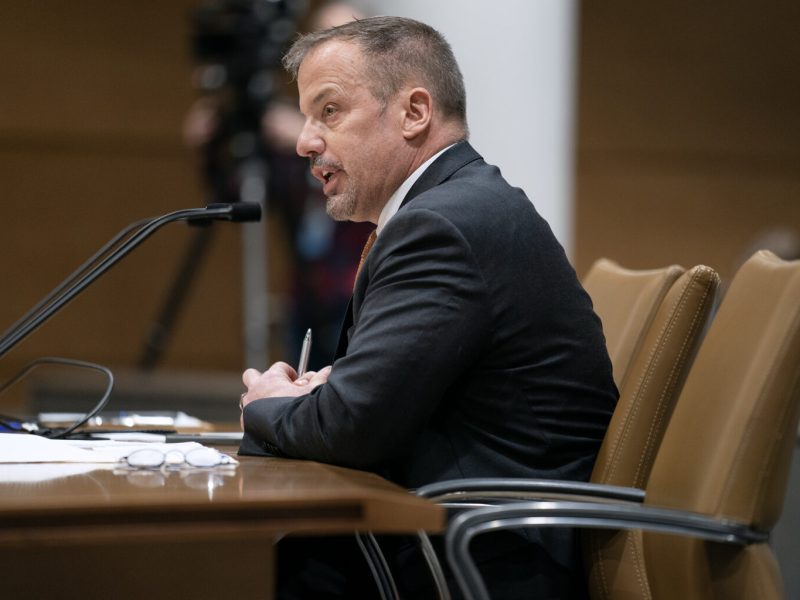
Chedrick Greene’s victory in Tuesday’s special election ensures Michigan Democrats will maintain their narrow grip on the state Senate, fending off a Republican attempt to deadlock the chamber through 2026.
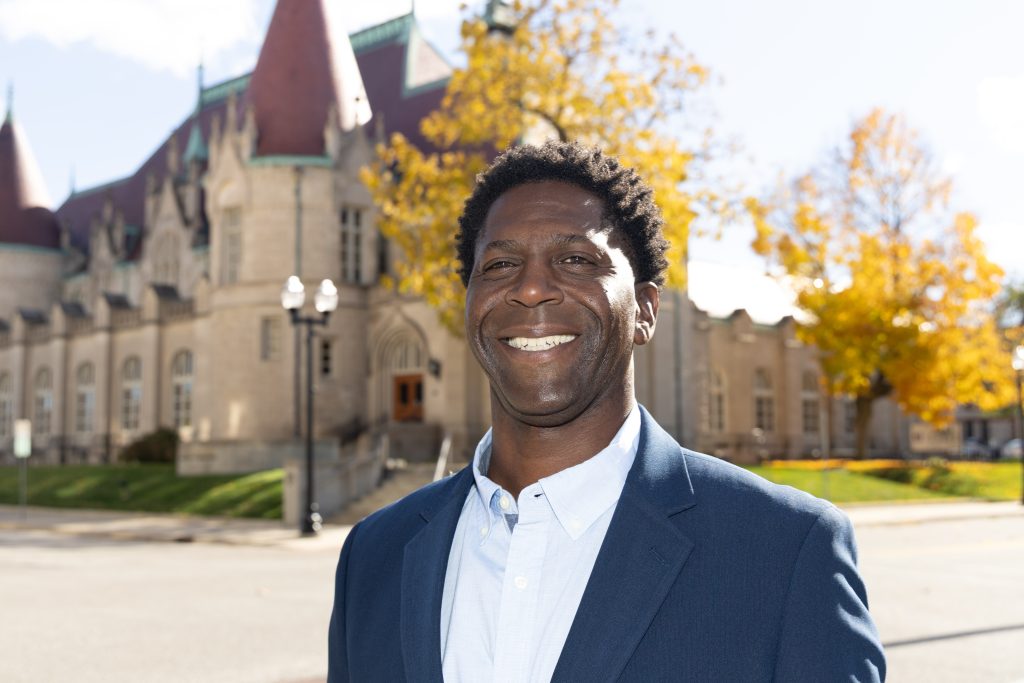
Chedrick Greene’s victory in Tuesday’s special election ensures Michigan Democrats will maintain their narrow grip on the state Senate, fending off a Republican attempt to deadlock the chamber through 2026.
Greene, a former fire captain from Saginaw, Mich., defeated Republican Jason Tunney, an attorney also from Saginaw, to win Michigan’s 35th Senate District seat. With 55.3% of the ballots counted, Greene led with 60% of the vote while Tunney had 38.3%. Tunney conceded the election around 10:21 p.m. EST.
The stakes for Michigan
With Greene’s win, Senate Democrats secured a functional 20-18 majority in the state Senate, which gives them the power to pass bills in the chamber without Republican support.
If Tunney won, the state Senate would be deadlocked 19-19, giving neither party the 20-vote majority needed to pass a bill in the chamber. Although Lt. Gov. Garlin Gilchrist (D) has the power to break a potential tie, Republicans would have been able to effectively block legislation by having one senator miss a floor session to prevent a tie and deny a Democrat voting majority.
Bipartisan work will still be required to send bills to Gov. Gretchen Whitmer (D) since Republicans control the state House of Representatives with a 58-52 majority.
Democrats are hoping Greene’s win in a tossup district is a sign of things to come in 2026, as they are looking to bounce back from President Donald Trump’s 80,000-vote victory in Michigan during the 2024 presidential election. Kamala Harris narrowly carried the district with 49.7% to Trump’s 48.9%.
This year, Democrats are looking to hold the state Senate and governorship and win back the state House to secure the trifecta they had from 2023-25. The party is also attempting to hold the U.S. Senate seat currently held by Sen. Gary Peters (D-MI), who is not seeking a third term this year.
Greene’s background
Greene, 50, is a political newcomer who is a Marine Corps Reserve veteran and fire captain. He campaigned on expanding the state’s Working Families tax credit and lowering housing, education and health care costs.
Tunney ran on Republican policies like privatizing education through school choice policies, cutting income taxes and passing right-to-work laws. Labor unions, many of whom supported Greene in the race, argue that right-to-work laws shift power towards corporations at the expense of working families.
Greene will replace former state Sen. and now U.S. Rep. Kristen McDonald Rivet (D-MI), who resigned from her state Senate seat to replace retiring Democrat Dan Kildee in Michigan’s 8th Congressional District. He will serve out the final months of Rivet’s four-year term, and is likely to run for a full term in the Aug. 6 primary and Nov. 3 general election.
Whitmer’s maneuvering
Republicans criticized Whitmer for failing to schedule the 35th District special election until Aug. 29 of last year, more than eight months after Rivet resigned on Jan. 3, 2025. The special election is being held 487 days after the vacancy, leaving 268,000 constituents without representation in the state Senate for more than 16 months.
“It seems like Gov. Whitmer is very intent on doing the most political thing, because it seems like they’re afraid they’re going to lose the seat to Republicans,” Senate Minority Leader Aric Nesbitt (R-Porter Township) said last year. “It’s blatantly political, partisan politics that they’re playing.”
Eighteen days before Whitmer announced the special election, a group of constituents sued the governor and argued her actions undermined public trust. Whitmer’s lawyers argued that the courts could not compel her to schedule a special election.
“The governor enjoys discretion to choose an election date between the creation of the vacancy and the next general election,” her lawyers wrote.
The lawsuit became moot when Whitmer finally announced the special election.
Whitmer also vetoed a bill in 2022 that would have required the governor to call a special session within 30 days of a vacancy. In her veto message, Whitmer said the bill “places restrictions on the executive branch’s exercise of its constitutional authority” and that she would not tie the hands of future governors.
Related Articles

Wisconsin GOP Rep. Dean Kaufert to retire following Heartland Signal inquiry into sexual harassment investigation
Wisconsin state Rep. Dean Kaufert (R-Neenah) announced his retirement three days after Heartland Signal asked his office about an investigation into inappropriate sexual comments he allegedly made about underage girls in 2019.