
Michigan utility donation ban clears corporate-funded signature challenge
Board of State Canvassers meets July 24 to decide whether the measure, which would bar utilities from donating to state candidates, reaches November’s ballot.
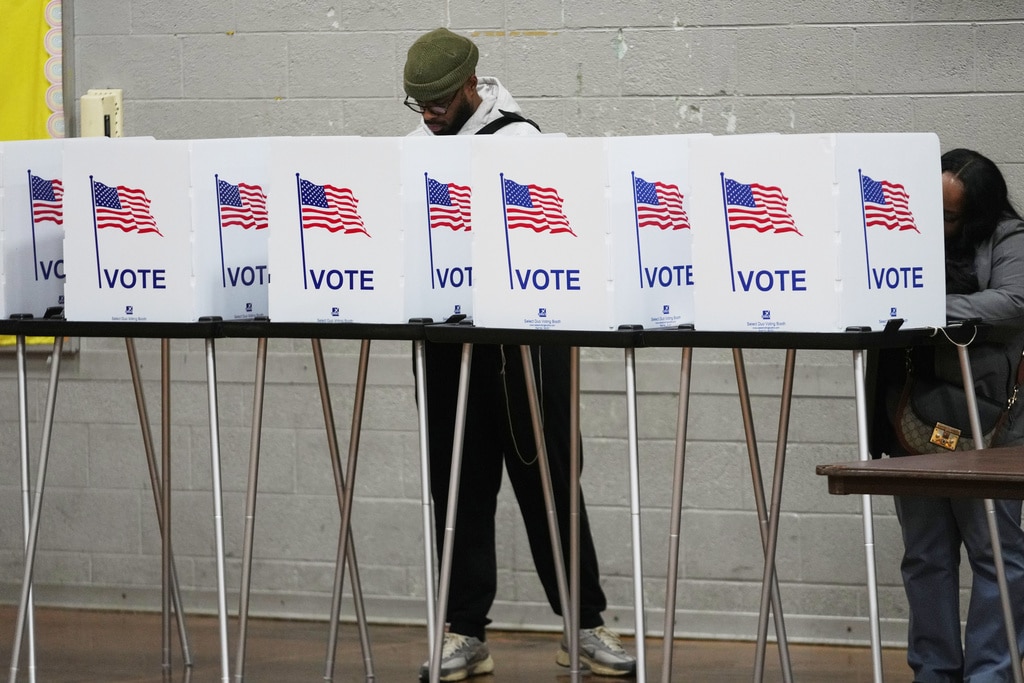
A grassroots effort in Michigan is working to stop utility companies from buying government influence. If certified, the landmark ballot initiative would ban Michigan’s powerful utility companies from donating directly or indirectly to state candidates and political committees.
Michigan’s Board of State Canvassers will discuss the campaign finance ballot initiative on July 24. The meeting will determine whether Michiganders for Money out of Politics (MMOP) collected enough valid signatures to certify the initiative for the Nov. 3 ballot.
“This systemic corruption that we’re fighting is a bipartisan problem that today we meet with a nonpartisan solution, and the signatures that we turn in today represent the will of 562,068 Michigan voters,” MMOP co-chair Sean McBrearty said in a press conference before submitting the signatures.
The meeting will also discuss an effort to kill the initiative spearheaded by Protect MI Free Speech (PMFS).
Several corporations have given five-figure donations to PMFS, including:
- MITA, Inc – $25,000
- Michigan Citizens for Better Health – $20,000
- Comcast Financial Agency – $15,000
- Blue Cross Blue Shield of Michigan – $15,000
- CMS Energy Corp (Consumers Energy’s parent company) – $15,000
- Delta Dental of Michigan – $15,000
- Michigan Chamber of Commerce – $14,000
- Michigan Manufacturers Association – $10,000
- Waste Management Employees Better Government Fund of Michigan – $5,000
The group argued that “sweeping irregularities” and widespread forgeries should invalidate the initiative.
“Before the free speech rights of everyday Michigan families are wiped out by this trojan horse, dark money-funded initiative that will put out-of-state billionaires in control of our state politics, the Board of Canvassers must conduct a thorough investigation into the apparent submission of invalid signatures, including signatures from dead people,” Protect MI Free Speech spokesperson John Sellek said in a news release.
However, a staff report released by the Board of State Canvassers determined that there are enough valid signatures to certify the effort.
The corporate-backed challenge
To verify ballot measures, state election officials draw a random sample of 1,000 signatures. Under the board’s statistical formula, at least 636 signatures in that sample must be valid for the proposal to qualify for the ballot.
In their July 9 challenge, PMFS asked the board to disqualify at least 432 signatures. While the board invalidated an additional 142 signatures after examining the challenge, they determined that there are enough valid signatures for certification.
“Based on the results of this random sample, it is estimated that the petition contains 368,762 valid signatures (at a confidence level of 90% and margin of error of ±2.5%), which is 11,804 signatures more than the minimum threshold for certification,” the report says. “Staff recommendation: Determine petition sufficient.”
The report acknowledges that PMFS did not have access to all 1,000 signatures when they issued their challenge on July 9.
“At that time, the physical sample sheets were not yet available because staff had not yet manually retrieved them,” the board clarified. “Manually retrieving the physical sample sheets is a time-intensive process that takes significantly longer than electronically drawing the sample from the scanned sheets. Staff began retrieving the physical sheets and providing PMFS access to the physical sheets, on a rolling basis as they became available.”
Although PMFS was only able to physically inspect a fraction of the random sample, they said their sweeping fraud allegations should apply to more than the 140 signatures they initially viewed.
Professional canvassing called forgery
The board’s report also rejected PMFS’s sweeping fraud arguments, including accusations of “round-robin” canvassing. “Round-robin” is an illegal tactic where circulators pass petition sheets among themselves to fill in fake signatures and addresses.
“PMFS argues that handwriting on these sheets involves ‘Varying numeral styles on the same petition line’ and this suggests the registered voter did not write the information in their own hand. However, it is not impermissible for a circulator or other person to fill in required information, such as the date, on the petition sheet,” the report contends.
MMOP also refuted these claims, saying that the uniform handwriting was the result of professional door-to-door canvassing by the nonprofit Clean Water Action (CWA).
To prove the validity of their work, MMOP organizers launched a “re-canvass” over a 48-hour period. They were able to track down 14 of the signees the opposition claimed were fake. Each reviewed the sheet and signed a sworn legal affidavit confirming they signed the petition with their own hands.
The ‘dead voters’ who are alive
PMFS also implied the signatures contained widespread fraud because the names of 10 deceased voters were present. The Board of Canvassers rejected these claims because they did not pertain to the random sample of signatures.
“As PMFS acknowledged, none of the 10 signatures challenged for this reason appear in the sample of 1,000 signatures; rather, they appear in the universe of 561,282 signatures,” the report says. “Under policies approved by the Board, only signatures in the sample are considered when determining sufficiency.”
MMOP’s rebuttal highlights that many Michigan voters share identical names.
“When a petition contains the name of a person who is deceased, the explanation most often is that the person who signed it is someone with the same name who is very much alive,” the MMOP legal team wrote. “The other information on the petition sheet — such as street address, city or township, and zip code — can help to identify whether the person who signed the sheet is a living person who simply shares a name with someone who died.”
In one instance, PMFS claimed that a Detroit resident’s signature is invalid because he is deceased. The rebuttal debunks this claim, pointing out that the late Richard Jackson Moncrease Sr. had passed away, but his son, Richard Jackson Moncrease Jr. — who is alive and registered to vote at the same address — was the one who actually signed the petition. Other disputed names followed the same pattern of living juniors, seniors and relatives sharing family names.
What the initiative would actually do
If the initiative becomes law, utility companies who violate the political contribution ban would face a fine up to 10 times the amount of the unlawful contribution they gave. Government contractors who violate the law could have their contracts canceled by the state or agency. They would also be unable to receive a new contract for 12 months after the election they contributed to.
In 2008, the Michigan Legislature gave 90% of the state’s electricity market to two companies, DTE Energy and Consumers Energy. The legalized monopoly inflated both companies’ influence, allowing them to routinely increase utility rates and annually give hundreds of thousands in campaign contributions to members of both political parties. In 2025 alone, the two companies gave $475,000 to the vast majority of Michigan state legislators. The companies faced fierce backlash regarding reliability when thousands of Michiganders went without power for up to five days earlier this month.
The new initiative would also expand donor disclosure requirements. Any person or organization that spends $5,000 or more in a calendar year on electioneering communications would need to file a disclosure report with the Secretary of State’s Office or local county clerk. The reports must disclose the name, address, occupation, employer and place of business for each person who contributed more than $100.01 to electioneering communications.
The definition of electioneering communications would also be expanded. Michigan law currently applies to communications that explicitly advocate for the election or defeat of a candidate. The MMOP initiative would expand the definition to cover any broadcast, internet or mass mailing communication that clearly identifies a candidate or ballot question, even if it does not advocate for voting for or against them.
Heartland Signal encourages news organizations and content creators to use our content. You're welcome to republish this article for free as long as you follow our republishing guidelines.
Related Articles
![Michigan gubernatorial candidate Anthony Hudson speaks into a microphone at a city council meeting, wearing a black sweatshirt reading "[illegible] NOT?" and a cap reading "FIX MICHIGAN."](https://d27ejbywo8x2i0.cloudfront.net/wp-content/uploads/2026/09/29164519/jhu-1024x662-1-800x600.png)
Michigan Libertarian Party disavows its own gubernatorial nominee
The Michigan Libertarian Party released a statement Tuesday afternoon disavowing Anthony Hudson, a Genesee County truck driver who is the party’s own gubernatorial candidate.

Minnesota AG candidate’s stock portfolio presents 174 potential conflicts of interest
If Republican Ron Schutz wins the attorney general’s race in November, he will be responsible for enforcing Minnesota’s laws against the country’s biggest and most powerful corporations. His own personal fortune is staked on many of them.

Assembly GOP candidates in competitive seats try to distance themselves from their party
Republicans’ control of the Wisconsin Assembly is up in the air this November, and GOP candidates in competitive districts are taking steps to convince voters to allow them to extend their 16-year streak of leadership, including by distancing themselves from Republican leaders in Washington, D.C. and in Wisconsin.