
Tennessee book bans see ‘Calvin and Hobbes’ and ‘The Magic Tree House’ barred from school libraries
After changes to Tennessee’s book ban law, schools in the state have banned several children’s novels from their libraries to comply with the law.
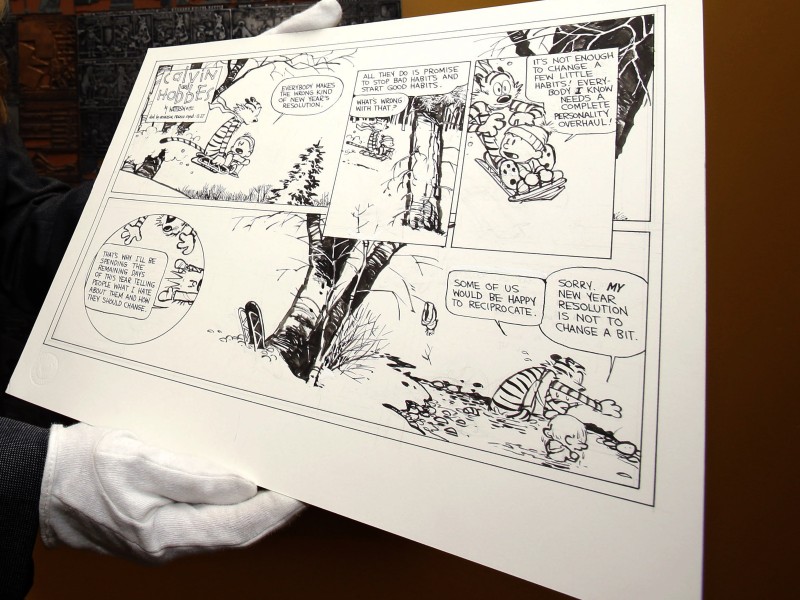
After changes to Tennessee’s book ban law, schools in the state have banned several children’s novels from their libraries to comply with the law.
New additions to the Monroe County school library’s book ban list includes authors Shel Silverstein (“A Light in the Attic”), Bill Watterson (“Calvin and Hobbes”) and Mary Pope Osborne (“The Magic Tree House”). According to PEN America, these authors join a list of over 500 titles purged from Monroe County. Hundreds of other books have been banned in Oak Ridge, Wilson County and Knox County.
The Republican-dominated Tennessee state legislature initially approved Senate Bill 2407, also known as the “Age-Appropriate Materials Act,” in 2022, with Gov. Bill Lee (R) signing it into law shortly thereafter. Republicans argued for each district to define what is age-appropriate material for their community, resulting in book like Harper Lee’s “To Kill a Mockingbird” and “Maus,” a graphic novel about the Holocaust, being removed in several areas of the state.
The law was expanded in 2024 to include books with sexually explicit material and excessive violence to the ban list via House Bill 843. Lawmakers determined that nudity, depictions and descriptions of sexual conduct, sexual excitement, or excessive violence were not age-appropriate for students up to the 12th grade.
Osborne’s “Ancient Greece and the Olympics” companion book for “The Magic Tree House” series was included in the ban because it features a nude Greek statue on the cover. Silverstein’s “A Light in the Attic” features drawings of naked bottoms. The “Calvin and Hobbes” comic strip frequently touched on broad issues like the environment and bullying, but it is unclear why it was included in one of the book bans.
According to a survey conducted by the Tennessee Association of School Libraries, 20% of school districts have experienced a district leader asking someone to remove books without going through the review process. One anonymous person said there are concerns about books being banned without taking their value as a whole into account.
“Librarians and educators are concerned that we will end up pulling a massive amount of books without looking at the books as a whole,” the response says.
“Books will be removed with no valid reasons. Children will be denied materials valuable to their education because some random legislator will get to choose what they are allowed to read,” another response reads.
Heartland Signal encourages news organizations and content creators to use our content. You're welcome to republish this article for free as long as you follow our republishing guidelines.
Related Articles

Milwaukee County Exec. David Crowley drops bid for governor, narrowing Wisconsin Democratic primary field
Milwaukee County Executive David Crowley announced Wednesday that he is dropping his bid to be governor, a decision that narrows the Democratic primary field for the second time in recent weeks.
Questions remain about Mitch McConnell’s health
Kentucky Sen. Mitch McConnell has been hospitalized for 23 days after emergency responders found him unconscious, but his office has still not clarified the reason for his hospitalization. While Republican leadership pushes back on rumors of his decline, the silence from his office leaves crucial questions unanswered.
Wisconsin Supreme Court denies access to voter competency records
In a 5-2 decision, the Wisconsin Supreme Court ruled Tuesday that an activist group does not have the right to obtain the documents that notify election officials when someone is declared incompetent to vote by a circuit court judge.