
Indiana Senators who opposed redistricting wiped out by Trump-backed challengers
The majority of the Indiana state Senators who voted against gerrymandering last year were ousted by Trump-endorsed candidates in their primary elections on Tuesday.
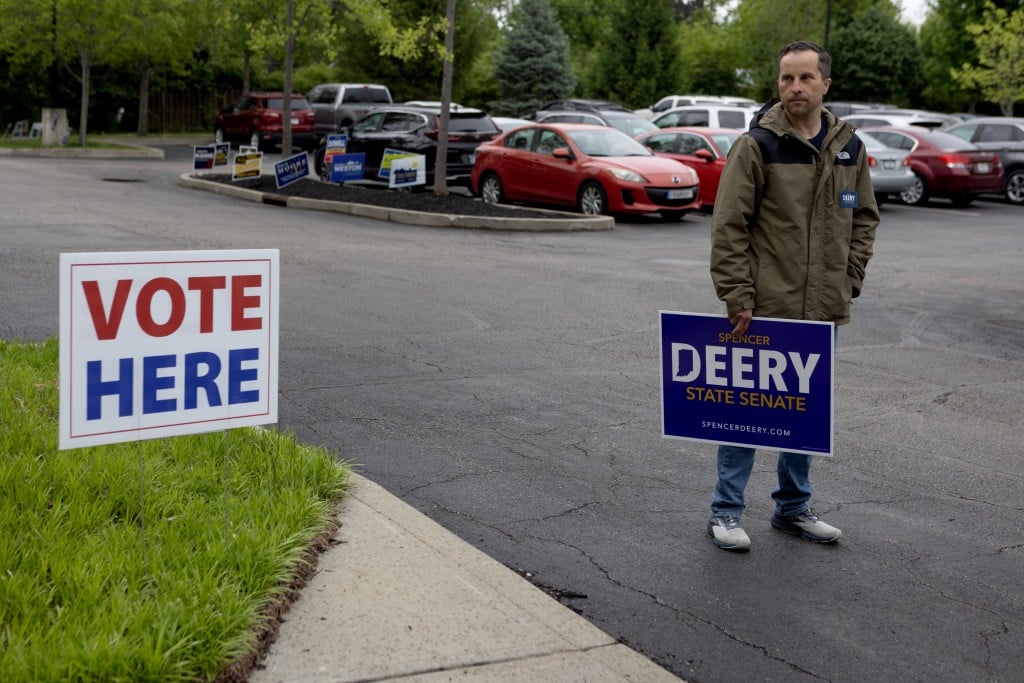
Eight Indiana state Senators who voted against the redistricting plan pushed by the Trump administration were on the ballot in Tuesday’s primary elections, and five of them were unseated by challengers backed by President Donald Trump.
After Republican attempts to gerrymander Indiana even further failed last year, Trump and Gov. Mike Braun (R) vowed to support primary challengers for the Senators on the ballot this year. Although 21 Republicans voted down the new map last December, only eight of them are up for reelection this year.
Trump’s efforts largely succeeded in the Hoosier state. Below are the six senators who were ousted on Tuesday:
Daniel Dernulc (R-Highland) lost to Trevor De Vries
James Buck (R-Kokomo) lost to Tracey Powell
Linda Rogers (R-Granger) lost to Brian Schmutzler
Travis Holdman ((R-Markle) lost to Blake Fiechter
Greg Walker (R-Columbus) lost to Michelle Davis
Trump did not endorse Sen. Rick Niemeyer’s (R-Lowell) opponent even though he voted against redistricting. On Wednesday morning, Decision Desk HQ and several other outlets reported that Niemeyer lost his race to challenger Jay Starkey.
State Sen. Greg Goode (R-Terre Haute) was the only incumbent who voted against redistricting to convincingly win his primary with 53.5% of the vote. Before making his opposition to the gerrymandering plan public, Goode held a town hall in his district where none of the participants who attended supported mid-decade redistricting.
Sen. Spencer Deery’s (R-West Lafayette) race was too close to call as of Wednesday morning, when he was leading by just three votes with 99% of the ballots in.
Braun praised the results in a social media post on Tuesday night.
The incumbents were supported by Senate President Pro Temp Rodric Bray, who led the redistricting opposition last year. After the elections, he said the money spent against the incumbents was a major factor in the election results.
“The amount of money that was spent in Indiana is material, it matters, and that was very, very difficult to overcome,” Bray told the Indiana Capital Chronicle. “We worked really hard. Our candidates worked really hard to get their message out, but the voters spoke, and we’ll deal with that in the coming days and months.”
Total spending in the Indiana Senate primaries exceeded $13 million, which is unusually high for state legislature primaries. Roughly $250,000 was spent on Indiana Senate primaries in 2024 according to AdImpact.
Redistricting is now possible in Indiana
Trump began pressuring Indiana’s GOP leaders to redistrict in July, sending administration officials like Vice President JD Vance to the state to discuss the issue. Even though there was resistance among members of his party, Braun launched a special session in December to gerrymander Indiana’s Congressional maps even more. The new map could have flipped the two seats in the state held by Democrats, and given Republicans the chance to win all of the state’s nine Congressional seats in 2026.
Trump repeatedly bashed the Republican dissenters on social media, calling them RINOs (Republicans in name only) and threatening to primary them if they didn’t support redistricting. Several lawmakers, including Goode, Deery, Dernulc and Niemeyer, faced harassment and threats after Trump’s repeated attacks.
In December, 21 Republican senators voted with the chamber’s Democrats against a bill to redraw Indiana’s Congressional map in a 19-31 vote (26 “yeas” were needed to pass it). Even if Deery wins his race, Braun would likely have enough votes in the state Senate to pass a new map next year since Trump-backed former state Rep. Jeff Ellington won an open seat in Indiana’s 39th Senate district.
Heartland Signal encourages news organizations and content creators to use our content. You're welcome to republish this article for free as long as you follow our republishing guidelines.
Related Articles
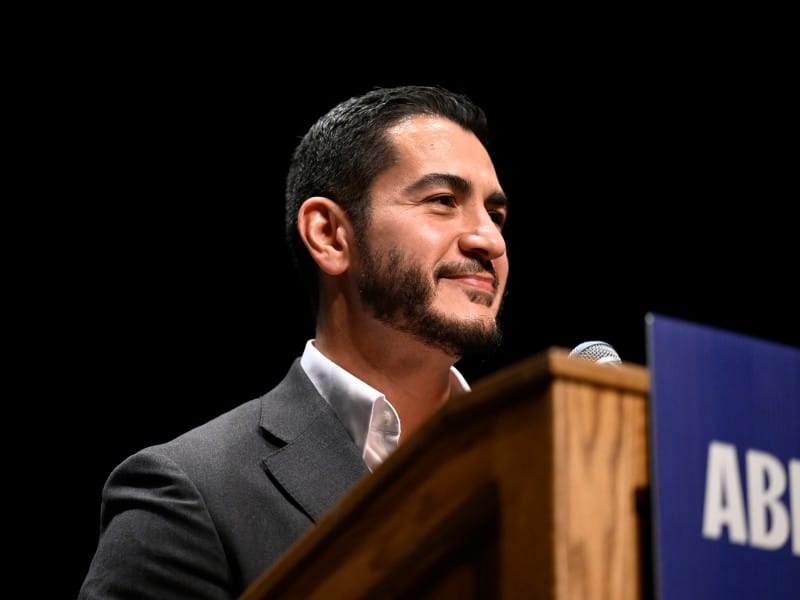
El-Sayed defeats Stevens in Michigan Senate primary, giving progressives massive win
Dr. Abdul El-Sayed secured Michigan’s Democratic U.S. Senate nomination on Tuesday, defeating U.S. Rep. Haley Stevens. El-Sayed will face Republican nominee Mike Rogers in November to succeed retiring Sen. Gary Peters.
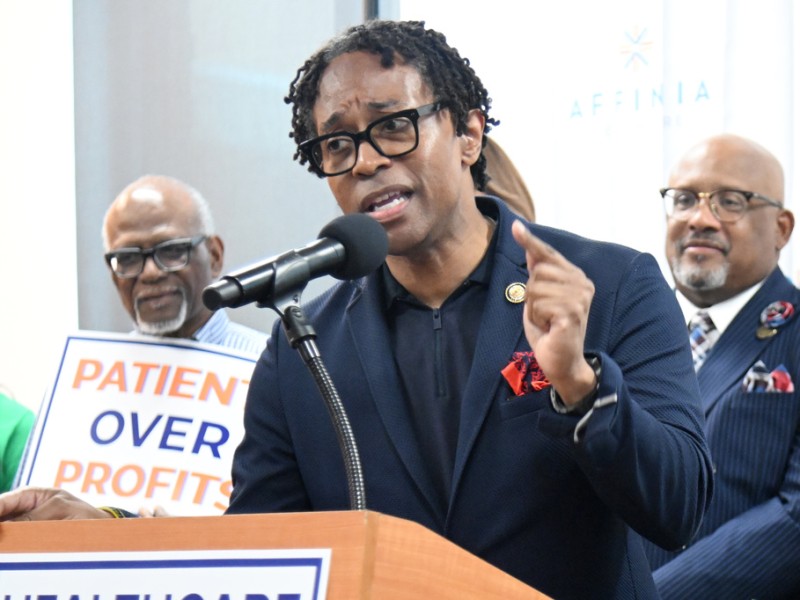
Wesley Bell defeats Cori Bush a second time in brutal, AIPAC-defined Missouri congressional rematch
U.S. Rep. Wesley Bell (D-MO), a moderate, is projected to defeat progressive challenger and former congresswoman Cori Bush in Tuesday’s Missouri 1st Congressional District Democratic primary.
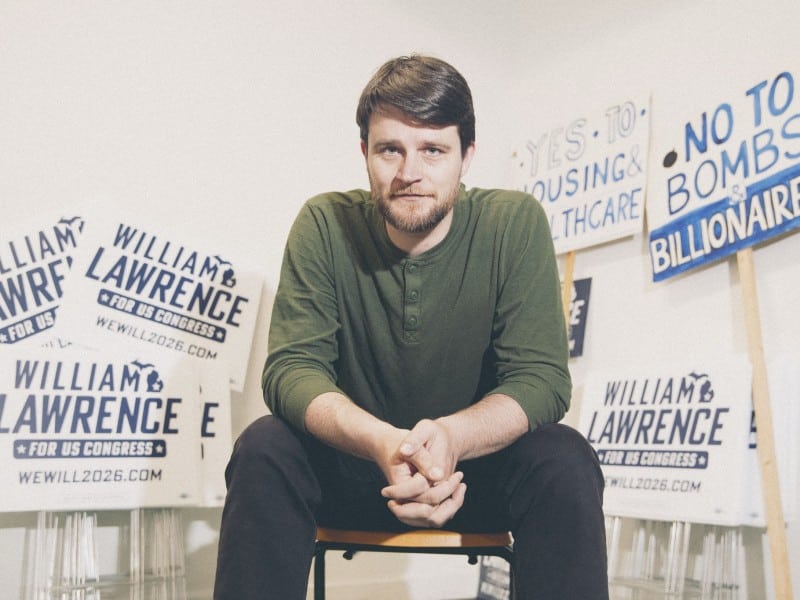
Rep. Tom Barrett will face progressive William Lawrence in Michigan 7th District
Grassroots organizer William Lawrence secured the Democratic nomination in Michigan’s 7th Congressional District on Tuesday, setting up a tossup general election battle against incumbent Republican Rep. Tom Barrett.