
LIVE 2024 Election Results
Check here for live election results as they come in. All times are in CST.
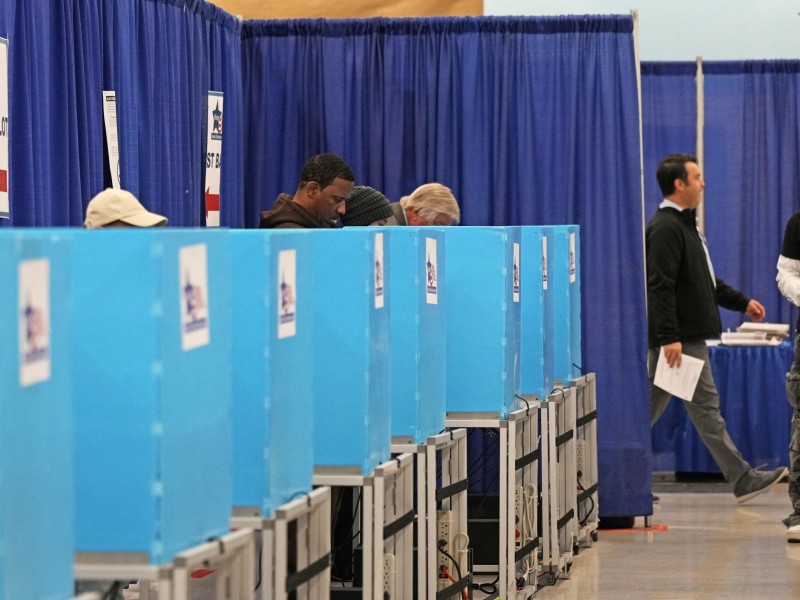
Voters cast ballots at the Chicago Early Voting Loop Supersite in Chicago, Oct. 24, 2024. (AP Photo/Nam Y. Huh)
Check here for live election results as they come in. All times are in CST.
11:26 p.m.: Incumbent Republican Zach Nunn retains Iowa’s 3rd Congressional District
Iowa Rep. Zach Nunn (R) has won reelection in the state’s 3rd Congressional District, holding a tossup congressional seat for the GOP. Zunn defeated his Democratic challenger Lanon Baccam when AP News called the race at 11:18 p.m. CST. As of 11:20 p.m., Nunn secured over 51% of the vote while Baccam had just under 49%. Nunn is an Air Force and National Guard Veteran who has served one term in Congress. Prior to his election in 2022, the 45-year-old lawmaker served in the Iowa House of Representatives from 2015-2019 and the Iowa state Senate from 2019-2023. While running for Congress, Nunn indicated that he opposes all abortions without exceptions, only to later flip on the issue and voice support rape and incest exceptions. Nunn also voiced displeasure with the Select Committee to Investigate the January 6th Attack, calling the body “a Nancy Pelosi committee determined to find someone that they can hang a noose around.” Baccam is an Afghanistan War Veteran who previously served in the United States Department of Agriculture. The first-time candidate saw strong polling numbers in the final weeks of the race in a district that includes the city of Des Moines. Baccam advocated for protecting reproductive rights, Social Security and Medicare and making prices more affordable.11:19 p.m.: Democratic Rep. Angie Craig retains Minnesota’s 2nd Congressional District
Minnesota Rep. Angie Craig (D) won reelection for her fourth term as the representative of the state’s 2nd Congressional District. Craig’s race was called by AP News on Tuesday at 10:52 p.m. CST when she secured over 55% of the vote. Her Republican challenger Joe Teirab garnered 42% of the vote (as of 11 p.m.) in a district that incorporates much of the southern Twin Cities metro area. Before getting elected to Congress in 2018, Craig worked as a reporter and in corporate communications. Craig was the first LGBTQ woman elected to Congress in Minnesota. Although some election forecasters projected this race as Likely Democrat, it was seen as a competitive seat for Republicans. Teirab raised $2.39 million this cycle while Craig boasted an impressive $7.6 million in total campaign contributions. In 2022, Craig introduced the Affordable Insulin Now Act, a bill intended to cap insulin costs for everyone covered under private health insurance and Medicare. A version of this bill was included in the Inflation Reduction Act passed in 2022, which capped insulin costs for Medicare recipients to $35 a month after Republicans rejected an amendment to also include private health insurance recipients. Craig reintroduced the full bill in September of 2023 but has been unable to get it passed through the Republican controlled House of Representatives. Teirab is a former U.S. Marine and federal prosecutor who attended Harvard Law School. The 37-year-old has never sought public office prior to 2024, where he hoped to return the 2nd District to the GOP. The seat was held by Republicans from 2001-19 when Craig first took office. In September, Teirab attempted to distance himself from his previous abortion stance by saying he opposes a federal abortion restrictions. In a pro-life questionnaire conducted by Minnesota Citizens Concerned for Life, Teirab indicated that there is a federal role for abortion policy.11:13 p.m.: Deb Fischer reelected in Nebraska Senate race
In a hard-fought battle, incumbent Nebraska Sen. Deb Fischer (R) has successfully secured re-election against the independent candidate Dan Osborn, affirming her position in the Senate for another term. The Associated Press called the race for Fischer at 11:06 p.m. CST. However, the competitiveness of the race in the final stretch stands as a glaring crack in the windshield, possibly signaling a sizable shift in Republican vulnerabilities in Nebraska. Nebraska’s Senate race emerged as a focal point in that election cycle, capturing attention as Fischer faced a surprisingly robust challenge from Osborn. As polling data began to reflect a competitive landscape, many observers questioned whether Fischer, who had held her seat since 2013, could fend off Osborn’s growing momentum. Fischer, a seasoned politician with a strong conservative record, traditionally aligned herself with the Republican Party’s priorities, including tax cuts and deregulation. Osborn, a newcomer to the political scene, mounted a campaign that resonated with a diverse coalition of voters who were looking for alternatives to the traditional party system, specifically in the left-leaning Omaha metro. Dan Osborn’s independent campaign gained traction, fueled by a message of bipartisanship and a commitment to addressing the concerns of everyday Nebraskans. His platform emphasized economic development, health care reform, and a focus on community engagement. By positioning himself as an outsider willing to challenge the status quo, Osborn attracted attention from voters disillusioned with partisan politics. The race was characterized by its intensity, with Osborn leveraging social media and grassroots efforts to connect with voters. His ability to articulate a vision that resonated with both moderate Republicans and Democrats made him a formidable contender. Fischer, meanwhile, faced the challenge of maintaining her base while addressing the growing appeal of Osborn’s message. As the campaign entered its final stretch, Fischer emphasized her record and experience, seeking to remind voters of her accomplishments. However, Osborn’s rapid rise in the polls signaled that voters were ready for a change, potentially leading to a significant upset.11:03 p.m.: Tony Wied defeats Kristin Lyerly, wins Wisconsin’s 8th Congressional District for GOP
Former gas station owner Tony Wied has won the race for Wisconsin’s 8th Congressional District, defeating Democratic opponent Dr. Kristin Lyerly. Wied secured victory on Tuesday night when AP News called the race at 10:55 p.m. CST. As of 11 p.m., Wied secured just under 61% of the vote while Lyerly had 39%. Wied is a political newcomer who used to own a chain of Dino gas station stops that he inherited from his father. He sold the company in 2022, ballooning his net worth possibly over $10 million. Wied heavily leaned on an endorsement from former President Donald Trump, which helped Wied advance past the August primary election. Trump also labeled Wied’s opponent Roger Roth a RINO before the Aug. 13 primary. Lyerly put up impressive fundraising numbers but was not able to overcome a tough district that includes Green Bay, Appleton and Door County. Prior to his abrupt resignation in April, Rep. Mike Gallagher (R) convincingly held District 8 for four consecutive cycles. Trump also carried the District in both 2016 (17 points) and 2020 (16 points) by wide margins. The candidates were on the ballot twice to determine who will fill out the remaining months of Gallagher’s term. In addition to winning a full term, Wied also won the previous special election.10:40 p.m.: Ohio voters reject ‘anti-gerrymandering’ amendment that would have created a citizen-led districting committee
Ohio voters descended upon the polls yesterday and declined to amend the state’s constitution regarding political districting — prolonging a now two-decade-long dispute over how to organize Ohio’s legislative sectors. The Associated Press called the race at 11:21 p.m. EST. Issue 1 would have created a bipartisan panel of Ohio residents selected by former judges. The measure was largely backed by local Democrats and campaigned against by the state’s GOP. “Make no mistake, Issue 1 will end gerrymandering and remove self-serving politicians from the process. Neither party would control the maps,” the Columbus Dispatch described in their endorsement of the ballot measure.10:32 p.m.: In a toss-up Senate election, Ohio businessman Bernie Moreno takes down Sherrod Brown
GOP upstart Bernie Moreno has knocked off longtime Democratic Sen. Sherrod Brown to become the state’s newest senator. The Associated Press called the race for Moreno at 11:27 p.m. EST. Like many other Republicans, Moreno was initially opposed to the Trumpian takeover of the party, calling him a “lunatic” and a “maniac” in 2016. His tune changed during his second run at Ohio’s senate seat, wherein he stated he was honored to earn Trump’s endorsement. With that endorsement came the bog-standard positions on immigration, abortion, LGBTQ rights and, of course, the conspiracy that the 2020 presidential election had been stolen. Brown, the lone Democrat in Ohio to hold a state-wide office, ran his typical left-of-center campaign. And, according to NBC, is “the only Democrat besides Barack Obama who has won more than one statewide election in Ohio in the last 30 years.” The race was marked by a historic spending spree, wherein a whopping $500 million was cumulatively spent on the election.9:34 p.m.: Josh Hawley reelected in Missouri Senate race
In a decisive victory, incumbent Missouri Sen. Josh Hawley (R) secured re-election, reaffirming the Republican stronghold in Missouri politics. The Associated Press called the race for Hawley at 10:28 p.m. EST. This win over Democratic challenger Lucas Kunce not only consolidates his position within the party, but also underscores the continued support for his conservative agenda among voters. The 2024 U.S. Senate race in Missouri was long viewed as a stretch race for Democrats. From the outset, it was clear that these candidates had distinctly different visions for both the state and the nation, capturing the attention of engaged voters. Still, Hawley has never trailed in the polls, according to FiveThirtyEight. Hawley, who has served in the Senate since 2019, campaigned on a strong conservative platform. He focused on key issues like immigration, health care and national security, emphasizing his experience and legislative record. Hawley’s campaign messages revolved around tax cuts, support for law enforcement, and opposition to certain federal policies, making a case for why he should continue representing Missouri. In contrast, Kunce aimed to position himself as a voice for working-class Missourians. As a veteran and former defense contractor, he emphasized issues such as health care access, job creation and climate change. Kunce was critical of Hawley’s record, arguing that he had fallen short in addressing the real challenges facing everyday residents. Throughout the campaign, there was no shortage of drama — intense debates, significant endorsements and spirited exchanges kept the race lively. Voter engagement was notably high/low, with both campaigns dedicating substantial resources as Election Day approached. Select polling suggested a surprisingly competitive race towards the end, heightening the anticipation.8:28 p.m.: Amy Klobuchar retains Minnesota Senate seat, trounces GOP opponent who called women ‘too mouthy’
In a decisive victory, Minnesota Sen. Amy Klobuchar (D) secured reelection, further solidifying her position in the Senate. Fox News called the race for Klobuchar at 8:14 p.m. CST. Her campaign’s focus on practical solutions and community engagement resonated with voters, who appreciated her commitment to addressing local issues. Klobuchar’s strong showing reflected not only her popularity but also a clear rejection of the extreme positions championed by her opponent. Klobuchar’s victory reinforces the strength of Democratic/Democratic-Farmer-Labor support in Minnesota, paving the way for her to advance important initiatives that align with the needs of her constituents. The race between Klobuchar and Republican candidate Royce White was a clear rematch between the Democratic establishment and the right-wing of the Republican party. While Klobuchar was expected to win in a landslide, the race garnered attention due to White’s extraordinarily controversial positions and outspoken nature. Polling consistently indicated Klobuchar’s strong lead, but White’s campaign stirred conversations about the state’s political climate and voter priorities. Klobuchar, who had been in office since 2007, had built a solid reputation by championing key issues such as health care, education, and infrastructure. Her record of securing federal funding for Minnesota and her focus on local concerns helped solidify her standing among constituents. Meanwhile, White, a former professional basketball player, made headlines with extreme views on various topics, including public health and social issues. Despite his efforts to position himself as an outsider challenging the status quo, White struggled to gain significant traction against Klobuchar’s well-established presence and broad support. His campaign was marked by numerous controversies, including a resurfaced tweet saying “the bad guys won” in World War II. While White aimed to tap into a desire for change among some constituents, many Minnesotans remained committed to Klobuchar’s proven leadership. The race was viewed as one of the less competitive contests in the Senate landscape. Klobuchar’s ability to effectively communicate her vision for Minnesota and her track record of achievements reinforced her status as the frontrunner. Polls consistently showed her leading by double digits.Related Articles

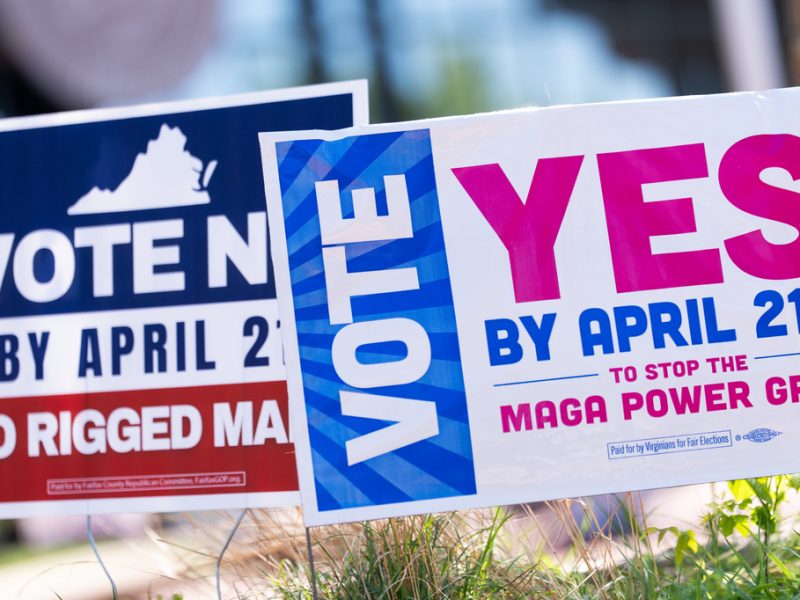
Virginia voters approve redistricting measure, boosting Dems’ 2026 U.S. House prospects
Virginia voters approved a referendum Tuesday allowing lawmakers to redraw the state’s congressional district map, paving the way for Democrats to pick up as many as four additional House seats to offset Republican redistricting gains.
