
OPINION: 12 months to restore democracy in Wisconsin
new gerrymandered maps are the reason why democracy in Wisconsin is broken. Keeping them for potentially another decade is a brutal blow to the state. And yet, this situation could have been avoided entirely had a few thousand votes in the 2019 spring election gone just a bit differently.
In the spring of 2019, the state of Wisconsin held what is proving to be an especially consequential statewide election.
Just a few short months after the “Blue Wave” of 2018 that sent Republican Gov. Scott Walker packing and reelected Democratic Sen. Tammy Baldwin by a double-digit margin, Wisconsinites went back to the polls for the spring election. On the ballot that April was a race for state Supreme Court. It was ultimately decided by less than 6,000 votes, or about one-half of one percent.
Since the 2016 election, Democrats in Wisconsin have been on a winning streak. The party, along with aligned candidates, have won 11 of the last 12 statewide elections. That list includes a U.S. senator, governor, lieutenant governor, attorney general, state treasurer, secretary of state, two state superintendents, two state Supreme Court justices, and President of the United States.
The lone victory for the right in this stretch came in that 2019 spring election that sent conservative Justice Brian Hagedorn to a 10-year term on the state Supreme Court.
While his election to the court was very much a win for the right in Wisconsin — he’s a Federalist Society member who helped author the 2011 anti-union Act 10 law as Scott Walker’s chief legal counsel, after all — Hagedorn has proven to be the court’s swing vote. He sided with the court’s three liberal justices (Ann Walsh Bradley, Rebecca Dallet and Jill Karofsky) on a few occasions, perhaps most notably in two separate 4-3 decisions rejecting Donald Trump’s attempts to overturn Joe Biden’s electoral victory in Wisconsin in 2020. Whether this says more about the increasingly extreme partisanship of court’s conservative justices (Rebecca Bradley, Annette Ziegler and Patience Roggensack) or Hagedorn’s apparently moderate position of saying our votes do in fact count, I’ll leave up to you.
In recent months, though, Hagedorn has been on both sides of state Supreme Court rulings on redistricting, siding with liberals before a (rather bizarre) U.S. Supreme Court decision, and siding with conservatives afterward, ultimately leaving the state with an even more egregiously unfair version of state legislative maps that have long been considered the nation’s most gerrymandered.
These ultra-gerrymandered maps are Republicans’ skeleton key to retaining power in Wisconsin, no matter how many statewide elections they lose. Now — despite this being the most closely contested 50-50 purple state in the nation — under these new Republican maps, experts and insiders are saying there’s a better chance of the GOP winning a veto-proof supermajority than Democrats winning a simple majority.
These maps are the reason why democracy in Wisconsin is broken. Keeping them for potentially another decade is a brutal blow to the state. And yet, this situation could have been avoided entirely had a few thousand votes in the 2019 spring election gone just a bit differently.
Every election matters, folks. This genuinely harmful redistricting ruling is our latest reminder of the knife’s edge upon which Wisconsin’s democracy currently sits. It also must serve as a recalibrating moment for Wisconsin progressives as we enter a particularly crucial stretch that may decide whether or not democracy in the state can be restored.
The obvious first step is with the midterm elections. The gubernatorial election looms particularly large on this issue, and Tony Evers is making his defense of democracy — which has been absolutely crucial to a state seeing some of the most outrageous, Big-Lie-fueled madness we’ve seen anywhere in the country — a cornerstone of his reelection campaign. He vetoed every last one of legislative Republicans’ attempts to limit legal voting in the state. Attorney General Josh Kaul has also been front and center of the fight for democracy in Wisconsin, too, and this position is becoming increasingly important as Trump-backed attorneys general are also working to overturn elections.
The race for secretary of state in Wisconsin will also be especially important this year. Currently, that office doesn’t have much power; much of it has been taken away or eliminated over the years. While in other states this office has a great deal of control over elections, in Wisconsin, election administration is more localized.
That could change. Republicans in the state are pushing to make changes to the Wisconsin Elections Commission, a bipartisan organization created by Republicans to oversee elections in 2015. Republicans created it after they abolished the nonpartisan Government Accountability Board, which had been investigating them for unlawful campaign coordination (and yes, this is a perfect example of how Wisconsin Republicans have moved the goalposts and eroded norms over the years, making things more hyperpartisan and even less accountable.)
Now, a top state Republican, Amy Loudenbeck, is leaving her seat in the Legislature to run for Secretary of State, campaigning to change the way the office works with regards to overseeing elections. On the Democratic side, current Secretary of State Doug La Follette, who is 81 years old and has held the office since 1982, is running for reelection but will face a primary challenge from Alexia Sabor, chairwoman of the Democratic Party of Dane County.
After those ultra-important midterm races — and we didn’t even mention Ron Johnson’s re-election battle that could go a long way toward determining control of the Senate, where key voting rights bills have stalled — Wisconsin still won’t have much time to rest. A few short months later will be an election that will likely determine the majority of the state Supreme Court.
Roggensack, a conservative and the court’s chief justice, will reach the end of her 10-year term next year. At age 81, she is unlikely to seek reelection. That election will be progressives’s best chance in years to win majority control of the court. A victory for a Democratic-aligned candidate could come legal challenges to put an end to partisan gerrymandering in Wisconsin, returning control of the state’s ultra-powerful Legislature to the voters (instead of the corrupt cartographers).
Who ultimately fills this role will also be crucial to what happens in 2024. We just saw what happened in 2020. We can’t pretend like Republicans wouldn’t try to overthrow the results of an election again. Wisconsin has to be at the top of the list of states where this is most likely to happen, especially given how fully Wisconsin Republicans have embraced the Big Lie. They have turned the state’s political discourse into a daily Jan. 6. After all, it has been more than 530 days since Election Day and they’re still trying to “investigate” and “decertify” the results.
So, between re-election campaigns for the likes of Evers and Kaul, the always-important state legislative races on the ballot (where a supermajority could be at stake), fresh importance for the secretary of state’s race, and the state Supreme Court race looming large next April, the next twelve months are going to be extremely important to restoring democracy in Wisconsin.
Republicans have to be seeing an incredible opportunity to go the other way, as well. Their midterm advantages going into the fall are well-documented. If they were to win in a sweep, they’d have a Republican governor ready to sign any law the gerrymandered Legislature would put in front of them, an attorney general backing them up and a secretary of state ready to upend the way the state conducts elections. Then, in April, if a Republican-aligned candidate is able to win that state Supreme Court seat, the Republicans’ inflated legislative majority would be effectively cemented, dooming Wisconsin to entrenched one-party legislative rule for another decade (at least).
Wisconsin is politically weary. There have been so many heated battles recently in this hard-fought swing state, particularly since our politics were upended in 2010. But these next 12 months could very well determine the fate of so much more. It’s time to batten down the hatches and get serious about what’s to come. The fate of the state’s democracy just might depend on it.
Dan Shafer is a journalist from Milwaukee who writes and publishes The Recombobulation Area. He previously worked at Seattle Magazine, Seattle Business Magazine, the Milwaukee Business Journal, Milwaukee Magazine, and BizTimes Milwaukee. He’s also written for The Daily Beast, WisPolitics, and Milwaukee Record. He’s won 13 Milwaukee Press Club Excellence in Journalism Awards. He’s on Twitter at @DanRShafer.
Heartland Signal encourages news organizations and content creators to use our content. You're welcome to republish this article for free as long as you follow our republishing guidelines.
Related Articles

Michigan 4th District race: McCann, Huizenga split over energy costs
In Michigan’s 4th Congressional District, a close race pits state Sen. Sean McCann (D) against longtime Rep. Bill Huizenga (R), who supports federal rollbacks of clean energy subsidies and expanded fossil fuel production. Both candidates diverge sharply on why utility prices are so high and solutions.
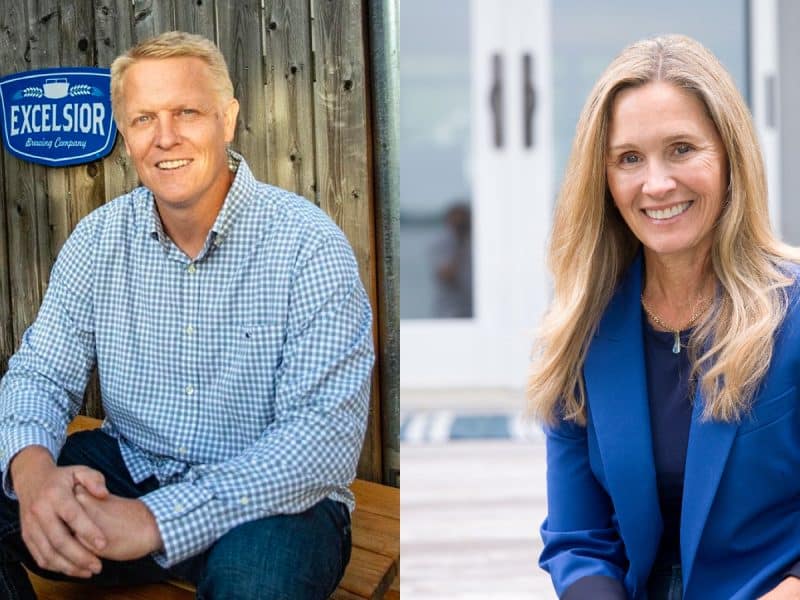
Minnesota House 45A: Myers, Breazeale split on guns, agree on data centers
This year’s race is a rematch of 2022 when Republican Myers defeated Democrat Breazeale with 55% of the vote to her 45%. The DFL hopes to flip the seat blue and, with it, regain a majority in the Minnesota House.
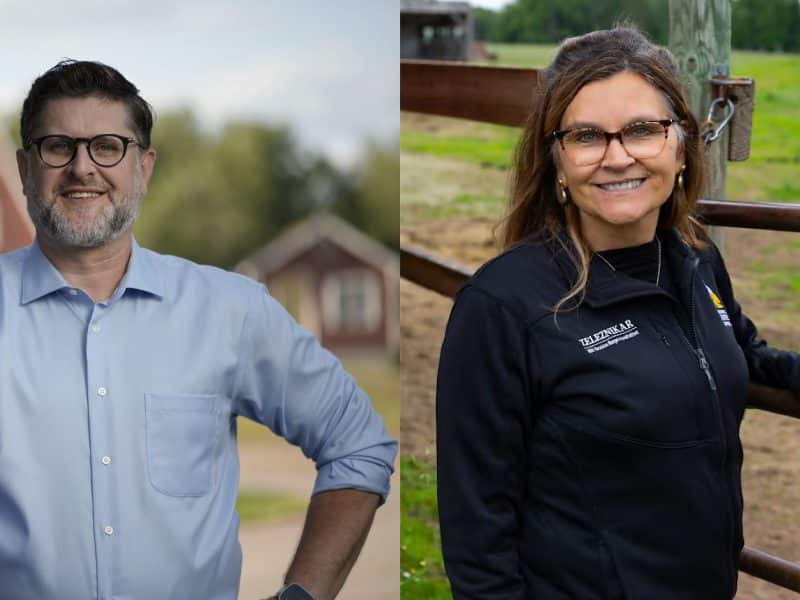
Minnesota House 3B: Zeleznikar, Schweiger debate data centers, taxes
Control of the Minnesota House could hinge on District 3B, where GOP Rep. Natalie Zeleznikar won her last race by just 159 votes. DFL challenger Aaron Schweiger says investments in child care and local infrastructure are what the district needs, while Zeleznikar warns against returning to one-party state control.