
Big banks and Illinois retailers clash over landmark credit card swipe fee law
With a July 1 deadline for the swipe fee ban looming, Illinois state Sen. Cristina Castro (D) is pushing back against “misleading claims” from big banks and a Trump-backed attempt to block the law.
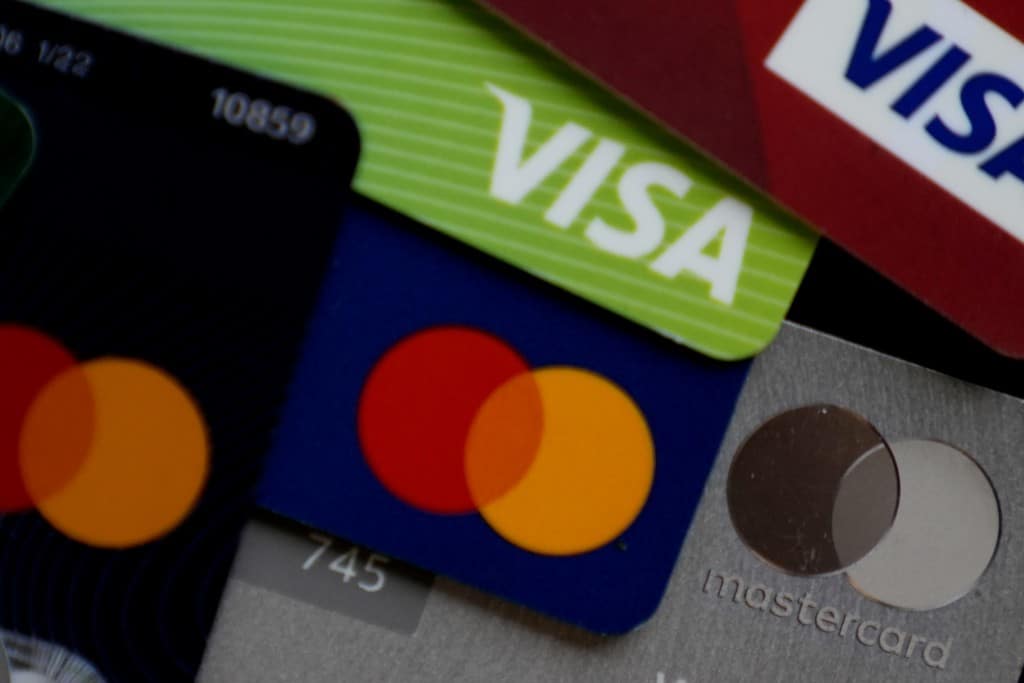
With a July 1 deadline looming, a legal battle over Illinois’ first-in-the-nation credit card fee law has returned to the lower courts. Illinois state Sen. Cristina Castro (D-Elgin) is doubling down on her defense of the Interchange Fee Prohibition Act (IFPA) as the Trump administration joins big banking groups in an attempt to scrap the law before it takes effect.
The novel law aims to crack down on swipe fees charged to small businesses. Retailers are hit with an electronic processing fee (typically between 1 to 3%) on every credit card transaction which is applied to the entire bill. The IFPA would ban credit card companies from applying these swipe fees to the taxes and tips portions of a given transaction. The IFPA was originally passed by the Illinois state legislature and signed into law by Gov. J.B. Pritzker (D) in 2024, but it is currently unclear if it will go into effect on July 1 amid an ongoing lawsuit.
The first of its kind law has been heavily opposed by banking groups since its inception, including a joint legal challenge launched by the Illinois Bankers Association, American Bankers Association, America’s Credit Unions and the Illinois Credit Union League. The group asked the courts to invalidate the IFPA, arguing that it would upend the “carefully calibrated global systems for debit and credit card purchases” and that the fees are necessary to offset financial risks. They also claim that if the law goes into effect, tax and tips would either have to be paid with a second swipe or cash only.
In February, U.S. District Judge Virginia Kendall largely upheld the IFPA, but the plaintiffs filed an appeal. Before oral arguments in the case were heard, the 7th U.S. Circuit Court of Appeals sent the case back to a lower court on May 8 to consider an order from the Office of the Comptroller of the Currency (OCC) in April saying that federal law preempts the IFPA.
“The district court should address these matters, and any related issues, before this court attempts to do so,” the U.S. Court of Appeals for the Seventh Circuit said in a ruling. “We therefore vacate the judgment of the district court and remand for appropriate further proceedings.”
The OCC, which is an extension of the Treasury Department, argues that national banks and federal savings associations are not required to comply with the IFPA since it is a state law.
Illinois Retail Merchants Association (IRMA) CEO Rob Karr, who supports the IFPA, bashed the ruling.
“Banks and credit card companies will stop at nothing to protect their ability to charge outrageous swipe fees, going so far as to recruit the Trump administration to block an Illinois law that was recently upheld by a federal judge,” Karr told the Chicago Sun-Times in April.
The plaintiffs in the lawsuit told the Chicago Sun-Times that they look forward to continuing their effort against the IFPA.
“We welcome the opportunity to resume our legal challenge to the Illinois Interchange Fee Prohibition Act in district court,” the plaintiffs said last week.
Proponents say IFPA will benefit consumers
Last Friday, Castro joined WCPT 820’s Patti Vasquez to discuss the impact of the IFPA and hostile claims made by the credit card industry. Castro said that the Trump administration’s order means nothing since the case is in the judicial system’s hands. She believes her legislation stands up for small businesses and consumers who she says bear the costs of the swipe fees.
“The biggest banks are making record profits by imposing fees on small business owners who end up passing it on to, guess who, the consumer through higher prices,” Castro said.
Listen to the full interview HERE.
The Merchants Payments Coalition (MPC), a group of retailers and businesses that supports the IFPA, released a report in March saying swipe fees reached a record-high $198.25 billion in 2025.
“Credit card swipe fees make just about everything Americans buy more expensive,” MPC Executive Committee member and National Association of Convenience Stores General Counsel Doug Kantor said. “Swipe fees set a new record by taking more of our money every year and the impact on American families and small businesses is devastating. President Trump, lawmakers across the political spectrum, business groups, labor unions, consumer groups, Native American tribes and more are calling for bipartisan swipe fee reform. It’s time for Congress to make America affordable again by ending the swipe fee ripoff.”
Many Illinois retailers also support the IFPA. A restaurant in Chicago’s Loop neighborhood told NBC 5 Chicago that they paid over $200,000 in swipe fees last year alone.
Credit card companies warn of chaos
The credit card industry and its allies have been flooding Illinois with misleading advertisements claiming that the law will cause chaos at checkout lines.
“Unless Springfield fixes this mistake, your debit or credit card may not work to pay tips or sales tax starting July 1st,” says an advertisement from the Electronic Payments Coalition.
Karr and the IRMA have pushed back on these claims, saying there would be simple software upgrades at most.
“They are literally looking to create chaos of their own making. They don’t have to do that. They’re trying to drive fear into their customers,” Karr said. “I can’t guarantee you that every single price is gonna go down by the same amount because lots of things go into prices. But anytime you can withdraw a cost driver, it helps, in our case, the retailer control their prices.”
Opponents also argue that the IFPA will slash credit card rewards programs and jeopardize local banks and credit unions while giving a handout to retailers. The International Center for Law & Economics says the IFPA will also require a costly overhaul of the current credit card system, requiring “a real-time exemption system that would require merchants to transmit detailed tax and gratuity data during payment authorization.”
Several state legislatures are attempting to replicate Illinois’ law. The Colorado legislature sent their version of the IFPA to Gov. Jared Polis’ (D) desk earlier this month. Similar bills have also been introduced in Alaska, Massachusetts and New York.
Heartland Signal encourages news organizations and content creators to use our content. You're welcome to republish this article for free as long as you follow our republishing guidelines.
Related Articles

Crowley calls for constitutional amendment on abortion rights
Democratic candidate David Crowley committed to advocate for a constitutional amendment that would allow voters to decide whether access to abortion and reproductive healthcare is a right protected by the state constitution.
Sprague, Russo, and more secretary of state candidates weigh in on Trump’s expanded voter database
The Supreme Court cleared the way for the federal government to share Social Security data to build a nationwide voter database. But election officials in Minnesota, Ohio and South Dakota are divided on whether the error-prone tool will protect voter rolls or disenfranchise eligible citizens.
U.S. Rep. Sharice Davids introduces health care reform package in response to federal cuts
U.S. Rep. Sharice Davids introduced health care legislation intended to benefit families grappling with rising Affordable Care Act premiums and to broaden federal support of rural hospitals.