
Ron Johnson’s latest conspiracy: Biden admin ‘purposefully’ raised gas prices to ‘force people into electric vehicles’
Wisconsin Sen. Ron Johnson (R) baselessly said in August that President Joe Biden administration “purposely” raised gas prices to “force people into electric vehicles.”
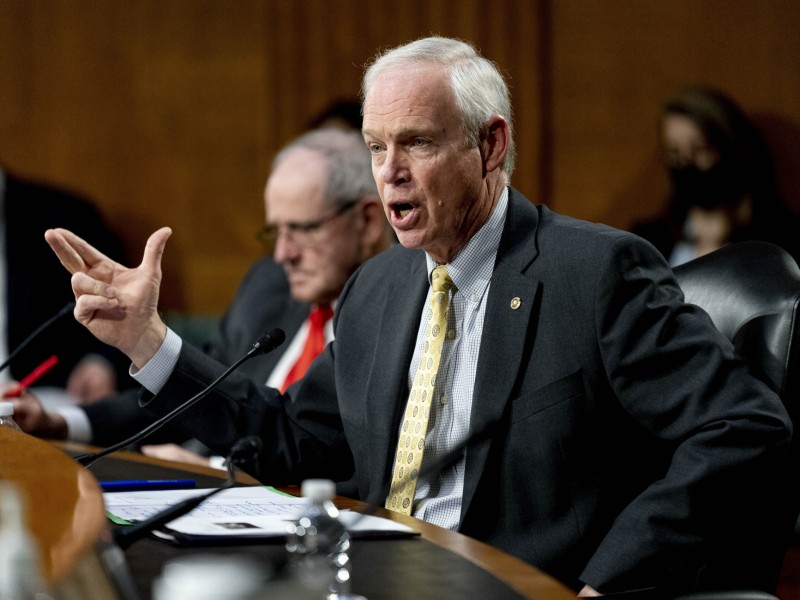
Wisconsin Sen. Ron Johnson (R) baselessly said in August that President Joe Biden administration “purposely” raised gas prices to “force people into electric vehicles.”
The senator claimed on the Aug. 8 episode of “The Larry Kudlow Show” that record gasoline prices “didn’t just happen.”
“You know, as you’re saying, they are purposely driving up the cost of fossil fuels. You know, record gasoline prices didn’t just happen,” Johnson told Kudlow. “They caused it, they wanted it to happen because they want to force people into electric vehicles.”
Johnson would double down on this while speaking on WISN Radio the next week, reiterating his belief that, “[Rising gas prices] were caused by the Biden administration. Democrats war on fossil fuel. They are purposely driving up the cost of gasoline and energy because they want to force everybody to shift into these EV electric vehicles and an alternate source of energy.”
Johnson’s statements track with his past comments on the subject. During July 2021, the Wisconsin senator would go on to claim, “I don’t know about you guys, but I think climate change is — as Lord Monckton said — bulls—.” Johnson did not say the expletive, but mouthed it out.
All of Johnson’s statements come as the world just experienced one of its hottest summers since scientists started tracking in 1880. This past summer was North America’s second hottest summer.
Apart from having controversial opinions on growing climate concerns, Johnson recently voted against the Inflation Reduction Act. According to a White House fact sheet, the IRA “supports climate-smart agriculture practices, which will help Wisconsin’s 64,100 farms lead on climate solutions and reward their stewardship. Additionally, the IRA will invest in “electric cooperatives, which serve about 270,000 homes, businesses, and other customers in Wisconsin, will for the first time be eligible for direct-pay clean energy tax credits.”
Dan Vimont, a climatologist at UW-Madison is trying to bring the topic of Wisconsin’s long-term stability as an agricultural supplier to the forefront. “This isn’t something that’s a hypothetical anymore. We understand it, we’re being affected by it and we’re taking action.” Failure to act can and likely will lead to a falloff in the quality of Wisconsin’s exports. Not only will it continue to affect farmers and rural communities, but it will disturb the natural ecosystem in place.
Heartland Signal encourages news organizations and content creators to use our content. You're welcome to republish this article for free as long as you follow our republishing guidelines.
Related Articles

Multiple childcare bills on access, fraud advanced in Ohio House committee
Multiple childcare bills were approved in an Ohio House committee on Monday. Three of the bills deal with increasing access for children, and another is a response to calls for increased vigilance regarding potential childcare fraud.

Chicago Bears say they will ‘advance’ stadium plans for northwest Indiana site
The Chicago Bears gave a boost Friday to the prospects of building the team’s new stadium in northwest Indiana, which top Indiana officials immediately seized as a sign that the multibillion-dollar deal will happen.
Illinois legislature wraps 2026 with $55.9 billion budget, new corporate taxes and rideshare union rights
The Illinois state legislature sent a record-setting $55.9 billion budget to Gov. J.B. Pritzker at the conclusion of the 2026 legislative session.