
OPINION: Breaking down Friday’s Wisconsin Senate debate
People watching the debate got the chance to see Mandela Barnes for the positive, reform-minded candidate he is and not the person Ron Johnson’s wealthy donors have portrayed him to be.
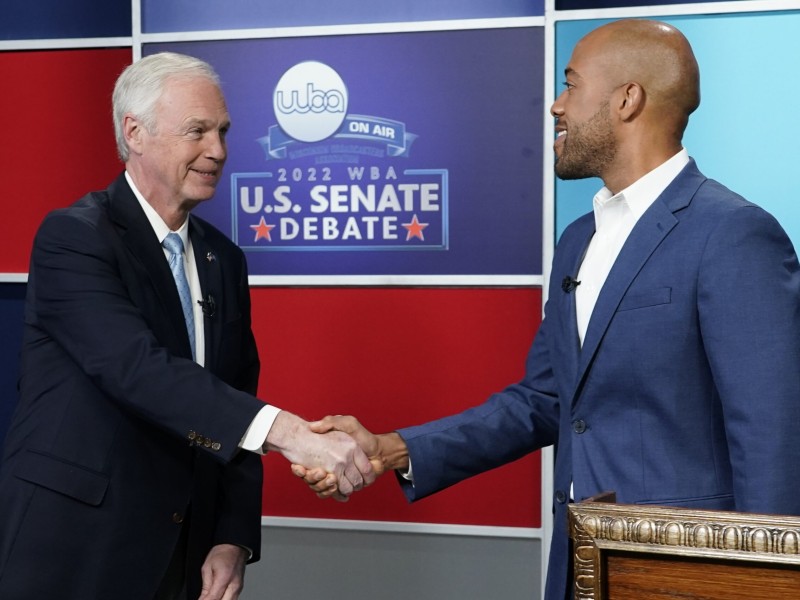
Sen. Ron Johnson and Lt. Gov. Mandela Barnes faced off for the first debate between the two candidates on Friday night.
The debate was hosted by the Wisconsin Broadcasters Association, and candidates took questions from a panel of six journalists from around the state.
Like so many statewide elections in Wisconsin, the race between Johnson and Barnes is a close one, with the incumbent Johnson polling with a slight edge in recent weeks.
The New York Times last week took a closer look at the state of the race and the impact negative advertising attacking Barnes has had since the lieutenant governor emerged victorious from the August primary.
Barnes has been outspent in recent weeks, with Mitch McConnell’s Senate Leadership Fund and the Wisconsin Truth PAC, funded by billionaires Dick Uihlein and Diane Hendricks (who directly benefited from a tax change Ron Johnson sought), accounting for more than $21 million in attack ads directed at Barnes.
This debate presented an opportunity for Barnes to address many of these attacks and showcase the real contrast that exists between him and Ron Johnson. In that respect, the lieutenant governor delivered.
People watching the debate got the chance to see Mandela Barnes for the positive, reform-minded candidate he is and not the person Ron Johnson’s wealthy donors have portrayed him to be.
Barnes gave strong responses on the need for comprehensive immigration reform, funding Social Security and Medicare, legalizing marijuana, addressing gun violence through stronger gun control laws, raising the minimum wage and tackling climate change.
Barnes also delivered what might have been the line of the night on cash bail, an issue on which he’s been attacked relentlessly in campaign ads, saying “Sen. Johnson might not have encountered a problem he couldn’t buy his way out of,” emphasizing his position advocating for reforming the process to one that’s based on severity of crimes, saying that “those who are likely to cause harm should not be able to buy their way out of jail.”
Senator Johnson may not have encountered a problem he couldn’t buy his way out of, but that’s not reality for the majority of people. I won’t be lectured about crime by the guy who CONTINUES to defend the insurrectionists that injured 140 police officers. #WISen pic.twitter.com/tk6mSDjInd
— Mandela Barnes (@TheOtherMandela) October 8, 2022
As for Johnson, as is often the case, he struggled with questions from journalists outside of his conservative media bubble. Johnson spends a tremendous amount of time on right-wing talk radio shows and other Republican-aligned media, and when he steps out of that world, he tends to have a much more difficult time answering questions.
He appeared unprepared, defensive and out of touch on many key issues. He seemed to suggest the minimum wage should not exist, was unable to explain his previous comments on wanting to make Social Security a discretionary spending item, said a policy option to reduce gun violence would be to “renew faith,” and contradicted himself mid-sentence on the Supreme Court’s decision on same-sex marriage and whether that was at risk of being overturned.
Lines like “the climate has always changed and always will change” or might work on certain stations on the AM dial, but it’s just not a response that matches the seriousness of an issue like climate change in a debate for the U.S. Senate.
Johnson’s position on abortion rights is a strange wishcasting for a statewide referendum that is neither realistic nor legal. Proposing such a fundamentally unserious policy on such an important issue should be beneath the level of someone in their twelfth year in the U.S. Senate, but that’s the type of approach to important issues we’ve sadly come to expect from Wisconsin’s senior Senator.
Johnson also had no answers at all for his role in the Republican attempt to overturn the election, and continued to downplay what happened on Jan. 6. More than perhaps any other U.S. Senator, it was Ron Johnson who fueled the conspiracies that led to the Jan. 6 insurrection and downplayed the events of that day.
Johnson is clearly vulnerable on this issue, and Barnes pounced, delivering some of the more memorable lines of the night.
Let’s be very clear: Ron Johnson called the armed insurrectionists “patriots” and “tourists.” He CONTINUES to defend people who stormed the Capitol.
Yet he still pretends to be the law and order candidate. We can’t let him get away with it. pic.twitter.com/p5ex6RUAA1
— Mandela Barnes (@TheOtherMandela) October 8, 2022
By the end of the night, it was clear that Mandela Barnes had won this debate. Making it even more clear, Johnson supporters have since blamed the media and the debate format, as clear an indication as any that the senior Senator lost the debate.
The candidates will square off once again on Thursday, Oct. 13 at Marquette University. Like the first debate, this is a great opportunity for Barnes to get away from the back-and-forth of the attack ads and speak directly to voters. That’s the type of things that Wisconsinites, who’ve been awash with a deluge of ads in two ultra-expensive top-of-the-ticket races, need much more of.
Dan Shafer is a journalist from Milwaukee who writes and publishes The Recombobulation Area. He previously worked at Seattle Magazine, Seattle Business Magazine, the Milwaukee Business Journal, Milwaukee Magazine, and BizTimes Milwaukee. He’s also written for The Daily Beast, WisPolitics, and Milwaukee Record. He’s won 13 Milwaukee Press Club Excellence in Journalism Awards. He’s on Twitter at @DanRShafer.
Heartland Signal encourages news organizations and content creators to use our content. You're welcome to republish this article for free as long as you follow our republishing guidelines.
Related Articles
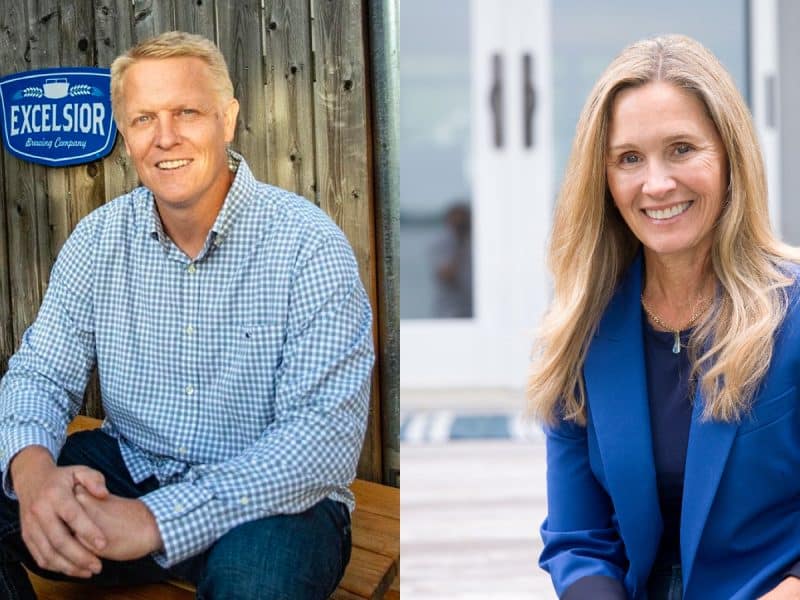
Minnesota House 45A: Myers, Breazeale split on guns, agree on data centers
This year’s race is a rematch of 2022 when Republican Myers defeated Democrat Breazeale with 55% of the vote to her 45%. The DFL hopes to flip the seat blue and, with it, regain a majority in the Minnesota House.
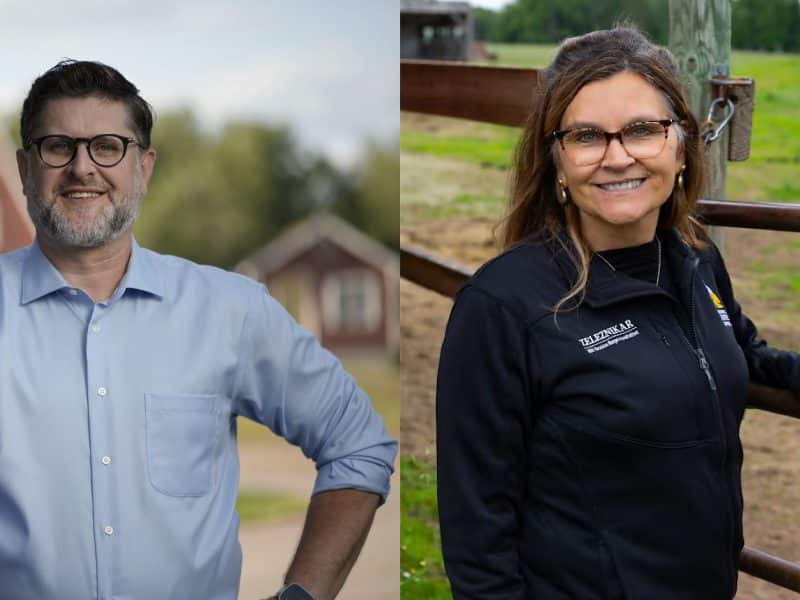
Minnesota House 3B: Zeleznikar, Schweiger debate data centers, taxes
Control of the Minnesota House could hinge on District 3B, where GOP Rep. Natalie Zeleznikar won her last race by just 159 votes. DFL challenger Aaron Schweiger says investments in child care and local infrastructure are what the district needs, while Zeleznikar warns against returning to one-party state control.
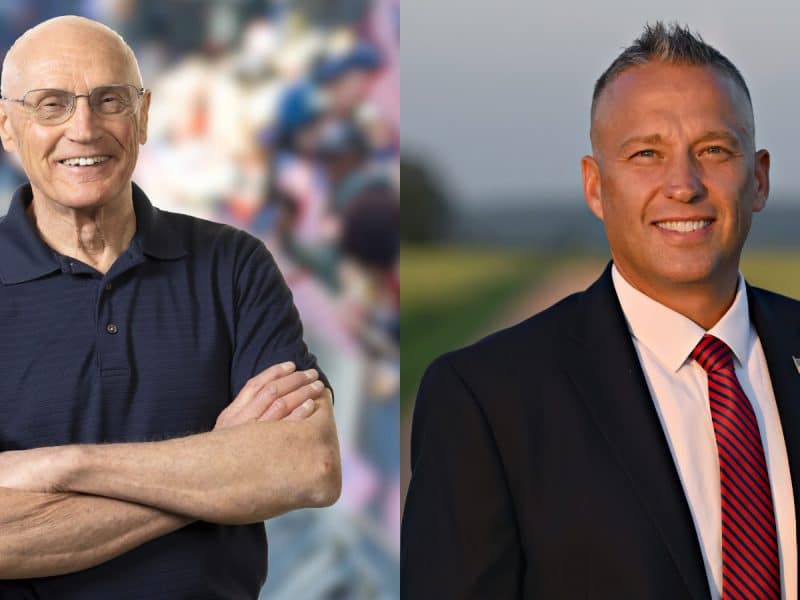
Minnesota Senate District 54: Bakeberg, Olson on fraud, taxes and ICE
Republicans handily won this race four years ago. But the current seat holder is retiring and now it’s seen as a tossup.