
The Lede — March 17, 2023

Speed Read
- Bank of America, Citigroup and JPMorgan Chase and eight other U.S. banks are preparing a $30 billion package to effectively bail out the California-based First Republic bank. Such measures are designed to prevent a bank run.
- On Thursday, Treasury Secretary Janet Yellen tried to quell anxieties surrounding the collapse of Silicon Valley Bank, stating in a hearing before the Senate Finance Committee that “our banking system is sound and that Americans can feel confident that their deposits will be there when they need them.”
- One-time railroad lobbyist and South Dakota Sen. John Thune (R) is attempting to block new legislation that would expand railroad safety regulations.
- Defense Secretary Lloyd Austin asserted that “the United States will continue to fly and to operate wherever international law allows,” after a Su-27 Russian fighter jet collided with an MQ-9 Reaper surveillance drone over the Black Sea.
- The U.S. Senate voted to begin efforts to repeal both the 1991 and 2002 Authorization for Use of Military Force resolutions that permitted military operations in Iraq.
The Lede
Silicon Valley Bank crash demonstrates the infallibility of the financial class
This past weekend, a run on the regional Silicon Valley Bank (SVB) resulted in the largest bank failure since the 2008 financial crisis and the second biggest closure in American history. A trusted partner to companies from Sequoia Capital to the e-commerce site Etsy, SVB at one point safeguarded $209 billion in assets. The main culprits behind the collapse are a mixture of financial mismanagement, tech hubris, and soaring interest rates.
After becoming flush with cash from venture capitalists and tech startups, SVB invested substantially in U.S. Treasury and mortgage bonds. A smart investment as long as interest rates didn’t rise. They, of course, did, and with each uptick in rates came billions in losses for the regional colossus.
Meanwhile, the squeeze on the Feds’ “free money” spigot meant start-ups would have to actually, you know, generate profit. A surprisingly difficult task considering the amount of resources and financial investment such firms have received over the past decade and a half.
All in the family: Distant relative of Elvis Presley seeks Miss. governor office
A recent survey by Tulchin Research indicates that the third cousin of Elvis Presley, Democrat Brandon Presley, could defeat GOP Gov. Tate Reeves. Presley leads Reeves by four points according to public opinion polling — thought 10 percent of voters said they were undecided.
Presley, who currently serves on the Mississippi Public Service Commission Board, became the youngest mayor in Mississippi history in 2001 after handily winning election a mayoral race in Nettleton, Mississippi at the age of 23.
A self-described “populist” and “FDR-Billy McCoy Democrat,” a potential Presley victory would allow the Magnolia State to join gubernatorial pivots in the South: Louisiana, Kentucky and Kansas all recently elected Democratic governors. Presley has, however, taken anti-abortion stances and broke rank in 2004 to endorse then-President George W. Bush’s reelection efforts.
Policy Corner
Michigan Senate repeals right-to-work law
Michigan’s state Senate has struck down the “right-to-work” language included in the Employment Relations Commission Act that was introduced by the Republican-led legislature in 2012. The new bill will almost certainly be signed into law by Gov. Gretchen Whitmer (D).
Following the introduction of union-busting Taft-Hartley Act in 1947, countless states introduced right-to-work laws — which allow employees in unionized shops and industries to opt out of union dues but still receive representation — to diminish the influence of organized labor. Michigan becomes just the third state since Indiana to use legislative power to repeal right-to-work laws. Indiana repealed their law in 1965 but subsequently reinstated such provisions in 2012.
Other states have relied on referendums or judicial decrees to remove right-to-work laws.
This brings the number of right-to-work states down to 26.
Such legislation is the first major rebuttal of right-to-work since the Janus v. AFSCME U.S. Supreme Court case in 2018. Janus’ victory allowed the expansion of such expectations into public sector unions. Right-wing operatives with financial ties to the Koch Brothers, the American Legislative Exchange Council, the Associated Builders and Contractors and the RNC have spent decades pushing such laws, which have been essential in diminishing the number of unionized workers within the workforce.
Right-to-work states have lower wages than non-RTW states, and right-to-work laws actively degrade wages for unionized shops.
DeSantis-backed bill would further criminalize the undocumented
A piece of legislation making its way through the Florida House, Senate Bill 1718, would implement a slew of draconian legal consequences for undocumented immigrants and the people who interact with them. The bill, given the current Republican electoral configuration, should pass both the state’s legislative chambers and is supported by Florida Gov. (and likely presidential candidate) Ron DeSantis (R).
“SB 1718: Immigration” contains language that would make the following illegal in the state of Florida: Transporting an undocumented person “into or within this state,” “harbor[ing], shield[ing], or concea[ling]” an undocumented person in a building — including your own home, providing work or continuing to employ someone if you know they are undocumented, seeking work without proper identification, admitting undocumented individuals from practicing law in the state.
Such trespasses would result in fines and/or second to third-degree felony charges. Undocumented individuals would also be required to provide a DNA sample if they are arrested.
Additionally, the bill would make allow Florida legal officials and law enforcement agents to not recognize out-of-state driver ID’s given held by undocumented people and require hospitals that accept Medicaid to request that all patients prove they are a legal resident.
It has yet to be seen if such a bill could be challenged in court, but these measures could have dire consequences for the almost 775,000 Floridians that are not legal residents.
SB 1718 passed through the Florida Senate on Wednesday with 15 voting in favor and five against. If successfully signed into law, the bill would become effective on July 1 of this year.
Person of Interest: Daniel Kelly
On April 4, Wisconsin voters will go to the polls to select a new judge for the state’s supreme court. Milwaukee County Circuit Judge Janet Protasiewicz and former Wisconsin Supreme Court Justice Daniel Kelly are the last two candidates standing after a primary eliminated Waukesha County Circuit Court Judge Jennifer Dorow and Dane County Circuit Court Judge Everett Mitchell.
Protasiewicz, an ideologically liberal judge, secured 42% of the vote in the February primary. Kelly, her conservative opponent, received 24%. With over $24 million spent collectively, the race has become the most expensive judicial election in American history
Kelly served on the Wisconsin Supreme Court from 2016 to 2020 after he was appointed by then-Gov. Scott Walker (R). He was eventually ousted in 2020 by now-state Supreme Court Judge Jill Karofsky via a similar election to the one taking place next month.
In the 2020 Supreme Court election, Kelly won half of all votes cast in the primary but received only 44% in the general.
An aggressively reactionary individual, Kelly is anti-abortion and believes the Obergefell v. Hodges ruling, which legalized same-sex marriage in all 50 states, is unconstitutional. He has also compared both affirmative action and Social Security to slavery. He also considered former President Barrack Obama’s 2012 reelection a victory for the “socialism/same-sex marriage/recreational marijuana/tax increase crowd.”
Kelly is a member of the Federalist Society, a hard-right, “originalist” legal foundation that counts Clarence Thomas, Brett Kavanaugh and Amy Coney Barrett amongst its ranks. Kelly’s campaign literature describes him as “an experienced and trustworthy judicial conservative who will apply the law as it is written, rather than legislate from the bench,” and someone who would “prevent judicial activism.”
Given his record, he would almost certainly push back against any new, state-wide regulations pertaining to civil rights and environmental protections.
And, if elected, Kelly would shift the ideological makeup of the court to the right. This would have huge implications for the 2024 presidential election, which will be a battleground state.
Heartland Signal encourages news organizations and content creators to use our content. You're welcome to republish this article for free as long as you follow our republishing guidelines.
Related Articles
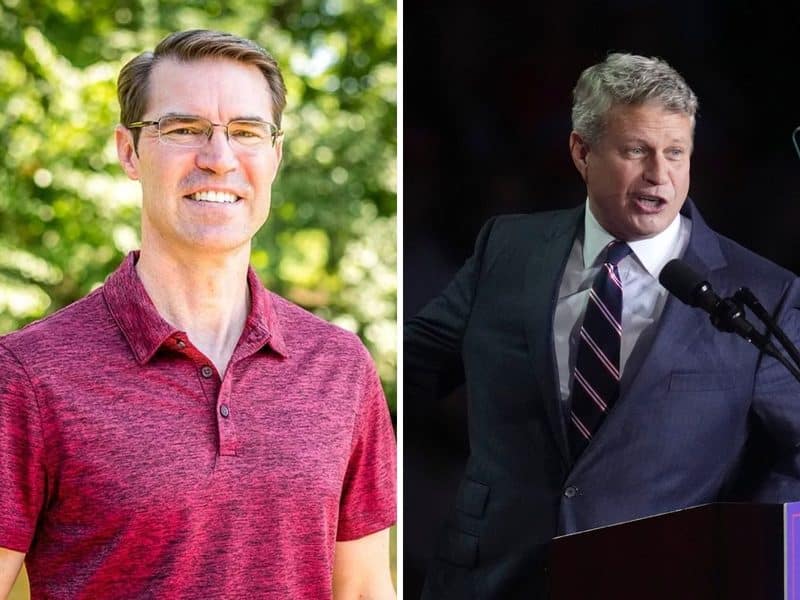
Huizenga v. McCann: What’s at stake in Michigan’s 4th Congressional District
Republican Bill Huizenga and Democrat Sean McCann face off in Michigan’s 4th Congressional District, clashing over health care, tariffs, energy costs and government ethics.
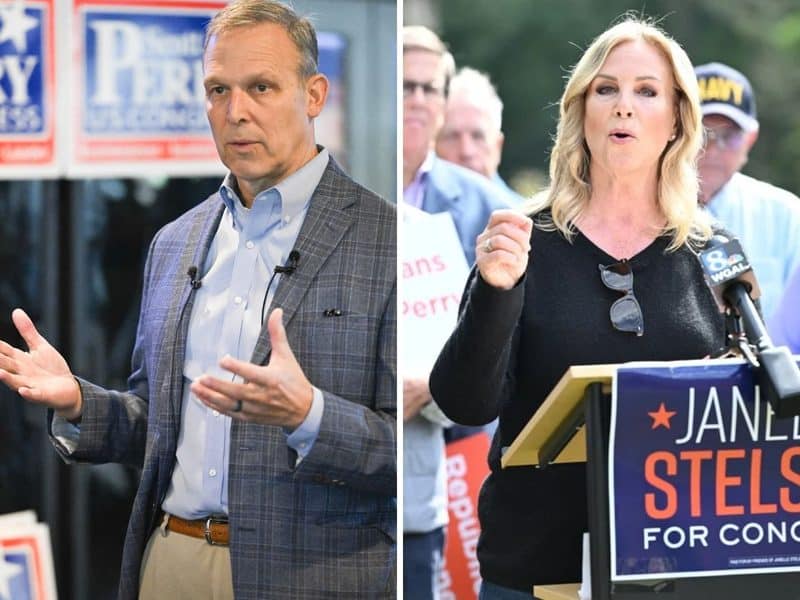
Perry vs. Stelson: What’s at stake in Pennsylvania’s 10th Congressional District
Scott Perry and Janelle Stelson face off in Pennsylvania’s 10th District, a race highlighting sharp contrasts on health care, tariffs, data centers, and ethics.
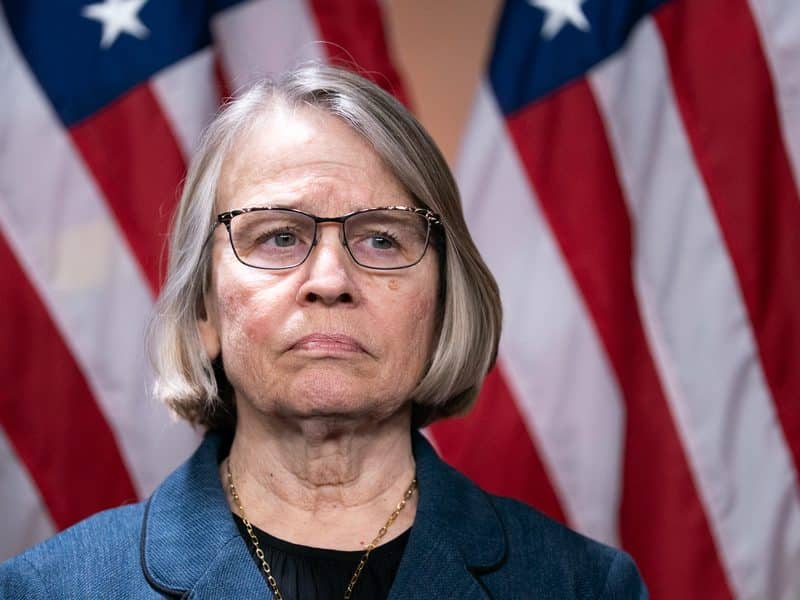
Iowa’s Miller-Meeks seeks reelection in a district where she neither lives nor votes
U.S. Rep. Mariannette Miller-Meeks is asking Iowa’s 1st District voters to send her back to Congress — but she won’t be voting for herself. Records confirmed by election officials show Miller-Meeks is registered to vote outside the 1st District in Wapello County.