
Illinois Rep. Eric Sorensen talks about defending his seat, extreme weather with WCPT’s Joan Esposito
Illinois Rep. Eric Sorensen, a TV weatherman turned first-term congressman, talked to WCPT’s Joan Esposito last Thursday about the battleground district he will be defending in November’s election.
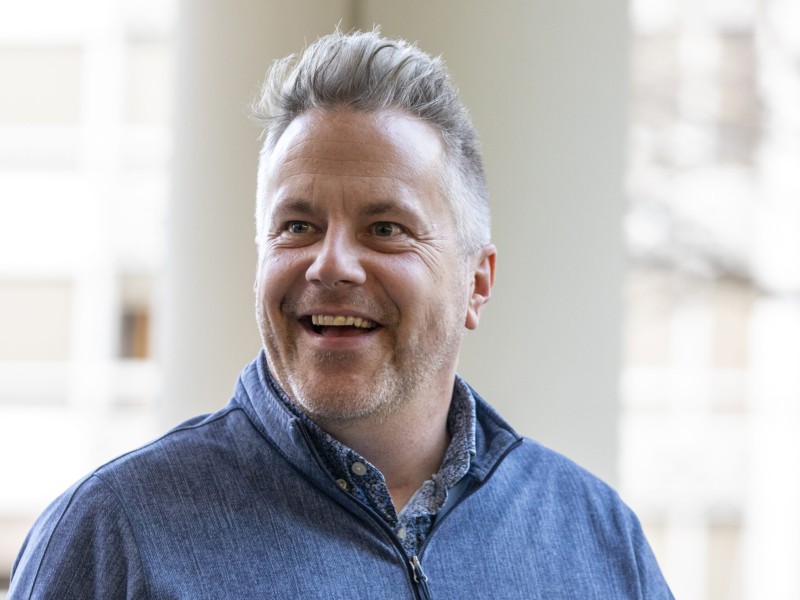
Illinois Rep. Eric Sorensen, a TV weatherman turned first-term congressman, talked to WCPT’s Joan Esposito last Thursday about the battleground district he will be defending in November’s election.
(On his congressional website, Sorensen describes the district as being “anchored by Rockford to the North and Bloomington-Normal to the South and includes Peoria and the Illinois side of the Quad Cities region.”)
House Speaker Mike Johnson (R) has targeted the district as one that Republicans can flip. Sorensen told Esposito that the speaker is planning to visit Peoria in two weeks to stump for Republican challenger Joe McGraw, a retired judge from Rockford. “This was one of the tightest races that we had in 2022 in the entire Upper Midwest and so we’ve got to be able to perform,” Sorensen said.
As the only meteorologist in the House of Representatives, Sorensen said that he knows “what a 60% chance of rain is. I would say that there’s a 60% chance that [Democrats] get the House back. But I also understand what a 40% chance means, right? We’re going to have some work to do.”
Sorensen, the first openly gay member of Congress ever elected in the state of Illinois, said that one reason he fights to codify the constitutional protections of Roe v. Wade is that he believes the Republican Party is “coming for” same-sex marriage next.
“And so, if I don’t stand up, if I don’t use my voice, if I don’t hold that megaphone today to stand up for women, then who’s going to stand up for me when the fascists on the right take my rights away?”
“What we’ve got to be able to do as Democrats is we have to be able to look back 20 years from now and say, ‘What did we do in 2024 when the Republican Party went fascist?’” Sorensen said. “Well, we went to those people, to our neighbors, the people that said, ‘I’m not like that, I’m not an extremist,’ and we welcomed them. And four years from now, we’ve got to look back and say we built our party back in 2024; we elected the people that made sense, the people who are our neighbors, not the political conspiracy theorists.”
Below is the full transcript of the conversation.
Joan Esposito: I am very pleased to welcome Illinois Congressman Eric Sorensen to our program. He represents the 17th District. You will see him on your ballot, if that’s where you live. And as he is, I believe, the only meteorologist on Capitol Hill who is also in Congress. He is particularly well positioned to talk about some of what’s going on in Florida these days.
Eric, thanks so much for being here.
Rep. Eric Sorensen: Oh, it’s good to be with you again, Joan, and you’ve known a lot of meteorologists in your career over the years.
Joan Esposito: (Laughs.) I have!
Rep. Eric Sorensen: And, yeah, I’m the only one. I’m the only elected meteorologist in Congress.
Joan Esposito: Yeah, though, honestly, I think if he ran for president, Tom Skilling would have a good shot.
Rep. Eric Sorensen: (Laughs.) I talked with him; I said, you could walk – you know, we could do a write-in, and you could win anything, Tom.
Joan Esposito: Yeah. Yes. He is certainly beloved.
Hey, I listened to you recently do an interview and you talked about something that I mentioned previously but haven’t talked about recently, which is Project 2025 and the plan to get rid of NOAA, the National Oceanic and Atmospheric Administration. Talk about that, if you would.
Rep. Eric Sorensen: Yeah. So, you know, I have a seat on the Space, Science and Technology Committee in Congress, which oversees NOAA and NASA. And, you know, in this Project 2025, it dismantles a lot of the scientific pieces where we do a lot of the discovery, you know, whether that is, you know, on our Earth, in our seas, you know, in the atmosphere, or, you know, between here and the moon and here and Mars. And so, we need to make sure that these are funded.
But then it’s unconscionable to me, as we are seeing an increase in the number of extreme weather events due to man-made climate change, that this would be taken away. You know, imagine if Floridians had no idea that Hurricane Helene was going to strike or where, precisely with the time, or just last night, Hurricane Milton coming ashore within 12 miles of the National Hurricane Center’s original forecast. That’s how specific it was. But now we’re seeing, unfortunately, it’s not just Project 2025; we’re seeing the politicization of the weather. And I think that is so that the far right — so what they can do is just control their people with their message, as opposed to people listening to the smartest people in the room.
Joan Esposito: It’s just unbelievable to me. You know, I’ve been reading a lot about this, and in the past, people said, you know, maybe there would be smear campaigns or disinformation from one candidate to another, but whenever there was a natural disaster, everybody got on board. Everybody pulled in the same direction, and everybody did what was necessary to help the people affected. Not this time. Not this time. It’s like nothing is off the board. Everything is subject to politicization.
I mean, it’s like nothing I’ve seen before, and I personally find it repugnant. I can’t imagine what it’s like for you being in Congress and being a scientist and see this happening. It’s unprecedented.
Rep. Eric Sorensen: You know, I was a broadcast meteorologist for 22 years before being elected to Congress. And I had heard conspiracy theories about whatever the new thing of the day was, with the contrails going across the sky or something nefarious, or that they’re controlling the weather.
But here’s the thing: Those came from conspiracy theorists. You know, these weren’t mainstream. The problem that I have today, and I think we all should, is that these aren’t coming from conspiracy theorists in the corner. They’re coming from political parties now, where we’re not taking data and science and using scientific method to come up with conclusion; now we’re just using rumor, innuendo and conspiracy, and some folks want to make big decisions based on that. And that is a poor trajectory for our neighbors, but that’s also a poor trajectory for our nation.
Joan Esposito: Yeah, absolutely.
You were endorsed recently by the Illinois Farm Bureau.
Rep. Eric Sorensen: Imagine that.
Joan Esposito: (Laughs.)
Rep. Eric Sorensen: So the only meteorologist in Congress that is talking about climate change to farmers was just endorsed by the Illinois Farm Bureau. Let that sink in for just a moment. (Laughs.) It’s something that, you know, certainly wasn’t a likelihood — thing to happen, right?
But here’s the thing: What I firmly believe is it is going to take more elected meteorologists, more elected atmospheric scientists to work across the center of the aisle to finally move us in the direction we need to go.
Joan Esposito: Man, that would be that would be nice to see.
Republicans have targeted you. How is the race going?
Rep. Eric Sorensen: You know, this has always been, and probably always will be, a tough race to win. This is Illinois’ only competitive seat for Congress, you know, and maybe — as we go forward, what we’ve got to be able to do is find new ways to bring people over.
And I’ve said this for a long time, Joan. You know, what we’ve got to be able to do as Democrats is we have to be able to look back 20 years from now and say, ‘What did we do in 2024 when the Republican Party went fascist?’ Well, we went to those people, to our neighbors, the people that said, “I’m not like that, I’m not an extremist,” and we welcomed them. It’s the people across the street of my house in Moline, Ill., that I see they have a different presidential sign in their yard than they did four years ago. They have changed. We have to be able to welcome them as Democrats, because we’re going to need to build our party. And four years from now, we’ve got to look back and say we built our party back in 2024; we elected the people that made sense, the people who are our neighbors, not the political conspiracy theorists.
Joan Esposito: I think that that is a wonderful message, and I’m glad to see that in Moline, that’s happening. I’ve been suggesting to the audience for a few weeks now that I think that there are a number of people who, for whatever reason, might have voted for Trump in the past, who have just simply had enough, that they’re tired of the vitriol, they’re tired of the anger, they’re tired of the grievance. And while they may not be as brave as your neighbors with a yard sign, I think — I sense that there’s this silent majority building of people who don’t really want to talk about it. They’ve been Republican their whole life, but when they get into the privacy of their polling place, they just might be voting Democratic for this election. Do you have any sense of that?
Rep. Eric Sorensen: And that plays into, Joan, how I serve, whether that’s from Peoria to Bloomington or up to Rockford or Moline. Right? I go and talk especially in smaller communities, you know, where your population sign is less than a thousand, right? A lot of these folks feel like they have been left behind. A lot of these folks have also been left behind by the Republican Party who [doesn’t] care about them. The Republican Party doesn’t care about the viability and the future of agriculture and family farms, because they’re not doing anything.
You know, whereas I go out and I go to these farms and say, ‘What is going to be next? What are we going to be able to do to sustain these family farms?’ You know, I was at a family farm in Winnebago, Ill., just the day before yesterday, and this is a family farm that dates back to 1850. What are we going to do to help them out? And so, it isn’t just that if you’re in agriculture, the default is you’re a Republican. The same thing: The default cannot be if you’re a veteran and you served in the military that you come back from your service and the default is you’re a Republican. No, no. Democrats are doing the work here. Democrats pass[ed] the PACT Act. Democrats are doing the things today.
We have to tell our stories and be able to welcome people to our side, because when we do that, when we open our arms, then that means that we’re not going to have to worry about this front-line seat, Illinois 17 two years from now. We’re not going to have to spend tens of millions of dollars to keep this congressional seat. We’re going to be able to go and work on other places in other states and get our Democratic majority not by just a couple of seats in the House. You know, I want a Democratic majority where we have 20, 30 extra seats in the House. That’s what I want to work for.
But in order for me to do that, Joan, you know, I’ve got to be the one that that still stands, even though Speaker Mike Johnson is coming to Peoria, Ill. in just two weeks to raise money and campaign for my opponent.
Joan Esposito: Wow. I want to talk more about that. We need to take a quick break, though.
Democratic Congressman Eric Sorensen represents Illinois’ 17th District. The 17th District covers a lot of western and central Illinois, sort of in the Moline-Rock Island area. And Republicans have targeted him. They are doing their best to unseat him. And right before we went to break, he was sharing with us that they are so determined to get him out of Congress that Mike Johnson, the Republican speaker of the House, is coming to the area.
Eric, tell us more about that.
Rep. Eric Sorensen: Yeah, if you don’t think that this is a competitive seat, understand that we only have 25 days until the election, and Mike Johnson is coming to Illinois. He is coming to this district to rally their troops on the other side, because, you know, they have a belief that they can flip this seat. And look, this was one of the tightest races that we had in 2022 in the entire Upper Midwest, so we’ve got to be able to perform.
I’m grateful, I’m optimistic that we have got a strong top of the ticket. You know, my district includes Western Illinois University, also Illinois State, and that young people — we’re giving young people the ability to vote for someone. You know, I feel a lot, Joan — I remember the feeling that I had in 2008, you know, when I voted for Barack Obama, right? I knew that I was doing something so important, and now we’re giving young people that feeling; they’re going to get to experience what we experienced in 2008, right? But now we have to make the case and tell them that this is important, that you do have to do this, that in the state of Illinois we need you to do this.
You know, the worry that I have is that there is complacency that sets up, or people will look at the state of Illinois and say, ‘Well, this is a blue state, you know, my vote doesn’t matter.’ Well, if you’re in a district like mine, you know, in Rockford, Freeport, Sterling or Galesburg or over to Bloomington, we need people to vote because I’m on the second line, right? I’m in a very, very tough place on the second line of this ballot. We need to tell everyone that they need to vote, not just for the top, not just so that we can win the electoral vote, but I want to win the popular vote by a lot. And we’re going to need Illinois to do that. But then also, that sets the stage for what we need to do in this district, instead of winning by four points, if we win by five or six, right, because then we can take this front-line, tough district off the table.
Joan Esposito: Wouldn’t that be nice to make it so secure that Republicans in the future look elsewhere? I really believe we have a strong chance to regain the House of Representatives in this next election. You probably are privy to more up-to-date and accurate information on that than I am. What do you see?
Rep. Eric Sorensen: I know what a 60% chance of rain is, right? I would say that there’s a 60% chance that we get the House back. But I also understand what a 40% chance means, right? We’re going to have some work to do.
You know, your listeners need to understand, it’s not just Illinois 17; it’s going across the river from me, across the Mississippi River. Iowa [District] number 1: It’s where Christina Bohannan is running against the Republican incumbent, Mariannette Miller-Meeks. There are several polls now that have Christina Bohannan in the lead. So that is one where we where we can change the trajectory of where we’re going. This is where we can get the House back not by just a couple, but we can get the House back by 10, right?
We have to look close by. We have to look at Rebecca Cooke up in Wisconsin 3, because not only is Derrick Van Orden just a terrible representative in Congress, we have the ability to replace him with someone like Rebecca Cooke, I mean, who is going to be that young champion that we need, the next generation of leadership. And so those can be made here. You know, I just heard the spotlight on my colleague Hillary Scholten over in Grand Rapids. It’s making sure that we secure her seat so that we don’t have to spend so much money, so I don’t have to do as much fundraising to keep my seat next time.
Joan Esposito: You mentioned young voters being a big part of this election, which I certainly see coming. How much does the right to bodily autonomy, securing rights to have in-vitro fertilization or other kinds of fertility treatments, protecting contraception, protecting abortion pills — how much do you think that matters to younger voters?
Rep. Eric Sorensen: I think it’s incredible. Here’s the thing, is people here in the Quad Cities, for instance, you know, half the population is in Iowa, half is in Illinois; half has the ability, you know, to make a decision over — you know, women to have decisions over their own body, but half don’t. Iowa has one of the most restrictive abortion bans. We’re seeing that in Wisconsin and Missouri, in Indiana. Talking with Planned Parenthood, even their Carbondale location, their facility there in Carbondale: 60 to 70% of the patients that come to Planned Parenthood in Carbondale are from Nashville. And we understand that this is so important, not just because we live in and we can be so proud to live in Illinois, but we also are going to need to make sure that we have the votes that we need in Congress so that we can codify Roe.
When I go and knock on doors, Joan, maybe it was a little bit of a surprise to me when I talked to grandmothers and seniors. You know, they’re talking with me about the fact they don’t want their grandkids to grow up with fewer rights than they have, you know. And I’m like, I also understand that what is next for the GOP, they’re coming after me.
You know, I’m the first gay member of Congress that Illinois has ever elected, and it happened in Peoria, Ill. It happened in Rockford because I was the weatherman on TV, but also my ability to marry my own partner — they’re coming for that next. And so, if I don’t stand up, if I don’t use my voice, if I don’t hold that megaphone today to stand up for women, then, who’s going to stand up for me when the fascists on the right take my rights away?
Joan Esposito: Yep. I think you’re spot on with that.
So I’m guessing you don’t believe Donald Trump when he says if he gets elected, he’s going to make in-vitro fertilization free.
Rep. Eric Sorensen: (Laughs.) I don’t know what we can believe from that guy, you know-
Joan Esposito: Nothing. The short answer is nothing.
Rep. Eric Sorensen: Nothing. Right, right. I mean, even we could go back and talk about how he politicizes the weather, you know, and how he wants people to be oblivious to the dangers of weather and he wants, you know, his people or most of the people that believe that Democrats steered the hurricane to only affect a red state. Come on. How naive do you have to be to believe that?
Joan Esposito: It’s the stuff that is out there that people apparently are believing. You know, the FEMA money: It didn’t go where it was supposed to go because it all went to immigrants. Didn’t you hear that too?
Rep. Eric Sorensen: (Laughs.) Here’s one thing that we on the left need to say is what the $750 is for emergency, right? That is for immediate necessities after a disaster. But also, you know what? The folks on the right, they always cry foul with fraud — fraud in this, fraud in that. You know what? FEMA makes sure that, you know, you can’t just go and get $400,000; you have to be able to prove that your house was destroyed, right? And, you know, and then FEMA can dole out some help as we go. But imagine the amount of fraud that would be there if people got more than 750 (dollars), if they were just lining up to take, take, take. We have to make sure in situations like this, especially after Hurricane Milton, that the immediate needs are met and that means anywhere along that Florida coast we have to meet those immediate needs.
But then we’re going to have to rebuild, but also rebuild in a way that is sustainable, understanding that we’re having more of these fierce hurricanes than ever before. We’re going to have to rethink this. And if we don’t, it’s not just the dire consequences of the environment; what are the dire consequences of insurance? You know, all of our insurance is going to be too unaffordable if we don’t start to do what’s right.
Joan Esposito: I’ve been reading that property insurance in Florida has increased something like 400%, and, you know, you can’t blame the insurance companies. I mean, with the extreme weather we’re having and these hurricanes that are more destructive and larger and seem to last longer than they used to — I mean, we’ve seen towns completely wiped off the face of the Earth. Of course it’s going to cost more to insure them. And I hear a lot of companies are thinking of getting out of the Florida market altogether. It’s a situation that really needs some government help and intervention.
Rep. Eric Sorensen: Right. And then it’s also working to make sure that the people who can’t afford insurance —for instance, I talked with a gentleman in the town of Cuba, Ill., in Fulton County, far western Illinois. The town had 14 inches of rain one night, July 15. The town was absolutely flooded. And I got to talk with this gentleman, Donald, and he works at the Casey’s General Store, and he told me, he goes, ‘My wife is — she’s on disability, so her disability checks are determined by how much I work.” And he goes, ‘We couldn’t afford insurance.’ And I said, ‘Well, you’re not even in a flood plain, so there’s no way you could get flood insurance.’ And he goes, ‘No, Eric.’ He goes, ‘We don’t have any insurance.’
And then I realized that is the norm, okay? And so that is the reason why I said, ‘Donald, I’m going to do everything I can so that we can get to the thresholds where the governor can call the president and this is a disaster area so that you are going to get some help, because this shouldn’t happen to you. You’re burdened by this,’ you know. And that goes when we start talking about how the climate is changing. The richest people in the world, you know, are causing the biggest change in our climate, and we’re making the people who can’t afford it pay for it. That’s not fair.
Joan Esposito: No, it’s not fair. And not only are we giving our younger generations a world with extreme climate, as you pointed out a little while ago, we’re giving them a world where they don’t have as many rights as their elders had. And when I think that my daughter now has fewer rights than I had at her age, I feel like I’ve really let her down. I think there are a lot of us who feel like, you know, we’re not quite sure how this happened, but we sort of feel responsible for it and we want to make up for it, which is why I think — I think we’re going to see a surprisingly large turnout for this election. You know, I mean, with the Electoral College, I’m not willing to say that anything is a lock, but I think we are going to see a lot of people go to the polls. And generally, as you know, Eric, when we get turnout, Democrats win.
Rep. Eric Sorensen: Absolutely. Absolutely. So it is going to be all about the turnout today. And so, for everyone listening, you know, we need to answer the question in our own heads. The question should be, what am I doing to help? Okay? It’s not maybe just arguing with a MAGA person down the street, right? It’s saying, how can I help to make sure that we’re going to have this turnout? How can I talk with people or make sure that people can get to the polls, right? How can I help people understand why it’s so important to vote early? You know, these are the things. How can I, you know, maybe write a check to Eric Sorensen for Illinois, PO Box 1172, Moline, Illinois 61265? (Laughs.)
Joan Esposito: You better say that again. That was too fast. Say it again.
Rep. Eric Sorensen: (Laughs.) PO Box 1172, Moline, Illinois 61265, or go to ericforillinois.com.
See, I can use a little bit of my former TV voice.
Joan Esposito: (Laughs.) There you go. I heard those dulcet tones,
Rep. Eric Sorensen: (Laughs.) You know, it’s going to take all of us, you know, and so that’s, I think, the greatest part of, you know, being a Democrat and being a Democrat in Illinois is, oh my gosh, don’t underestimate us. You know, when we mobilize, we know how to do it in a very big way.
Joan Esposito: Yes, we do. And if people aren’t motivated for this election, then I’m ready to throw in the towel, because this isn’t just a regular election, where we’re looking at, you know, people who want the country to go in the same direction but have different ideas how to get there. No. This is people who want a democracy and equity and fairness, and people who really want to sink into fascism and dictatorship. We are on the brink of a terrible tragedy if we don’t get out, get up and vote. And if you are in the 17th District, you need to vote for Congressman Eric Sorensen and send him back to Congress for the Democratic Party.
Eric, thanks for joining us.
Rep. Eric Sorensen: Thanks, Joan. It’s always great to talk with you.
Heartland Signal encourages news organizations and content creators to use our content. You're welcome to republish this article for free as long as you follow our republishing guidelines.
Related Articles
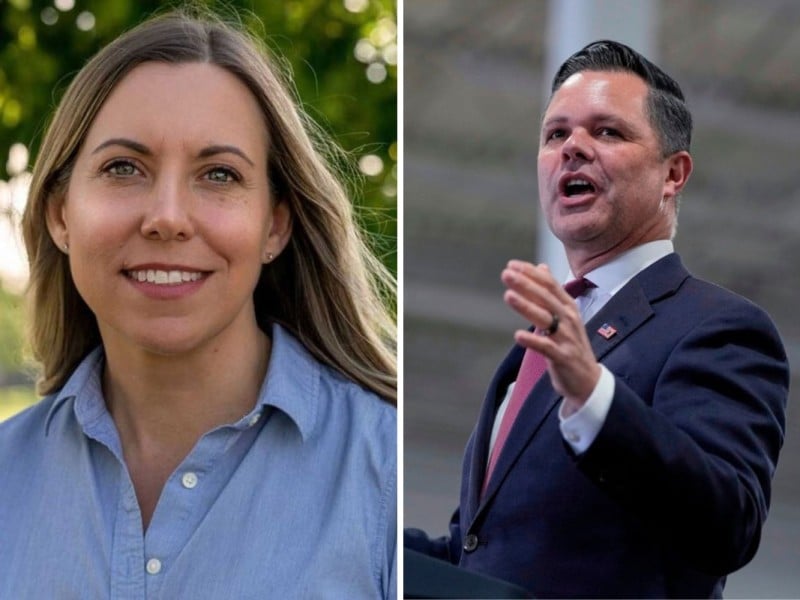
Nunn vs. Trone Garriott: Where Iowa’s 3rd District candidates stand
Rep. Zach Nunn voted for Medicaid cuts that shuttered health clinics and backed tariffs that raised costs for Iowans. State Sen. Sarah Trone Garriott is challenging the Iowa Republican, campaigning on lowering health care expenses and ending tariffs.
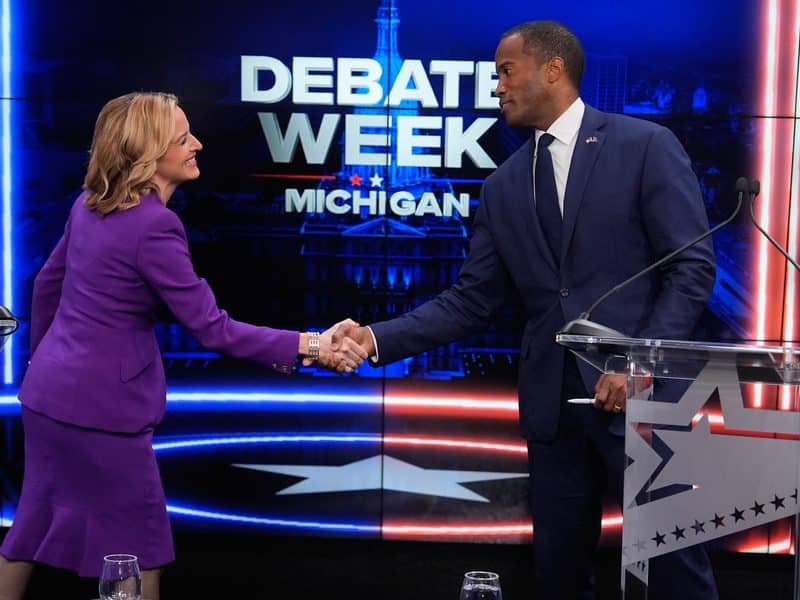
Data centers investments, personal finances take center stage at Michigan governor debate
Michigan gubernatorial candidates Jocelyn Benson and John James faced off over rising living costs, government reform and data center developments. While both candidates agreed on a couple issues, they clashed over transparency and who is best equipped to lead the state.
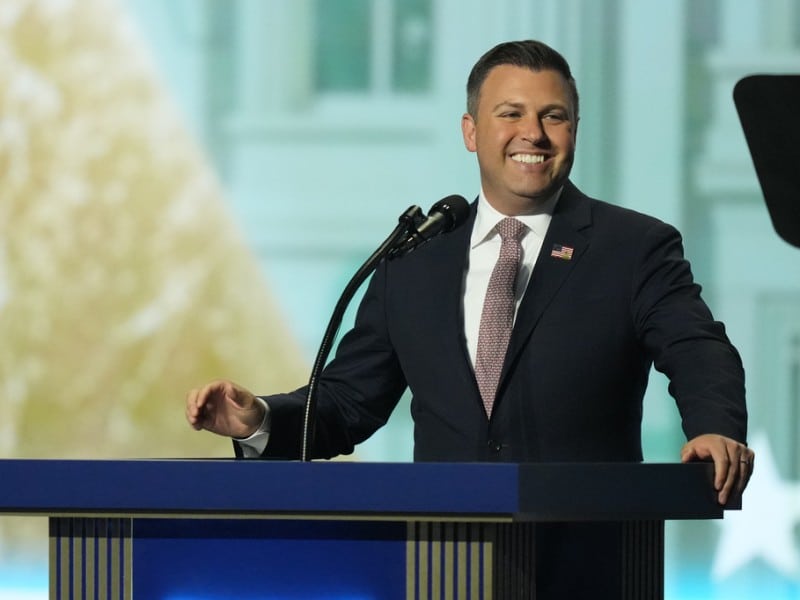
FACT CHECK: Ryan Mackenzie parrots misleading claim denying Iran War is spiking fuel prices
U.S. Rep. Ryan Mackenzie (R-PA) is repeating misleading claims that recent high fuel prices aren’t driven by the war with Iran. Experts say even with sea passages open, risk premiums and lost oil supply from ongoing Middle East conflict continue to keep prices inflated.