
Judge blocks Trump admin changes that could have forced 170,000 families into homelessness
HUD’s funding changes would have significantly increased the homeless population of every state across the country, with homelessness numbers in cities like Chicago sharply increasing, according to projections.
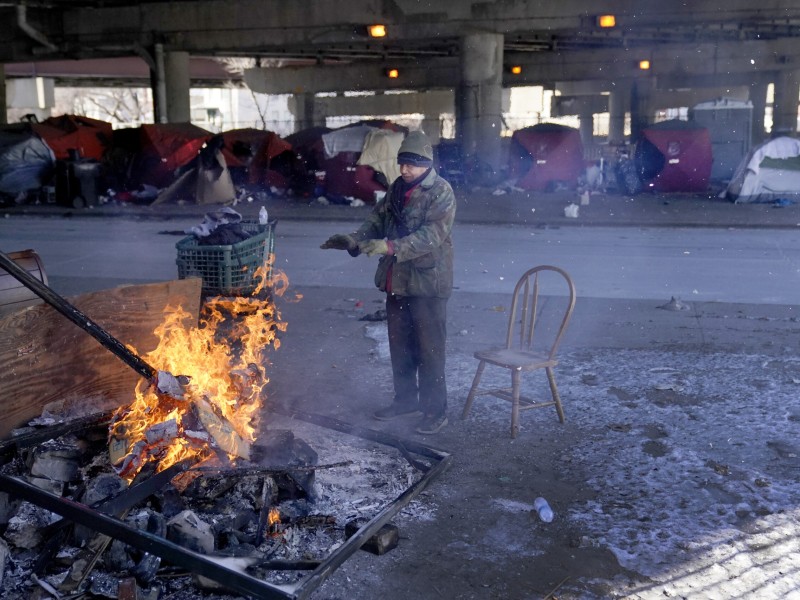
Last month, a federal judge blocked new funding changes announced by the Department of Housing and Urban Development (HUD). The changes would have significantly increased the homeless population of every state across the country, with homelessness numbers in cities like Chicago sharply increasing, according to projections.
HUD announced the sweeping changes in November that would have altered how federal dollars can be used to fund homelessness programs in the United States. Homelessness experts argued that the changes would have only exacerbated America’s homelessness crisis. The National Alliance to End Homelessness (NAEH), which was one of the plaintiffs in the lawsuit against HUD, estimated that 170,000 households would have lost housing if the changes were implemented. The effects would have been implemented as soon as January.
U.S. District Judge Mary McElroy in Rhode Island issued a preliminary injunction blocking the changes earlier this month.
“Continuity of housing and stability for vulnerable populations is clearly in the public interest,” McElroy said, ordering HUD to maintain its previous funding formula.
In a statement to NPR, HUD spokeswoman Kasey Lovett said the department remains committed to reform in accordance with the law.
“HUD will continue working to provide homelessness assistance funding to grantees nationwide,” Lovett said. “The Department remains committed to program reforms intended to assist our nation’s most vulnerable citizens and will continue to do so in accordance with the law.”
HUD proposal would have shuttered homelessness programs
One of the most consequential changes HUD proposed was capping the amount of money that can be used for permanent housing programs at 30% (There is currently no limit.)
Permanent housing (also known as Housing First) is a homelessness assistance model that initially focuses on providing a person with shelter before working with them to improve areas of their life that are contributing to their situation such as mental health, job skills or substance use.
“What we know from experience and many studies, is that this model of assistance works. It works really well and it keeps people out of homelessness,” said Doug Schenkelberg, the executive director of the Chicago Coalition to End Homelessness.
Schenkelberg said that roughly 90% of the federal funding received by the Continuum of Care (CoC) in Chicago goes to permanent housing. The majority of permanent housing programs in Chicago and across the nation would simply not be able to function with the 30% cap proposed by the Trump administration.
NAEH projects that 7,062 beds in the Chicagoland area would be lost due to the funding cuts, potentially adding thousands of homeless people to a city that already experienced a three-fold increase in homelessness numbers in 2024, according to the coalition. Schenkelberg said America would likely experience the largest overnight increase in the homelessness population in recent memory.
“You would see a drastic increase in encampments around municipalities, around cities and towns,” Schenkelberg continued. “We already know that the shelter system is oversubscribed. There’s more people that need shelter in Chicago and surrounding suburbs throughout the state. So the pressure on that system would just get all the worse.”
The HUD announcement also called for prioritizing transitional housing, which studies have shown is not as effective at keeping people housed long-term or reducing the rate of homelessness like permanent housing does.
“It’s not to say transitional housing has no place in the continuum of options for folks experiencing homelessness,” Schenkelberg said. “It does work and can be particularly useful for youth experiencing homelessness. But permanent housing is by far the best model to use in terms of keeping people out of homelessness in the general public.”
Trump administration’s aggressive approach on homelessness
Under the changes, individuals who would lose their permanent housing would also be ineligible to be transferred to other programs because they would technically not be considered homeless. They would first have to become homeless again in order to qualify for a different housing program.
Schenkelberg said these harmful changes are emblematic of the Trump administration’s overall philosophy on homelessness. President Donald Trump falsely maintains that being homeless is a choice that should be punished.
“This administration’s belief is that homelessness is a public safety problem, it’s a criminalization issue, it is an issue to be dealt with by law enforcement,” Schenkelberg continued. “Not that it is a social issue that stems from systemic problems that requires input and support and housing to solve. The irony is that one of the main goals of this administration is to clear out encampments, and clear people out from living on the streets, but their policies and funding priorities will only increase the number of people on the streets.”
HUD’s original memo also allowed the department to reject funding applications based on evidence that “the project has previously or currently … conduct[s] activities that rely on or otherwise use a definition of sex other than as binary in humans.”
Schenkelberg said this policy would effectively deny homelessness programs from using any gender identity different from male and female and suppress the identity of a group that is particularly vulnerable to homelessness. According to the National Network for Youth, LGBTQ+ youth are 120% more likely to experience homelessness compared to non-LGBTQ+ youth.
Another restriction would have blocked funding for programs that engage in harm reduction, which includes strategies for assisting drug users that might include safer and managed drug use over outright abstinence, according to the National Harm Reduction Coalition. Even if a program isn’t using HUD dollars for harm reduction, they would be ineligible for HUD funding if they offer those services.
HUD’s justification
Although HUD’s new funding structure has been blocked, the Trump administration’s efforts to combat homelessness focus on law enforcement and public safety, as outlined in an executive order signed by Trump in July. After the changes were announced in November, HUD Secretary Scott Turner claimed that his department’s changes “end the status quo that perpetuated homelessness through a self-sustaining slush fund.”
“Roughly 90% of the last four years CoC awards funneled funding to support the failed ‘Housing First’ ideology, which encourages dependence on endless government handouts while neglecting to address the root causes of homelessness, including illicit drugs and mental illness,” HUD said in a news release last month.
Schenkelberg agrees that a significant portion of homeless people experience drug abuse and mental illness, but he argues that the root cause of homelessness in America is the lack of affordable housing.
“The driver of homelessness is the affordability crisis that we are dealing with in our country,” Schenkelberg said. “Even on our best day, the federal government, state and local governments as well, have never funded the solution at a scale that meets the demand. So, in many ways, the answer is straightforward. Better fund permanent housing and the support services people need to be stable in that housing and do it at a scale that meets the number of people who need it.”
Heartland Signal encourages news organizations and content creators to use our content. You're welcome to republish this article for free as long as you follow our republishing guidelines.
Related Articles

Skinner brags about failed Lake Altoona project in campaign ad
The Wisconsin Senate candidate’s ad brags about a project she says cleaned up Lake Altoona for free. County records — and Skinner’s own voting record — tell a different story.

Minnesota State Fair crop art sprouts political creativity
From MAGA Kool-Aid Man to Antifa Waldo, Minnesota artists drew huge lines to see their “seedy” creations
Pillen memo calling for 5% cut across Nebraska agencies raises questions about governor’s authority
For the University of Nebraska, a 5% cut could subtract $36 million from its newly approved operating budget