
26 House Democrats push Illinois Speaker Chris Welch to step aside
Illinois House Speaker Chris Welch won’t seek a fourth term after 26 Democrats called for new leadership amid the Benton scandal. Here’s who could succeed him.
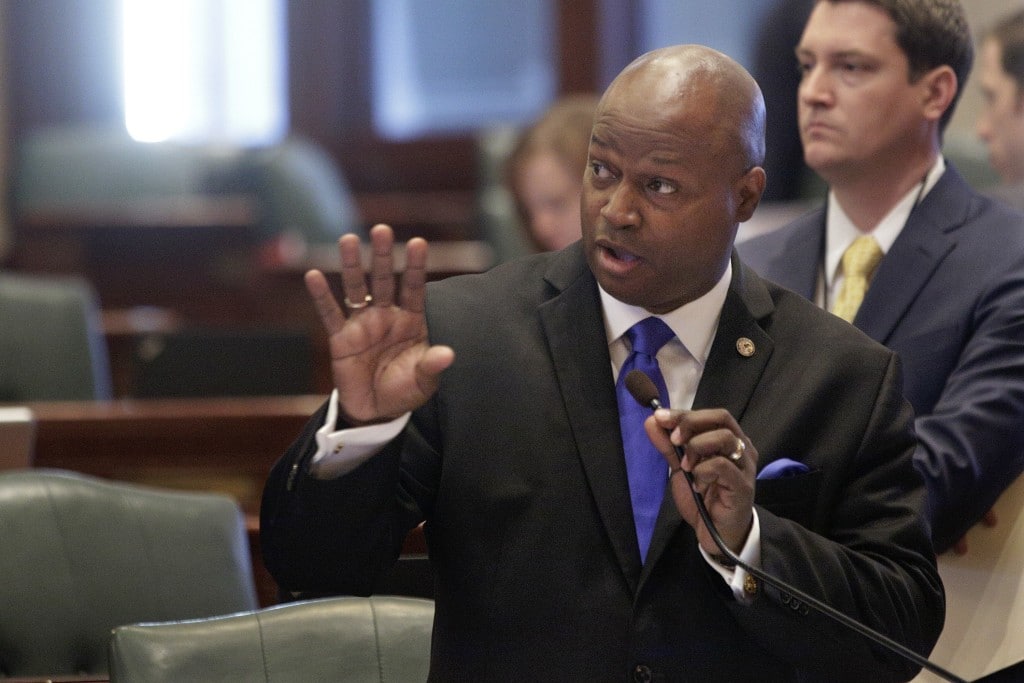
Illinois House Speaker Emanuel “Chris” Welch will not seek another term, ending nearly six years as speaker after 26 current and incoming House Democrats called for new leadership following months of criticism over his handling of sexual harassment allegations against former Rep. Harry Benton.
Welch, D-Hillside, announced Nov. 5 that he would step aside and become a rank-and-file member of the caucus. “I serve at the pleasure of the caucus,” he said in a statement, which also credited him with helping House Democrats gain seats in every election he led. The decision came just days after Illinois Democrats expanded their already commanding House majority in the midterm elections, putting the party on track to hold 85 of the chamber’s 118 seats.
Benton, a Democrat from Plainfield who represented a competitive southwest suburban Chicago district, resigned in July. A legislative inspector general found he violated state law in two incidents: approaching a district director at a Springfield bar and leaning over her with his hand on her back, and propositioning a lobbyist at a bar early this year. The inspector general also described a “pattern and practice of inappropriate sexual conduct” dating to 2023, shortly after Benton took office. Benton denied the allegations.
A former district staffer’s 2023 email to Welch’s office described Benton asking her to stay with him at a friend’s condo, telling her he was keeping her “off the pole” by hiring her and advising her to “wear something underneath that.”
Welch’s office received that email, sent to his chief of staff, on April 14, 2023. The office did not address the allegation with Benton until July 2023, and Welch’s political operation subsequently spent $1.4 million supporting Benton’s successful 2024 reelection campaign. Welch said he had been concerned about due process because the staffer did not file a formal complaint. He did not respond to Heartland Signal’s request for comment for this story.
Welch eventually barred Benton from House Democratic caucus meetings and stripped him of committee assignments in late February. He called for Benton’s resignation in July, after the inspector general’s findings were delivered to his office. But the delayed response left Welch facing questions about whether protecting a politically valuable seat had taken precedence over protecting legislative employees.
The revolt also reflected broader dissatisfaction with Welch’s leadership. Four members of Welch’s own leadership team — Eva-Dina Delgado, Lisa Hernandez, Bob Morgan and Katie Stuart — signed the statement calling for new leadership. Beyond his handling of the Benton allegations, lawmakers have criticized Welch’s communication and management of the caucus, including his inconsistent enforcement of an unofficial rule requiring 60 Democratic votes before a bill can be called for a floor vote. Members also pointed to internal disputes, including Welch’s removal of Rep. Fred Crespo from committee leadership after Crespo pursued an independent budget proposal.
Welch also faced scrutiny over his own interactions with the staffer, who was formerly an intern in his office. In an August interview with Capitol News Illinois, he said he did not realize his behavior had made her uncomfortable until reading a July Chicago Tribune article detailing how he reacted to her Instagram photos with heart-eye emojis and invited her to discuss career advice at a bar through Signal, an encrypted messaging app. “I regret that and I’m embarrassed by it, and I apologize for it,” Welch said.
Welch had faced questions about his treatment of women before becoming speaker. In 2002, an ex-girlfriend told Hillside police that Welch grabbed her by the hair and repeatedly slammed her head against a kitchen countertop during an argument. Welch denied the allegation, and the woman ultimately declined to pursue charges. In 2021, several Democratic women lawmakers questioned Welch about the incident before deciding whether to support his bid for speaker.
Elected in 2021 as Illinois’ first Black speaker, he presided over balanced budgets, improved state credit ratings, the Climate and Equitable Jobs Act, reproductive rights protections, gun safety legislation and major education investments. His tenure also included the Workers’ Rights Amendment and the state’s first child tax credit.
But those victories did not insulate him from a caucus increasingly frustrated with his leadership. His departure also follows former Speaker Michael Madigan’s fall from power after a federal corruption investigation, leaving Illinois Democrats confronting another leadership transition shadowed by institutional misconduct. Madigan was indicted on federal racketeering and bribery charges in 2022 and convicted on 10 counts in 2025.
The next speaker will need 60 votes. With Democrats holding a historic supermajority, the contest will be decided internally, not by Republicans. Several women lawmakers have emerged as potential successors, including Reps. Jehan Gordon-Booth, Eva-Dina Delgado, Lisa Hernandez and Ann Williams, raising the possibility that Illinois could elect its first female House speaker. Reps. Kam Buckner and Marcus Evans Jr. have also been mentioned. Rep. Mary Beth Canty, chair of the House Democratic Women’s Caucus, told WBEZ that it may be time for members to look to their female colleagues to lead the chamber.
The transition presents Illinois Democrats with a choice to preserve the centralized leadership model that helped deliver major policy victories, or use their expanded majority to build a more transparent and accountable institution.
Heartland Signal encourages news organizations and content creators to use our content. You're welcome to republish this article for free as long as you follow our republishing guidelines.
Related Articles
Bresnahan’s account bought oil stocks before Big Beautiful Bill vote
Disclosures show Pennsylvania Rep. Rob Bresnahan’s account bought oil and equipment stocks a week before the House first passed the megabill.
FACT CHECK: Ad blames Minnesota Rep. Matt Norris for fraud he tried to stop
A new attack ad blames Minnesota state Rep. Matt Norris for “$9 billion stolen” in recent state fraud scandals. Campaign records and legislative filings show a very different story: Norris actually chief-sponsored the state’s marquee anti-fraud oversight bill.
FACT CHECK: Helping a rapist? Overseeing fraud? Minnesota state House candidate calls attack ad ‘deplorable’
A Renew Minnesota ad ties DFL candidate Jason Heaser to a pardon and the Feeding Our Future fraud. We checked each claim against his record and the timeline.