
Michigan reproductive justice advocates lay out priorities for incoming Democratic trifecta
Reproductive justice advocates gathered in Lansing to outline priorities for Michigan’s incoming Democratic trifecta, including paid leave laws, shield laws protecting abortion and gender-affirming care providers, ending abortion waiting periods, and immigration protections.
This post has been republished from the Michigan Advance under Creative Commons license CC BY-NC-ND 4.0.
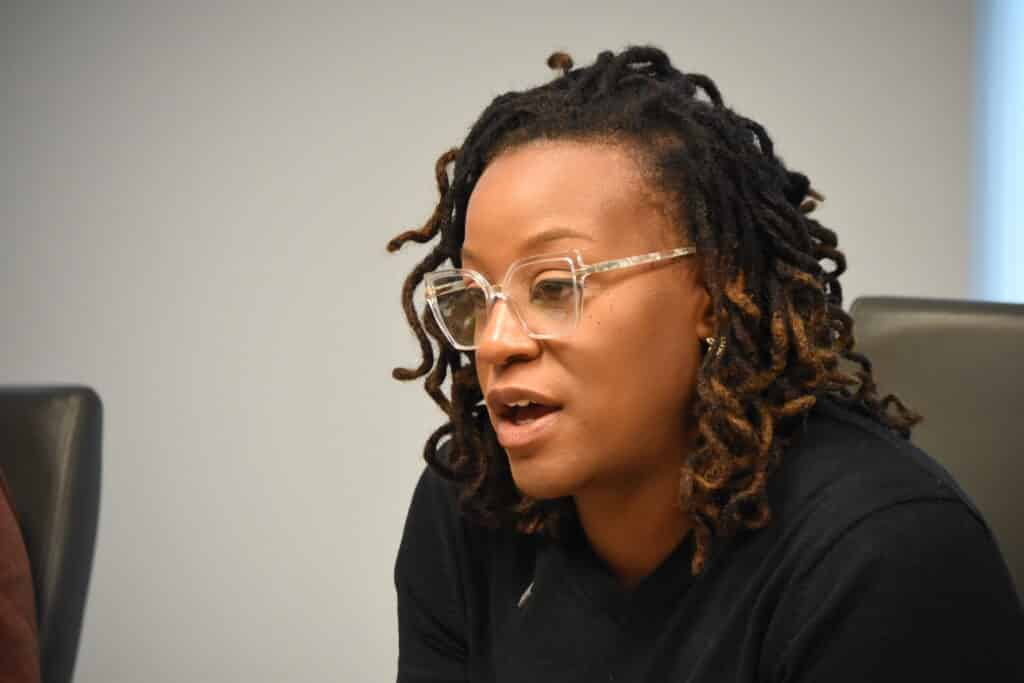
Danielle Atkinson, the founder and executive director of Mothering Justice Action Fund, said that she is “cautiously optimistic” about the incoming Democratic trifecta to work with organizations like hers on prioritizing legislation to support caregivers and to improve maternal and child health outcomes.
She also described some of these policy priorities as having the potential to be impactful early wins for Gov.-elect Jocelyn Benson’s administration — such as passing paid leave laws, which Atkinson noted her organization has done the research and feasibility studies to put them on the table.
“You have the support. You have the majority. Something that can be done really quickly that can be meaningful, and then stop the bleeding,” she said. “Unfortunately, it’s not the sexiest thing. But these cuts that are coming down from the federal government are going to be really harmful, and people are going to feel it, and they’re going to feel it silently, and they’re going to blame this incoming administration, deserve it or not. So they have to stop the bleeding and make sure that Michigan has an answer to what has happened at a federal level.”
Atkinson joined other reproductive justice advocates in Lansing Thursday to discuss policies and priorities that they hope to see taken up in January when Democratic majorities take power in the Legislature alongside Benson assuming the governor’s office.
Shanay Watson-Whittaker, the director of Michigan campaigns with Reproductive Freedom for All, for example, laid out two specific pieces of legislation that she hopes to see passed. She advocated for establishing a state-level Freedom of Access to Clinic Entrances (FACE) Act, which would make it a criminal offense to interfere with access to a health facility that provides reproductive health services, as well as a state-level shield law, which provides legal protection for both reproductive healthcare providers and patients who receive reproductive care coming from states where it is illegal.
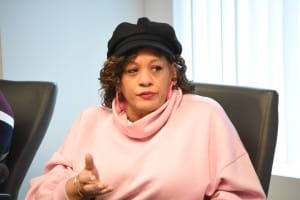
Paula Thornton Greear, the president and CEO of Planned Parenthood Action Fund, speaks at a roundtable of advocates discussing priorities for the incoming Benson administration and legislative term on Nov. 12, 2026. (Photo by Katherine Dailey/Michigan Advance)
Paula Thornton Greear, the president and CEO of Planned Parenthood Action Fund, similarly mentioned shield laws as a priority — including for providers of gender-affirming services — as well as access to medication abortion and telehealth services. She also pushed for legislators to end the 24-hour waiting period for abortions and parental notification requirements.
With Democrats set to control both chambers of the Legislature as well as the governorship, the advocates described a ‘mandate’ from Michigan voters to enact legislation that expands access to health care, including reproductive healthcare.
“Incremental progress is not enough anymore, and Michigan has a real opportunity to take a lead across this country,” Thornton Greear said. “We need things written into law. Executive orders are not strong enough; they can be torn down and broken, and they end. So we need to collectively push to have things written into law. An executive order is a promise written in pencil.”
Cassy Jones-McBryde, founder of the Michigan Chamber for Reproductive Justice and executive director of the Michigan Equity Action Fund, warned against the same problems that the last Democratic trifecta, from 2023 to 2024, faced.
“I was heartbroken when we also had a trifecta not so long ago, and we still didn’t get the promise of what the trifecta was,” she said. “We need to be audacious with our asks now. We have learned a few things from this administration. We know that we can be just as aggressive as the ways they took things from us, we can advocate and get things passed now that we have the promise of what this new administration here in Michigan will be.”
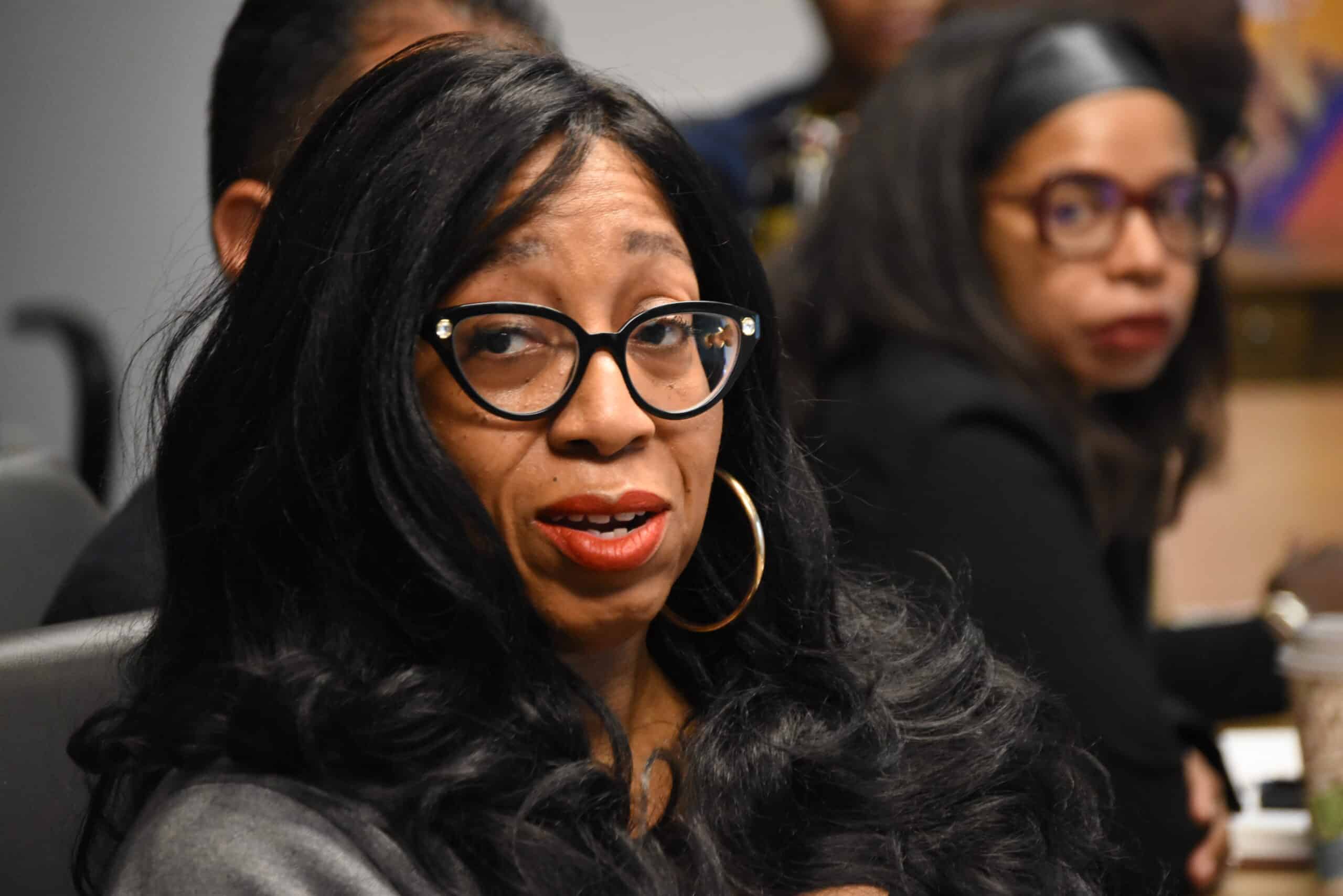
But Atkinson, speaking to Michigan Advance after the roundtable conversation, expressed hope about the bigger majority that the Democrats now hold and how it will prevent any one legislator from stalling key priorities.
“We are hopeful that this cohort of elected officials will not be as worried and timid because there’s only a few people holding the majority together, and we have weak legislators,” she said, “We don’t need legislators like that, and we have fewer of them in this — well, we’ll see. True colors will show, but because there is a nice cushion. I’m really hopeful that the leadership will be able to hold a core together to get these ambitious but meaningful and funded policies across the finish line.”
Thursday’s conversation also considered how policies outside of healthcare access do directly impact those conversations — including the harsh immigration policies of the Trump administration.
Dr. Seydi Sarr, an advocate and the founder and CEO of the African Bureau for Immigration and Social Affairs, described how immigrants in Michigan — including many who worked to mobilize voters for the Benson campaign and state-level Democratic candidates — are living in a culture of fear of being detained by ICE.
“Driving without a license in Michigan is a deportable offense. Taking your children to the hospital, taking your children to school, going to do grocery shopping can get you arrested,” she said, referencing stalled efforts to allow undocumented residents of Michigan to obtain drivers licenses. “You can end up in detention, and you could be deported. So when we have a trifecta, we have to make sure that we hold our community, our elected officials, accountable to their promises.”
Jones-McBryde also discussed social determinants of health impacting access to reproductive health outcomes that she hopes to see addressed under the Benson administration — including legislation to address water affordability and eviction protections.
Atkinson, who was announced as a part of Benson’s inauguration team on Thursday, said following the roundtable that, while she hopes to take her position on that team to celebrate the victory for Benson’s supporters, she also intends as an advocate to “stay visible in the administration, so that they see me and I’m a squeaky wheel.”
Whitmer directs state agencies to strengthen privacy protections for reproductive health data
Benson’s transition team — which is distinct from the team on which Atkinson holds a position — has faced criticism over her choice of members with strong ties to DTE Energy and the controversy-ridden Michigan Economic Development Corporation.
“I understand the criticisms and I also have concerns, but it’s about the undue influence that they might have, and the best way to combat that is with more representation,” Atkinson said. “So you know, just asking who’s there for childcare, who’s there for wages.”
Accountability was a strong theme throughout the conversation, with Thornton Greear noting that she has seen a trend of greater “self-accountability” among incoming leadership, who understand the message from voters about what is expected of them in the next term.
“You can have hope, but it is really quite useless without strategy,” she said. “The governor-elect’s office knows full well that the federal administration is not done coming after Planned Parenthood or other providers. Just look around the corner, and you’ll see that they are poised to do something once again detrimental to Title X, which will impact so many Michiganders. I think it’s incumbent upon us to continue having that dialogue, to work with the governor-elect’s office to plot a course forward, to be around the table collectively with her, and actually plot out what we can get done.”
Atkinson, who often advocates specifically for the “sandwich generation” — people responsible for both childcare and for elder care of parents — also added that she hopes to see Benson establish task forces to examine the actual administration of policy and the nuances of how different departments can work together.
“They have to deliver. They have to be specific,” she added. “They have to be able to say with their full chest, Black women need this, and when we do this for Black women, it will affect and help everyone.”
Heartland Signal encourages news organizations and content creators to use our content. You're welcome to republish this article for free as long as you follow our republishing guidelines.
Related Articles

Ohio House advances measure allowing firearm suppressors and short barreled rifles
Ohio House lawmakers approved a measure Tuesday eliminating long-standing restrictions on firearm suppressors and short-barreled rifles.
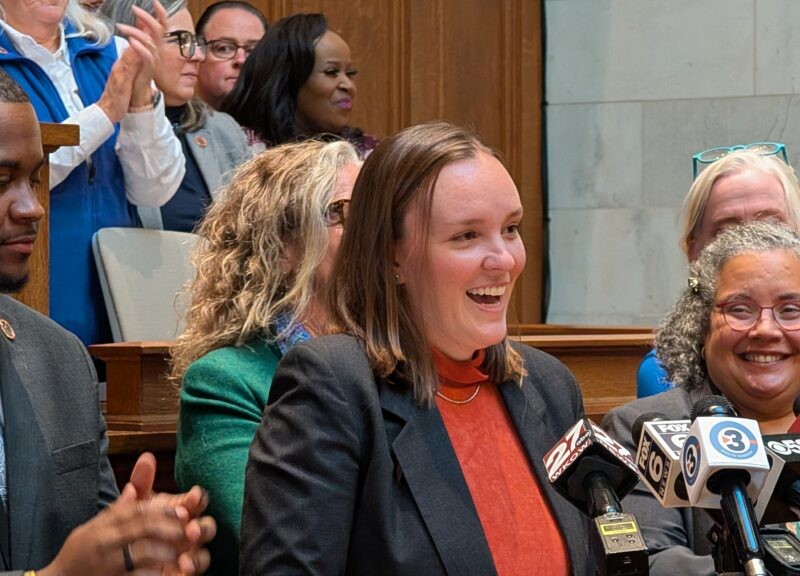
Wisconsin Democratic lawmakers step into new era with election of two women leaders
Wisconsin Democrats elected Rep. Greta Neubauer as the first female Assembly speaker and Sen. Dianne Hesselbein as Senate majority leader, marking the first time women will lead both chambers.
Ohio lawmakers have returned for lame duck, but bill banning child marriage continues to stall
Advocates are calling on lawmakers to pass a bill that would ban child marriage in Ohio.