
Former sheriff kicks off Minnesota gubernatorial campaign with an attempt to mislead local media
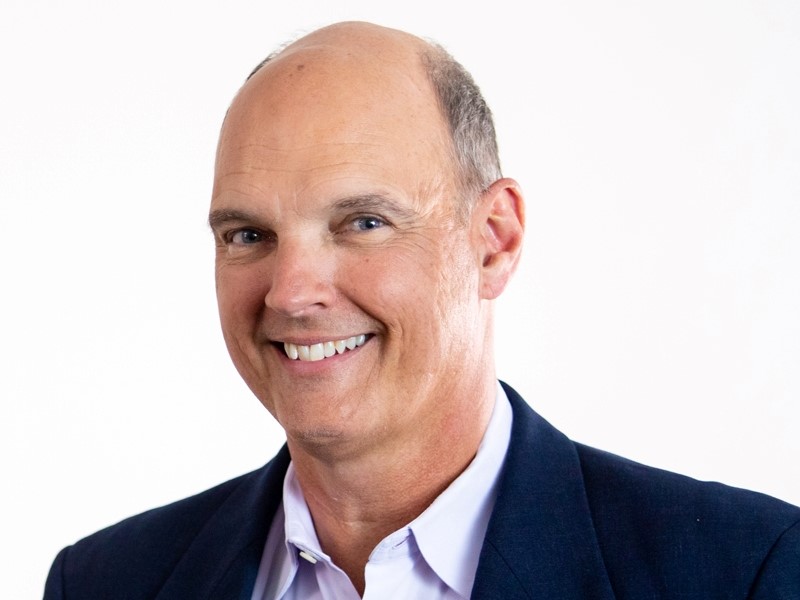
Rich Stanek, the newest GOP candidate for Minnesota governor, told Minneapolis ABC affiliate KSTP that he did not use racial slurs, saying he resigned as Minnesota Public Safety Commissioner in 2004 for other reasons. But according to a 1992 deposition, when asked under oath if he used those slurs, Stanek simply said, “yes.”
In 2004, Rich Stanek was forced to resign from his role as Minnesota Public Safety Commissioner when his admission to repeatedly using racial slurs while he was an officer with the Minneapolis Police Department surfaced.
Gov. Tim Pawlenty said at the time the person holding the position of public safety commissioner “has to have the public’s trust and confidence.” Questions regarding a person’s views on race “impedes that person’s ability to be effective in this job,” Minnesota Public Radio reported.
After announcing Tuesday he was entering the race for Minnesota governor as a Republican, the former Hennepin County Sheriff told Minneapolis ABC affiliate KSTP he “did not use that word.”
He said he resigned his position to “make it easy for the governor” and immediately returned to work with the Minneapolis Police Department.
But in the 1992 deposition, Stanek was asked point-blank if he’d ever used the “n——” slur around other officers, “when you were not quoting what other people said but expressing your own thoughts.”
“Yes,” Stanek replied. He noted other officers had used the slur and he had never told them it was inappropriate.
When asked whether he felt the use of the specific slur was inappropriate, Stanek said, “It depends on what the circumstances are.” He said he felt he shouldn’t use the slur in public, but said around his home or friends, “then I think that’s my business.”
He appeared to attempt to backtrack later in the deposition. When the lawyer asked for clarification about whether Stanek believed it was appropriate to use the n-word at work or around other officers, Stanek said it was not.
Responding to a follow up story from KSTP Wednesday related to the deposition and controversy, Stanek doubled down. “I have never used racial slurs when conducting my duties as a police officer,” he said. He claimed he was reciting things other people said — despite saying in the 1992 deposition that the slurs were his own words and thoughts.
The deposition stemmed from a 1991 civil suit filed against Stanek by Anthony Freeman. Freeman ran a red light in 1989 and struck Stanek’s vehicle. Freeman alleged in his own deposition, after the crash, Stanek approached his vehicle swearing and calling Freeman racial slurs, the now-defunct City Pages Newspaper reported.
Freeman said Stanek then broke out his driver’s side window and pulled Freeman from the vehicle. Stanek, who was in uniform, hit Freeman, handcuffed him and beat him “with his feet, fists, and other police-issued paraphernalia,” while Freeman lay face down on the ground, the complaint alleges.
The case was settled out of court for $40,000.
Stanek went on to serve in the Minnesota House of Representatives for five terms from 1995 until 2003. He then served as sheriff of Hennepin County — which contains Minneapolis — from 2007 until 2019, when he lost his re-election bid to Dave Hutchinson.
Minnesota Democratic Farmer Labor Party Chairman Ken Martin said in a press release, “Rich Stanek didn’t just admit to repeatedly using racial slurs under oath – he defended his choice to do so as ‘his business,’ when asked about it.”
Martin said it was a “low bar” to ask for a governor that rejects racism, “but Mr. Stanek failed to clear it.” Martin also called on the Republican Party to “make it clear they do not support the use of racial slurs,” by rejecting Stanek’s candidacy.
Executive director of Alliance for a Better Minnesota Marissa Luna told KSTP, “Stanek can lie about his past, but it only continues to prove that he is wrong and dangerous for Minnesota.”
Follow Zach Cunning on Twitter @zcheartlandsig
Heartland Signal encourages news organizations and content creators to use our content. You're welcome to republish this article for free as long as you follow our republishing guidelines.
Related Articles
Tiffany campaign blocks Milwaukee Journal-Sentinel reporter from event
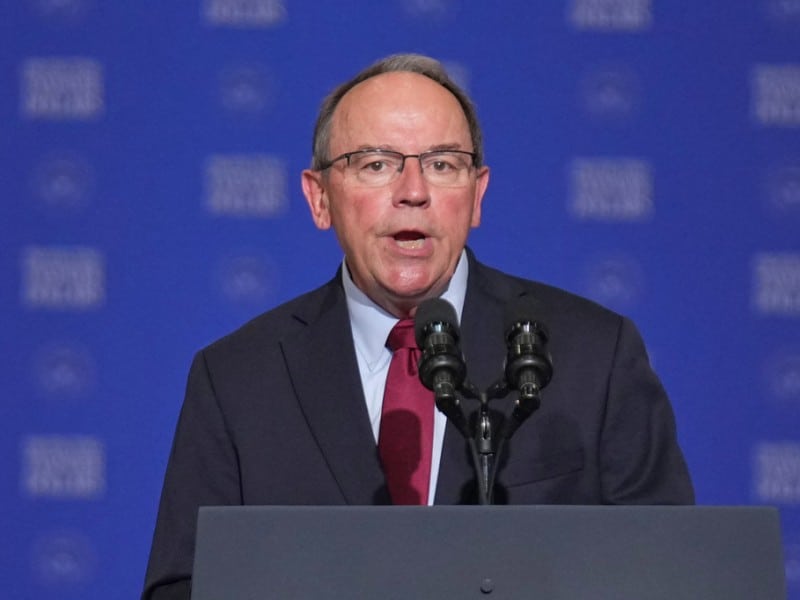
The gubernatorial campaign of Republican Tom Tiffany blocked a reporter for the Milwaukee Journal-Sentinel from entering an event in Milwaukee Thursday, preventing the state’s largest newspaper from covering the campaign.
Ohio GOP lawmakers tee up votes for gas tax holiday after Acton, then Ramaswamy, back idea
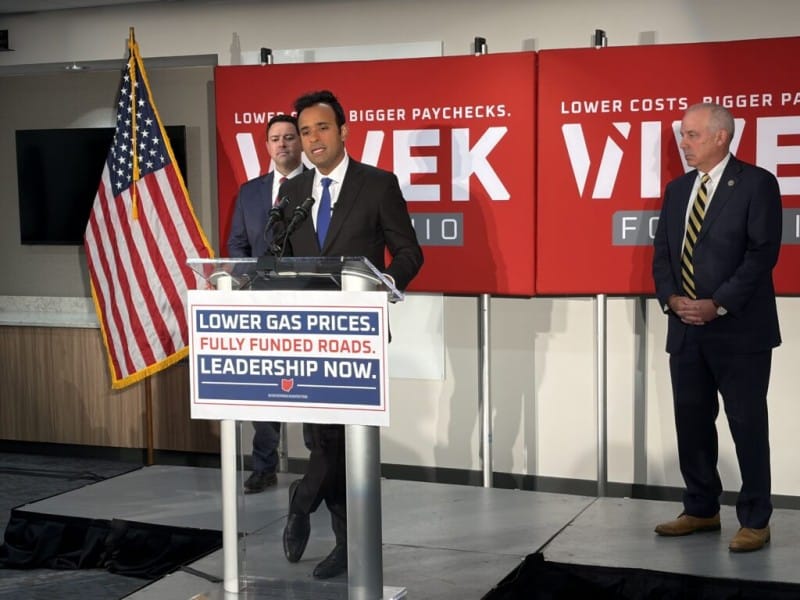
Ohio Republican candidate for governor Vivek Ramaswamy introduced his plan Wednesday for a 90-day gas tax holiday. It comes on the heels of Democratic candidate Amy Acton calling for a similar halt to the tax.
Amendment 6 could make another Missouri congressional gerrymander much harder
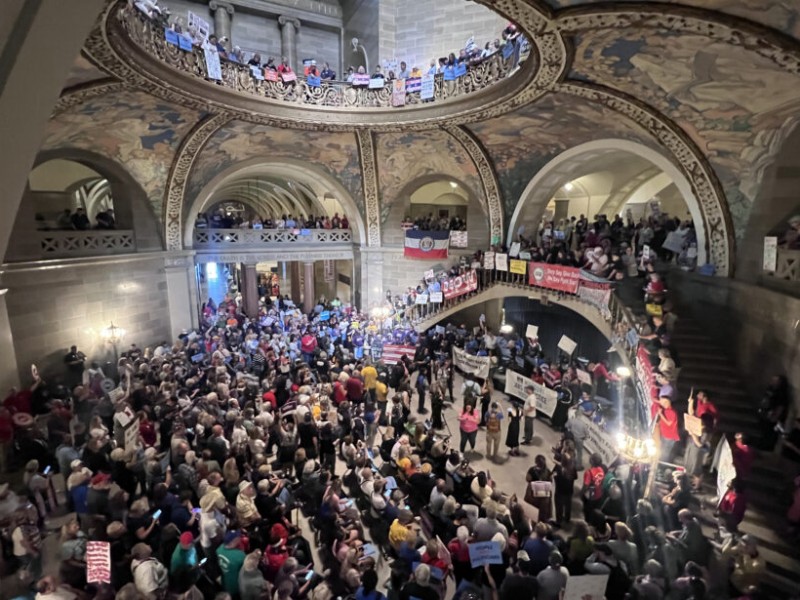
If voters reject the gerrymandered map in November, a second ballot measure could require 80% legislative support and another statewide vote for lawmakers to pass another map prior to the next census.