
OP-ED: Reproductive rights are in peril. Here’s how Illinois can defend them for all.

As a looming Supreme Court decision threatens to overturn Roe v. Wade, activists are gearing up to defend reproductive rights in our communities nationwide. Illinois has been a leader in this fight — our state is widely recognized as a beacon for access to reproductive health care, and we’ve taken great strides to protect reproductive rights. In 2019, Gov. J.B. Pritzker signed the Reproductive Health Care Act into law, establishing a fundamental right to reproductive healthcare, including abortion and maternity care.
And yet, people of color and people with few resources in our state continue to experience persistent and unacceptable maternal and reproductive health outcome disparities. To close these gaps and truly live up to our reputation as an oasis for reproductive health care, Illinois must become a state where all people can decide if, when and under what circumstances to be pregnant and parent. How? By making access to birth control universal.
Birth control is basic healthcare. Sixty-two percent of Illinois women from ages 15 to 44 use birth control, but contraceptive services are largely excluded from routine primary care. According to research by Power to Decide, nearly 800,000 women live in Illinois counties without reasonable access to the full range of birth control methods.
Medicaid holds healthcare providers accountable for conducting screenings to prevent depression, high blood pressure and substance use disorders, but not to meet patients’ contraceptive needs and desires — essential services for nearly every patient of reproductive age. Ninety-nine percent of people who are sexually experienced will use at least one contraceptive method in their lifetime, even though many are unable to conveniently access the method of their choice. It’s time to make contraceptive care a standard and essential component of primary care.
We can’t accomplish this goal without measuring where we stand now. As a first step, the Illinois Department of Healthcare and Family Services, which operates the state’s Medicaid program, should adopt benchmarks to evaluate how well providers are delivering accessible, high-quality contraceptive care. These benchmarks would improve services for the more 2 million Illinoisans enrolled in one of our state’s five Medicaid managed care plans. They could also pave the way for national standards measuring the quality and accessibility of contraceptive care.
Many patients in Illinois face another significant barrier: Religiously affiliated Medicaid providers can refuse to provide contraceptive care — a basic preventive service — and continue to receive taxpayer funding. One in three healthcare networks in Illinois have religious directives limiting the provision of family planning services. These directives disproportionately limit how easily low-income patients and people of color can access the contraceptive care of their choice.
To address this gross inequity, the state should require Medicaid insurance plans to document their capacity to offer a full range of reproductive health services. Plans should be required to give patients access to reasonable care options, accounting for travel distance, the availability of appointments and whether providers are accepting new patients. The state should require Medicaid plans to make members aware, through easy-to-understand language, of their right to access the full range of covered contraceptive options and their free choice of provider when seeking covered family planning services.
Finally, the state must expand Medicaid’s family planning coverage to include undocumented individuals and people on the path to U.S. citizenship. The state already pays for other reproductive health services, including abortion and perinatal care, for individuals regardless of their immigration status. It’s logical, compassionate, and fiscally prudent to cover birth control, too.
Recently passed legislation already commits the state to greatly expand contraceptive coverage for residents living at or below 213% of the federal poverty level. This expansion could result in 70,000 additional documented people gaining coverage for family planning care.
Now is the time for the state to cover all individuals regardless of their documentation status.
Easy, affordable access to birth control is fundamental to bodily autonomy. As reproductive rights erode nationwide, it is urgent that health care providers, payers and policymakers across Illinois lead the way to ensure unfettered access to birth control for all.
—
Kai Tao and Katie Thiede are the co-founders of Illinois Contraceptive Access Now (ICAN!), which works to advance reproductive health equity by improving the quality and coverage of contraceptive care.
Heartland Signal encourages news organizations and content creators to use our content. You're welcome to republish this article for free as long as you follow our republishing guidelines.
Related Articles

GOP Wisconsin legislator Zimmerman missed 225 votes last session, some to attend AI summit
Reps. Tip McGuire and Shannon Zimmerman were both booked on the same Milwaukee AI panel on June 24, 2025. McGuire withdrew so he could finish voting on the Assembly floor. Zimmerman made the panel, and votes kept being recorded in his name after he left his seat.
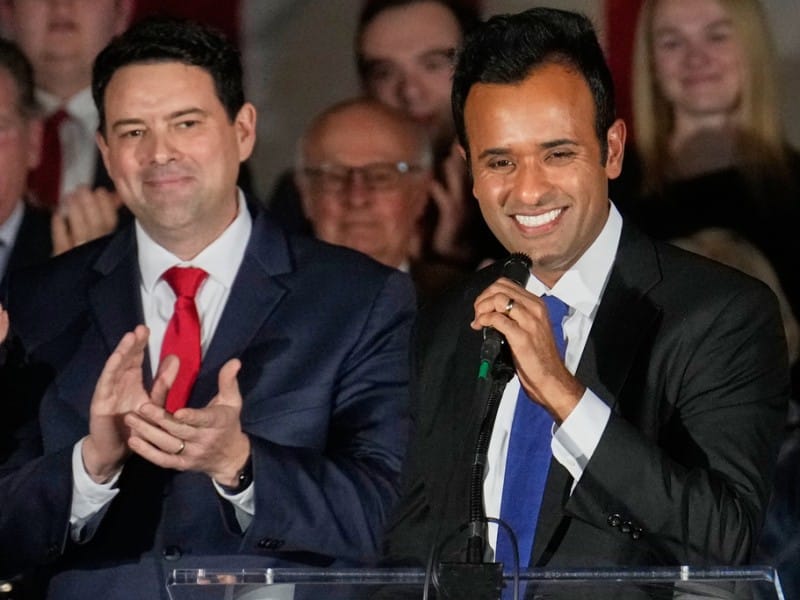
Ohio’s Ramaswamy and McColley have long backed near-total abortion bans
Even after Ohio voters overwhelmingly passed a 2023 constitutional amendment protecting abortion rights, GOP gubernatorial nominee Vivek Ramaswamy and state Senate President Rob McColley remain committed anti-abortion advocates. Audio from a recent rally shows McColley framing the constitutional defeat not as a setback, but as a shift in strategy.
Ryan Mackenzie’s stance on data centers collides with his policy record
Rep. Ryan Mackenzie says data centers should pay their fair share. His record includes a 2021 tax exemption vote and support for limits on local oversight.