Chicago Mayor Brandon Johnson discusses proposed property tax increase, his accomplishments with WCPT’s Richard Chew
On Tuesday, WCPT’s Richard Chew aired an interview he recorded the day before with Chicago Mayor Brandon Johnson.
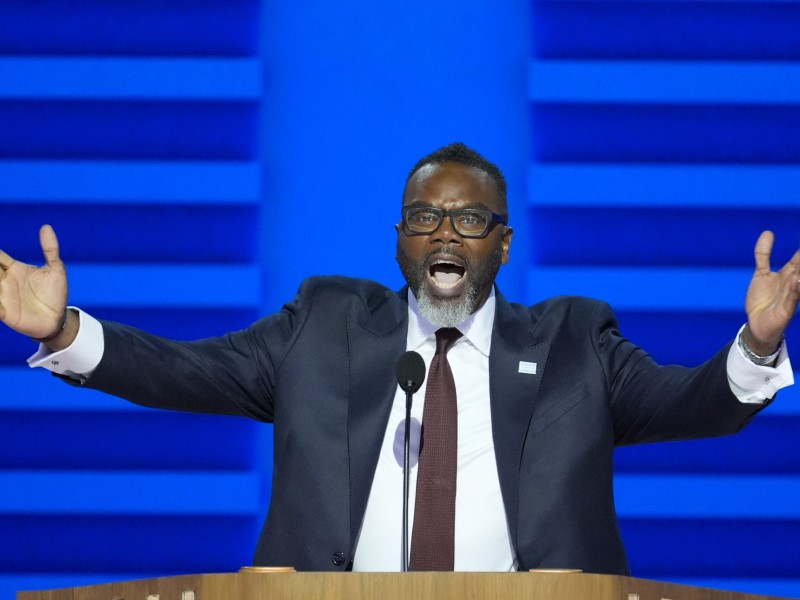
On Tuesday, WCPT’s Richard Chew aired an interview he recorded the day before with Chicago Mayor Brandon Johnson.
Conceding that the city of Chicago is “certainly not short of challenges,” Johnson put the focus on the budget he proposed late last month, calling it “the beginning of a discussion.” That proposal includes a $300 million property tax hike.
“Unfortunately,” the mayor told WCPT, “the only other choice that’s left, since we don’t have the progressive revenue that we fought for [with a proposed real estate tax hike that Chicago voters rejected in a March referendum], is either to have mass layoffs or to ask homeowners to lean in. It’s not something that I take lightly as a homeowner, because working families in this city constantly make tough decisions.”
Johnson said his ultimate goal is “to have real, sustainable, progressive revenue. The people of Chicago know that they voted for a fighter and an organizer. So even though those measures were defeated, I am not done fighting for those measures, and I’m counting on the progressive movement to continue to fight alongside of me as we go to Springfield to fight for more education funding.”
As Johnson avoided talking about recent controversies involving last month’s mass resignation of the Chicago School Board and last week’s forced resignation of his new pick to head that body — for social media posts deemed antisemitic and misogynistic — he pointed to investments his administration has made in youth and workforce development and affordable housing, and highlighted the downward trend in public safety metrics “from homicides to shootings to vehicular hijackings to robberies to criminal sexual assault.”
Looking ahead to 2025, the mayor said he plans “to continue to invest in our public schools to ensure that our children have access to libraries and librarians. As a former public-school teacher and as the first mayor in the history of Chicago to actually send their children to our public schools here in Chicago, I have tremendous confidence in that system and its ability to be transformed.”
Below is the full transcript of the interview. (Please note: The transcript has been edited for clarity.)
Richard Chew: Well, good morning. This is “Chew’s Views.” I want to welcome Chicago’s own Mayor Brandon Johnson to the show, and excited to have the mayor with us this morning here on Election Day to chat a little bit about what’s happening in his world and what’s happening in the greater political world that we all are in.
But right out of the gate, welcome, Mayor Johnson, to the show. How are you this morning?
Mayor Brandon Johnson: Hey, I’m doing terrific. Thanks for having me. It’s always good to be with the family, WCPT, progressive talk radio, you know, the spot where I got some of my political chops developed. So it’s great to be with you all this morning.
Richard Chew: Absolutely. Glad to have you with us.
So right out of the gate, I’ve got to give you your feathers in your cap, and that being the convention. I’m a Chicago guy, just like you. I’m a few years older than you. But I love our city, and I love how our city has stood up in recent years to all the garbage that gets thrown at Chicago about this, that and the other. And we know what those items are and we’re going to talk about them briefly. But I want to give you and your administration and the folks that you had outreach to for pulling off probably one of the best conventions in my entire adult voting life.
Mayor Brandon Johnson: Well, thank you for that, and really thanks to the people of Chicago who were incredibly patient throughout this entire ordeal. And I promised a safe and vibrant convention, and that’s exactly what we were able to deliver. I had no doubt that the extraordinary people of the city of Chicago would rise to the occasion, as we always do, and not only an exceptional convention but a historic convention, a historic convention that launched the first Black woman nominee, and, of course, a former social studies teacher with Governor Walz. So Vice President Kamala Harris and Governor Walz — what an incredible testament to who we are as not just a party but as a country. And it’s truly been an honor to serve as mayor of this amazing city. And again, the people of Chicago really rose to the occasion, giving us exactly what the people of the globe needed, and that was an exceptional presentation of what democracy looks like and what a world-class city looks like.
Richard Chew: Absolutely. And I know that in your role and in our meetings and talking in the past, it’s tough being a mayor of a big city, the third largest city in the country. It’s tough to be the mayor of the city of Chicago. You ran because you wanted to lead the city in a better, more positive direction. And we got a nice plug again — I think it’s the seventh year — from Condé Nast magazine for how great the city of Chicago is. And I know that’s something that you’ve got to be proud of.
Mayor Brandon Johnson: Yeah. It’s unprecedented. It’s actually eight years in a row where Condé Nast has declared the city of Chicago the best big city in America. And look, we have some incredible assets: 20 percent of the world’s fresh water, between Lake Michigan and St. Lawrence, is right in our front yard; the architecture; of course, the food is absolutely exceptional here in Chicago; one of the most walkable cities in all of America and, quite frankly, the globe. And so we offer so much: top universities, an incredible workforce. We are obviously very much a pro-workers town, a pro-labor town, something that I’m deeply connected to. So it is certainly, again, a remarkable testament to who we are as a city, as we continue to see the type of economic growth, as well as the diversity, continue to expand in our beloved city.
Richard Chew: Well, Mayor Johnson, the challenges that you face are obvious. We know them. I think the thing that you’ve done is you’ve shouldered the responsibility of a city that, as great as we are, we all know the city’s got big challenges: our city budget, taxes, our school system, what’s happening with CPD. I’m not a “gotcha” guy. I never have been. I probably won’t ever be. But I want you to talk about your vision in those areas with the city’s budget. We know that taxes have become a recent issue. We know that our school system is an issue. We know that policing is an issue. Talk about how we go forward with the recent challenges that have been in your lap.
Mayor Brandon Johnson: Look, the city of Chicago is certainly not short of challenges. I’ve inherited quite a bit, but it was really the motivation behind why I ran. Previous administrations have neglected the city’s finances, to the extent in which now we face a billion-dollar budget deficit. My first budget, it was a half a billion dollars, and the deficit, we were able to close that effectively, while still making critical investments.
But look, in the ’90s, when I was in high school, when administration after administration made a conscious decision to take the dedicated revenue for retirement, for our city’s workers and put that into the hands of developers, it left our city in the
financial dire strait that we’re in now. And so now that bill is due. They redirected the dedicated stream for retirement security, sold off assets. And I know you know this history: selling off the parking meters, selling off the Skyway; just poor decision after poor decision; closing schools — they said that was going to close the gap. It didn’t work. Shutting down public housing — they said that was going to help. That didn’t work. All it has done is exacerbated the push out of Black families in the city of Chicago, the gentrification of brown communities, and it’s left our communities unstable and unsafe.
However, since I’ve been in office, I’ve made critical investments in four key areas.
One, youth and workforce: 32 percent increase in youth and workforce. We hired almost 28,000 young people for summer jobs. You know how incredibly important it is for our young people to experience their purpose and have an opportunity to earn a W2. This particular budget that I’m proposing now: another increase, $52 million for youth and workforce development, and that’s going to increase the workforce up to 30,000. We made critical investments into behavioral mental health, reopening the mental health clinic in Roseland. Every single administration since Mayor Harold Washington has shut down mental health and behavior health care services. Well, we’ve expanded those. We created an alternate to 911, where behavior health counselors will show up to the 40 percent of the 911 calls that are essentially mental health crises.
We’ve also invested in affordable homes. We’ve built over 3,400 affordable homes since I’ve been in office. The $1.25 billion investment that I passed in April [is] the largest investment for economic development and housing in the history of Chicago.
And then, finally, public safety. As you know, that’s been top of mind for Chicagoans in every single major category, from homicides to shootings to vehicular hijackings to robberies to criminal sexual assault. We continue to see the downward trend. I promised to hire 200 more detectives by the end of my first term. We’ve done that by — we’ll do that by the end of this year. The three helicopters will be online by the end of this year as well. So there’s a lot to celebrate. And in this particular budget, we’ve saved $300 million [for the] taxpayers through efficiencies. We did $200 million in this particular budget in efficiencies and savings. But even with all the savings that we’ve made, with all the vacancies that we have cut, there’s still roughly a $300 million gap that we have to close.
Now, I pushed for Bring Chicago Home, as our progressive listeners know. The corporate interests worked to confuse and to conflate the voters, and we unfortunately were not able to capture that $100 million. The governor of Illinois — valiant effort to have a progressive income tax. We’re only one of 11 states that do not have a progressive income tax. We lost that revenue. Ken Griffin beat that back, and then he moved, right? And so now we’re in a position now with all of the efficiencies and even with some of the other revenue ideas, there’s a $300 million gap that I still have to close. And unfortunately, the only other choice that’s left, since we don’t have the progressive revenue that we fought for, is either to have mass layoffs or to ask homeowners to lean in. It’s not something that I take lightly as a homeowner, because working families in this city constantly make tough decisions. But absent more forms of progressive revenue, which the state of Illinois controls a good portion of our ability to raise progressive revenue, has left me with only one other option, if we don’t want to see mass layoffs, particularly in police and fire, and that’s to raise property taxes.
Richard Chew: Yeah. And we know that people are not going to be happy about that, and I will commend you on dealing with it. I’m not happy about it. And let’s be honest: I don’t think you’re happy about it. I think you, from what you’re saying, recognize that this is a thing that we may have to do and advocate for, and I know it’s going to be a tough haul. You campaigned on not wanting to do that, and now you’re faced with that reality. So it does put reality to the fact that you campaigned on certain things, and then you deal with the realities of what the powers that be force you to do.
Mayor Brandon Johnson: It really does. And I just think, to another point to that: We’re talking about our corporate fund right now, and 45 percent of our corporate fund is made up of police and fire. And so, in order to close that $300 million gap, we’re talking about potentially 2,500 police officers, 600 firefighters, 200 personnel in Streets and Sanitation. That would harm economies, particularly in the 41st and the 19th Ward. These are wards where police and fire overwhelmingly live, so I don’t want our neighbors to be laid off either. It is a very difficult and tough decision, but it is a proposal. I put forth a balanced budget. The City Council’s responsibility is to pass it. And so this is the beginning of a discussion. And again, the goal is to make sure that we continue to make critical investments.
Richard Chew: And I appreciate you making sure that people understand it’s a proposal. It’s a starting point. We’ve got to work through this. Listen, Mayor Johnson, I’ve said this for years: I don’t mind paying more in taxes, property taxes, or whatever tax conversation we’re having, if we know — and I think a lot of people would agree with me on this, and I think you probably do too. If we raise taxes in some areas, and we know what’s going to happen with that money, or we have a pretty doggone good idea, as citizens, of a particular municipality, what’s that being done for? I think people get on board. Is that your belief or been your experience?
Mayor Brandon Johnson: It is. In fact, as you articulated quite well, that the people of Chicago rely upon these dedicated services. We want our trees trimmed. We want our garbage picked up. But even deeper than that, we want to make sure that those critical services, particularly around public safety, that those are not compromised, right?
You mentioned earlier about the investments in our public schools. So when I was an organizer, man, I used to just constantly push previous administrations to use the TIF surplus to go towards the taxing bodies. And then every administration would say, well, we can’t do it, and they would hem and haw about it. When I got to the fifth floor, one of the things that was absolutely clear is that what we fought for, for TIF surplus, could actually be delivered. Right now, we have the second largest TIF surplus in the history of Chicago. Since I’ve been mayor, $300 million is going to go towards our Chicago Public Schools, millions of dollars going towards community colleges. Some more exciting news about our public education system: Enrollment in our community colleges is up almost 12 percent. Here’s the part that I’m real excited about. The number one subgroup of registrants, enrollees in our community colleges are Black young men. We’re working now with Malcolm X College to build a satellite campus on the West Side that’s solely dedicated to training women and men in the trades. We have $20 billion of new investments that have come to Chicago since I’ve been mayor. I want to make sure that the workforce is available to participate in that growing economy. So whether it’s the TIF surplus, whether it’s fighting for progressive revenue, as a progressive mayor, we have fought for every single measure that would help provide a more sustainable economy, and unfortunately, again, the interests of the ultra-wealthy in this city, in this state-
Richard Chew: In this country.
Mayor Brandon Johnson: In this country, right.
Richard Chew: The reality is, and I was asked this question by some very dear folks when I ran my mouth this weekend saying, yeah, I’m going to have Mayor Johnson on — I was excited about it, and you probably hear it in my voice, and that’s genuine excitement — people said, well, “why did” and “how come?” Well, at the end of the day, your predecessor, even though you ran against her sternly, she had external forces that were constantly giving her hell about things that she was trying to do to improve the city of Chicago. Now, we all know that she made some decisions that we all weren’t cool with and people said various things about her. But at the end of the day, when external forces are pushing against the goal to move the city forward, that makes it difficult. I mean, you signed up for it. We know that. So as much as I’m giving you your kudos and your flowers, you did sign up for this. And I would ask you this question, as much as I can respectfully ask you this question: What will be your measuring stick, things that you need to have had happened in this first term to tell you or to give you an idea that it was a successful first term?
Mayor Brandon Johnson: Yeah. Thank you for that. When I first jumped into the race a couple of Octobers ago, public safety was the number one issue in Chicago, and what we have seen gradually over time is that more and more of our residents are becoming more active and involved in the full force of government keeping our community safe. But we have seen a decline in homicides and shootings and robberies. There’s still a lot of work to go, but that is a measure of the investments that we’ve made. Youth and workforce — how many more people can we give access to W2s? And we’ve seen a 32 percent increase since I’ve been in office.
Behavioral health and mental health: Not only did we reopen mental health clinics and providing more behavior and mental health care services, we moved away from the pilot program of the alternate [response] to 911 when we had co-responders, which included police officers. That is no more. So when there’s a mental health crisis, it’s only mental health crisis workers showing up.
And then affordable homes: How many more homeowners can we create? Right now we’re at 3,400 and counting. I mean, these are the things that that I am holding myself accountable to.
The ultimate goal is this: We have to have real, sustainable, progressive revenue. The people of Chicago know that they voted for a fighter and an organizer. So even though those measures were defeated, I am not done fighting for those measures, and I’m counting on the progressive movement to continue to fight alongside of me as we go to Springfield to fight for more education funding. We fought for an evidence-based funding model that would fund our schools based on need and not on a per-pupil basis. Well, I pushed the Chicago Public Schools to embrace that model. No other administration has done that.
The state of Illinois conservatively owes the districts across the state of Illinois $3.6 billion; that’s 1.1 billion (dollars) for the city of Chicago, 2.5 (billion dollars) for the rest of the state. We can fight that together. We have partners in Springfield that I know want to invest more in our public education system. These are the things that I was elected to fight for, and these are the things that we’ve been able to accomplish.
Some things that we should be proud of: We have the most expansive paid-time-off ordinance right now in the entire country. The people of Chicago asked for a day off. Well, I gave them 10. We abolished the sub-minimum wage. Take workers: Primarily brown and Black women will receive raises on top of their tips. So the progressive charge is alive.
I don’t want people to become weary and despondent. When our city was under attack by the governor of Texas, sending busloads of people to the city of Chicago to score political points with extremism in this country, we were able to operationalize this crisis and then manage it. Right now, in this budget, we have just created a single shelter system for all individuals who are experiencing the horror of being unhoused.
And so, these are the things that as progressives we push for. These are the things that we’ve accomplished. We cannot allow the naysayers, the doubters as we shift course from a raggedy form of government, where people were irresponsible towards taking care of our retirees. These are the things that we fought for. And we’ve had two credit upgrades since I’ve been in office. It is proof positive that progressive leadership can make investments and have financial[ly] responsible stewardship.
And I think the last thing that I just want to encourage us as progressives: We are strongest when we continue to organize. And so this is something that I’m pushing for, and I’m looking forward to serving the city of Chicago, the remainder of this term and getting geared up for the next election, in a couple of years.
Richard Chew: So well stated, and I’m going to make a couple statements and then let you wrap up.
If folks have something to do — young folks, old folks, in between — if they have something to do positive, they’re not going to be doing anything negative. And that’s why the jobs work that you’re doing and those programs there are so substantially important, because when folks have something to do, they’re not going to be out there robbing grandma and doing this and that and the other. So I appreciate you leaning into that.
A suggestion, Mayor Johnson: More people need to know about what you’re doing. I mean, if we do it here on CPT, on my show on “Chew’s Views,” I’m proud to do that. More folks need to know about those things that you are accomplishing, because I think the more that people know about them, the more they can buy into that which it is that you’re doing. Give us your vision for 2025 as we wrap up, Mayor Johnson,
Mayor Brandon Johnson: Yeah, we’re going to continue — thank you for that. I’m going to continue to lead this city in the bold, tenacious way in which the people of Chicago expect me to do. And in 2025, of course, we have a big election today. Voting for Vice President Kamala Harris and another fellow social studies teacher as myself, Governor Walz, will certainly put the city of Chicago and America in a stronger position. We’ve re-instituted and developed the Department of the Environment here in Chicago after it was dismantled two administrations ago.
I really see 2025 as a key indicator of what it means to lead with boldness. So we’re going to continue to expand the youth employment and workforce. We’re going to continue to invest in our public schools to ensure that our children have access to libraries and librarians. As a former public school teacher and as the first mayor in the history of Chicago to actually send their children to our public schools here in Chicago, I have tremendous confidence in that system and its ability to be transformed. And then, finally, between behavior and mental health and ensuring that our communities are safer: That is the goal and the vision for the city of Chicago, to continue to invest in people to build a better, stronger, safer Chicago.
Thank you so much, brother.
Richard Chew: No, absolutely, Mayor Johnson. I’m in your corner. I’m the guy that’s going to criticize and compliment in the same sentence because that’s how we move forward. And I will say to you, I’m hoping you’re going to hang out with us some more after we get through this election, to get into 2025. We definitely want to be here, because I’m a Chicago guy. I want our city to be the best, continue to be the best city in the country, if not the world. And I appreciate your leadership. I know it’s not easy. I know it’s what you signed up for, but we appreciate you being on “Chew’s Views” this morning. Thanks, Mayor Johnson.
Mayor Brandon Johnson: Hey, you’re certainly welcome. You can count on me. We’ll see you on the other side of the election. Let’s go, Kamala. Let’s go, America.
Richard Chew: Let’s go, America. All right. Mayor Johnson, thanks for being with us this morning.
Mayor Brandon Johnson: You’re welcome.
Heartland Signal encourages news organizations and content creators to use our content. You're welcome to republish this article for free as long as you follow our republishing guidelines.
Related Articles
Pillen memo calling for 5% cut across Nebraska agencies raises questions about governor’s authority
For the University of Nebraska, a 5% cut could subtract $36 million from its newly approved operating budget
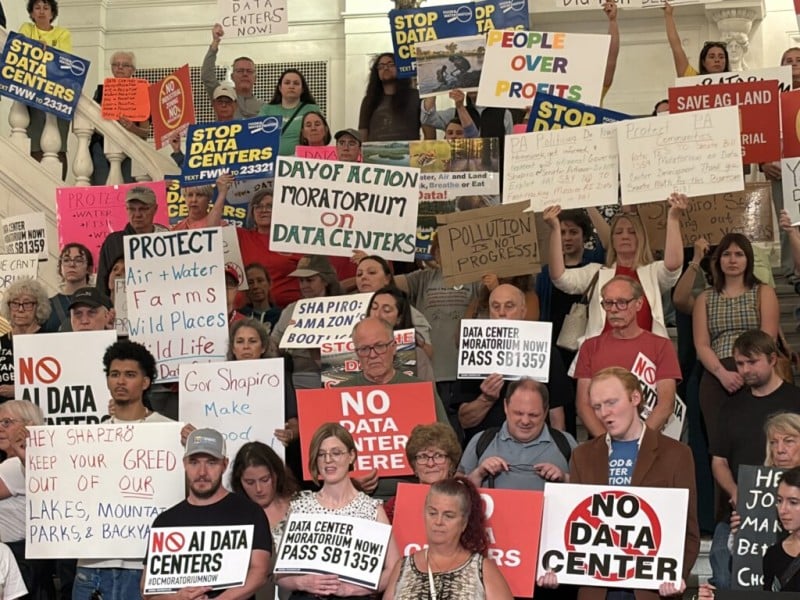
PA legislature wrestles with how to handle data center developments
State legislators in Harrisburg have largely resisted any comprehensive regulation, on data centers, instead focusing on piecemeal, largely bipartisan efforts.
Michigan Speaker Matt Hall defends GOP lawmaker over ‘victim mentality’ comments about colleague’s dead daughter
Michigan House Speaker Matt Hall (R-Richland Township) defended state Rep. Jim DeSana (R-Carleton) Thursday after a Detroit News report revealed DeSana’s controversial comments about one of his colleagues.