
Trump administration terminates billion-dollar food program for schools, food banks
As a part of President Donald Trump and billionaire Elon Musk’s austerity regime, more than $1 billion in funds used by the Department of Agriculture towards schools and local food banks have been cut.
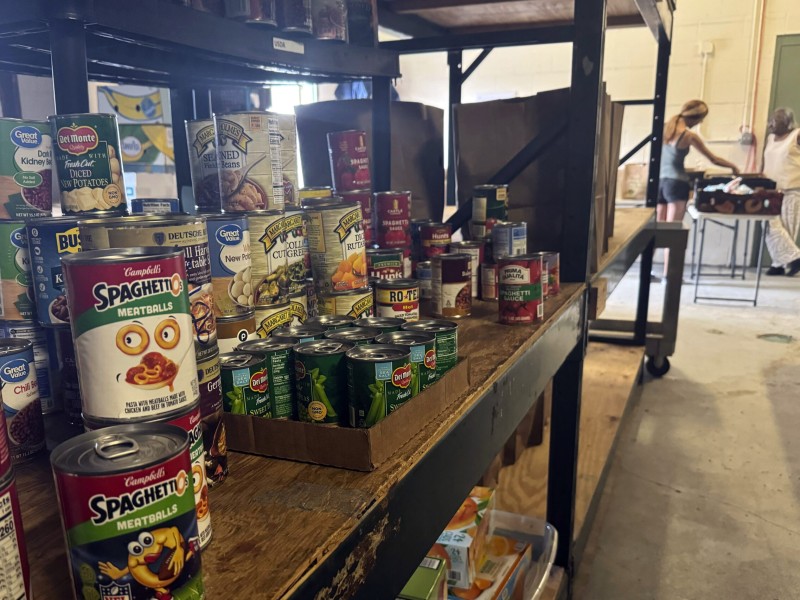
As a part of President Donald Trump and billionaire Elon Musk’s austerity regime, more than $1 billion in funds used by the Department of Agriculture towards schools and local food banks have been cut.
The vast majority of these funds, some $660 million, are dedicated to educational and child care institutions through the Local Food for Schools Cooperative Agreement Program (LFS), which allows them to purchase large sums of food from nearby farms and ranches.
The announcement came last Friday, leaving the over 40 states who signed on to the program — and the communities that depend on LFS — with little warning. Funding for the Local Food Purchase Assistance Cooperative Agreement Program (LFP), the LFS’s sister program designed specifically for food banks, was also slashed.
While the first round of funding towards both LFS and LFP, which was confirmed under the Biden administration last October, will be unfrozen, the second portion will not be allocated in fiscal year 2025.
Such cuts will have a substantial impact on Heartland communities. In Illinois, where $26 million in LFP and LFS funding was earmarked, officials were quick to delineate the harm.
“This loss in support for our farmers, especially those from communities that have historically been disinvested in, is a loss for everyone in our state,” Illinois Department of Human Services Secretary Dulce M. Quintero said.
Indeed, last year, Chicagoland households that leaned on food pantries and grocery programs rose by 57% compared to 2020 statistics.
And in the Hawkeye State, the Iowa Food System Coalition reacted to the loss of $11 million.
“It is outrageous to think that this promise to Iowa farmers, schools, food banks, and childcare centers could be broken. This could not come at a worse possible time as farmers have already planned their season,” the coalition’s executive director, Chris Schwartz, told KGAN.
Schwartz also pointed to the impact this would have on farmers and others in the agriculture industry who rely on the funds.
“In greenhouses across Iowa the plants are already sprouting up, processing time in meat lockers has already been booked, seeds have been ordered, money spent, and countless hours of planning have been done. Now we are going to pull the rug out at the 11th hour and leave these folks out to dry,” Schwartz added.
Heartland Signal encourages news organizations and content creators to use our content. You're welcome to republish this article for free as long as you follow our republishing guidelines.
Related Articles
Missouri education board declines to seek $300 million increase in school aid
After a stalemate, the board voted to keep its foundation formula request flat despite rising costs under state law.
December trial date set for South Dakota lawmaker facing election-related felony charges
A judge in Minnehaha County set a December trial date on Tuesday for a South Dakota state senator facing election-related felony charges.

Jackson County GOP names 9/11 golf sponsorships after attack sites
Sponsorship tiers named for the Twin Towers, the Pentagon and Flight 93 are on sale for a “Tee Off in Remembrance” event on the attacks’ 25th anniversary.