
With Michigan work project funding on hold, Hall says deal to restore funds is possible
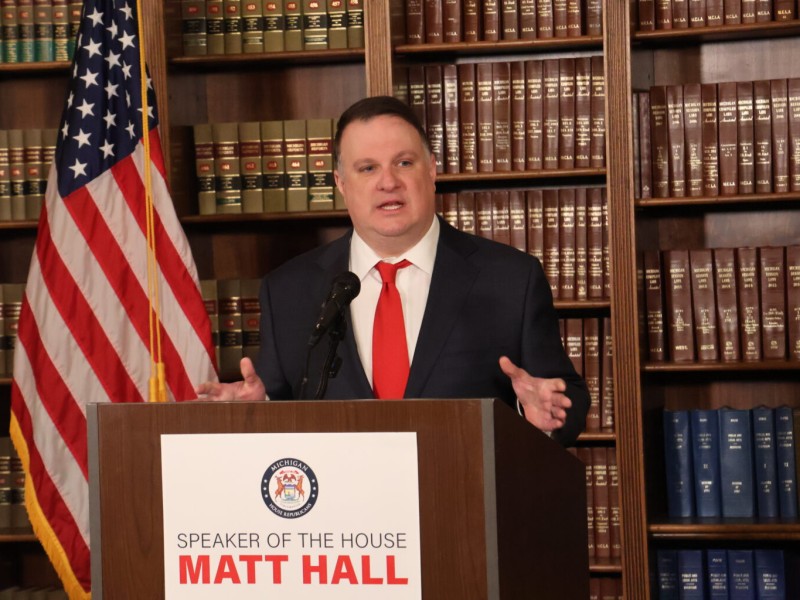
Following a Friday decision to bar the state from spending contested work project funds, Michigan House Speaker Matt Hall told reporters he’d be open to restoring funds to some work projects through a supplemental budget, provided the Senate’s Democratic leadership abides by the transparency rules championed by the Republican-led House during last year’s budget negotiations.
“Ultimately, we’ll get a deal. We’ll make a deal on the supplemental. It’ll have to go through HEAT – the Hall Ethics, Accountability and Transparency plan, something the Democrats don’t want,” the Richland Township Republican said during a press conference Wednesday.
In early December, Republican members of the House Appropriations Committee voted to disapprove $645 million in work project funds, prompting strong criticism from legislative Democrats, who called the vote “cruel” while noting these cuts included funds for programs to provide wigs for cancer patients, among other efforts.
Senate Democrats quickly moved to pass a $634 million supplemental budget to offset the cuts, which received the support of five Republican senators. Senate Appropriations Committee Chair Sarah Anthony (D-Lansing) also requested an opinion from Michigan Attorney General Dana Nessel, a fellow Democrat on whether the House could cancel the projects.
While Nessel declared the move to cancel the funds unconstitutional, House Republicans filed a lawsuit to bar state departments from using the funds.
Michigan Court of Claims Judge Michael Gadola ruled Friday that the state cannot encumber, expend, transfer, or otherwise obligating any of the $645 million in unencumbered funds canceled by the House, though the order does not apply to any funds paid out by the budget office as of Sept. 15, 2025.
Hall also slammed Gov. Gretchen Whitmer’s administration, arguing they had failed to account for how much of the work project funding had been encumbered, or committed to a specific purpose.
When asked for comment Whitmer Press Secretary Stacey LaRouche directed Michigan Advance to the State Budget Office, which declined to comment on the record.
While Hall was willing to restore funding to some of the programs, he emphasized that not every dollar would be returned.
“My point is we’re not going to give the $600 million back, but maybe we’ll do $100 million, and then we’ll keep the other $500 million and that’ll be really helpful with the budget,” Hall said, giving a hypothetical scenario.
In the coming budget, Hall said lawmakers will need to pursue $1.2 billion in their next budget to account for a decrease in projected state revenue.
Rosie Jones, spokesperson for Senate Majority Leader Winnie Brinks (D-Grand Rapids), did not respond to a request for comment.
Michigan Advance is part of States Newsroom, a nonprofit news network supported by grants and a coalition of donors as a 501c(3) public charity. Michigan Advance maintains editorial independence. Contact Editor Jon King for questions: info@michiganadvance.com.
This article, “ICE may be tracking you via your cell phone. A Minnesota law can help,” has been republished from the Michigan Advance under Creative Commons license CC BY-NC-ND 4.0.
Heartland Signal encourages news organizations and content creators to use our content. You're welcome to republish this article for free as long as you follow our republishing guidelines.
Related Articles
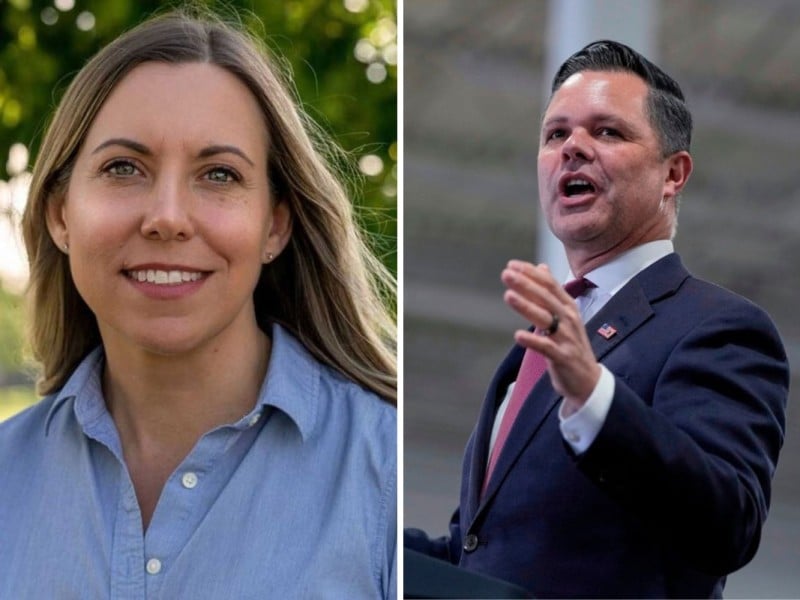
Nunn vs. Trone Garriott: Where Iowa’s 3rd District candidates stand
Rep. Zach Nunn voted for Medicaid cuts that shuttered health clinics and backed tariffs that raised costs for Iowans. State Sen. Sarah Trone Garriott is challenging the Iowa Republican, campaigning on lowering health care expenses and ending tariffs.
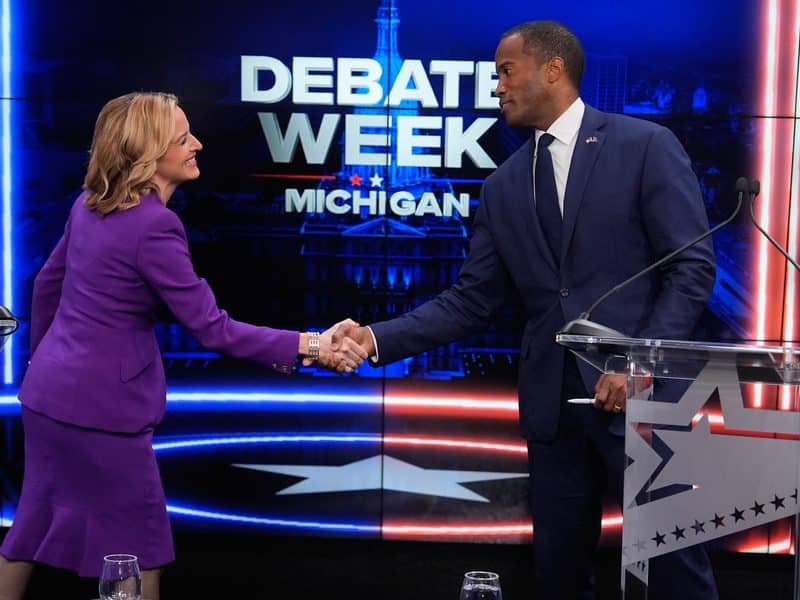
Data centers investments, personal finances take center stage at Michigan governor debate
Michigan gubernatorial candidates Jocelyn Benson and John James faced off over rising living costs, government reform and data center developments. While both candidates agreed on a couple issues, they clashed over transparency and who is best equipped to lead the state.
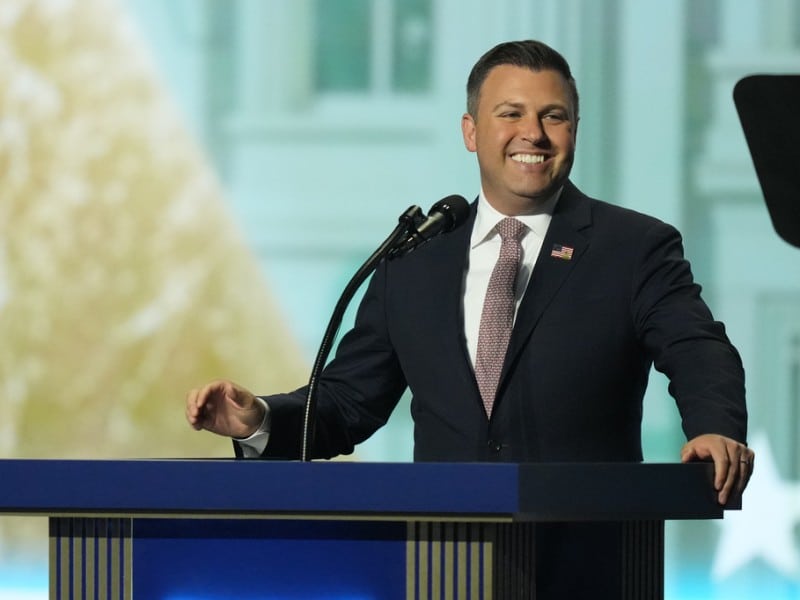
FACT CHECK: Ryan Mackenzie parrots misleading claim denying Iran War is spiking fuel prices
U.S. Rep. Ryan Mackenzie (R-PA) is repeating misleading claims that recent high fuel prices aren’t driven by the war with Iran. Experts say even with sea passages open, risk premiums and lost oil supply from ongoing Middle East conflict continue to keep prices inflated.