
Kansas bill would allow for-profit companies to continue charging veterans for disability claims
The Kansas House of Representatives recently approved a bill that regulates for-profit veteran consulting companies but still allows them to continue charging veterans for the free services that are guaranteed to them by law.
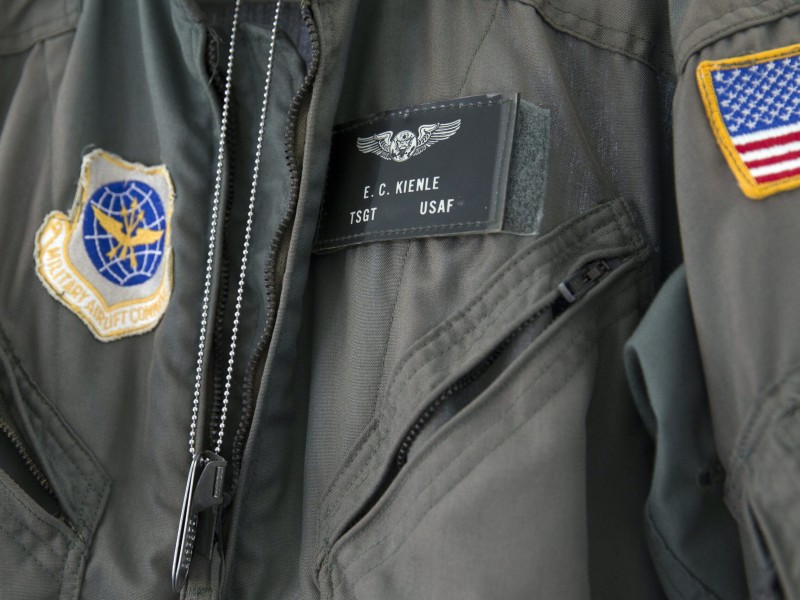
The Kansas House of Representatives recently approved a bill that regulates for-profit veteran consulting companies but still allows them to continue charging veterans for the free services that are guaranteed to them by law.
House Bill 2214, a Republican-written bill that passed in the state House of Representatives with broad GOP support (81 Republicans voted for it, while all 36 Democrats voted against it), addresses concerns that these for-profit companies are illegally charging veterans. However, HB 2214 stops short of making these services illegal, like a previous bill introduced in 2024 did.
The for-profit consulting companies help veterans prepare and submit claims to the U.S. Department of Veterans Affairs (VA). Although VA claims can take an average of 76 days to process, the VA recently reported a 57% drop in the claims backlog since President Donald Trump was inaugurated for the second time in January 2025.
The guardrails for-profit consulting companies must abide by if HB 2214 becomes law includes:
- Collecting a one-time fee no more than five times the monthly increase for the veteran
- Telling veterans that the same services are offered for free at other organizations
- Prohibiting companies from using a veteran’s personal login to access medical, financial or government information
HB 2214 will need approval in the state Senate before it is sent to Gov. Laura Kelly’s (D) desk. If she vetoes the bill, Republicans have enough seats in both chambers of the state legislature to overwrite her veto.
Lobbying efforts
Opponents to these companies, including the Veterans of Foreign Wars of the U.S. (VFW), call them “claim sharks.” One such company, Veterans Guardian, has spent more than $5.3 million for lobbying at the federal level since 2020, and hundreds of thousands more at the state level. Veterans Guardian supports HB 2214.
The company has spent money to oppose House Resolution 1732, a federal bill introduced by U.S. Rep. Chris Pappas (D-NH) that would reinstate penalties for companies charging veterans fees for benefit claims.
Former Kansas state Rep. Jim Karleskint, who introduced the previous bill to crack down on these for-profit companies, told the Kansas Reflector he believes similar lobbying efforts are pushing HB 2214 through the Kansas Legislature.
“There’s too much money involved,” Karleskint said. “Individuals in leadership are supportive of this bill. And that makes a big difference.”
Veterans Guardian did not respond to a request to comment for this story.
Last year, Veterans Guardian co-founder Bill Taylor told The War Horse, a nonprofit newsroom that reports on veteran and military issues, that lobbying is a necessity for his business.
“That’s hurt,” Taylor said of the money it has spent lobbying. “But it’s either do that, or I shut my business down.”
Veterans Guardian fraud accusations
Veterans Guardian charges a fee equal to five times a client’s successful disability rate increase. For example, if a client’s VA disability rating increased from 30% to 100%, their monthly payment from the government would increase by $3,386.11, but Veterans Guardian would collect a total of $16,930.55 from the veteran.
Leslie Carico, a former Veterans Guardian employee who was terminated for “toxic behavior,” filed a whistleblower lawsuit in 2020 accusing the company of using fraudulent business practices and deceit to obtain the highest disability rating for clients and, thus, a larger commission for the company.
“Veterans Guardian in essence hijacks the application process, wresting control of it from the veteran in order to utilize a fraud-laden business model which the Defendants deliberately engineered to ensure that Defendants will enjoy the largest commission possible. Indeed, even clients’ signatures are routinely forged,” the lawsuit argues.
An investigation into Veterans Guardians conducted by The War Horse, found evidence of fraudulent business practices aimed at maximizing profits. The publication interviewed several current and former employees who corroborated the whistleblower’s claims.
Some of the fraudulent practices Veterans Guardian has been accused of include changing depression evaluation scores, coaching applicants to look tired or depressed, using amateur psychologists, telling clients the VA can’t be trusted, including nonexistent medical conditions on claims, limiting client interviews to eight minutes and prioritizing clients who had a better chance of a successful claim.
In an interview with The War Horse, Taylor denied the claims against his company and called Carico’s lawsuit “baseless.”
“I might be able to convince one or two people, maybe three to do something nefarious,” Taylor told The War Horse. “There is no way I can convince this many people to cheat veterans, to take advantage of veterans. We’re proud of what we do.”
Last September, a North Carolina judge dismissed Veterans Guardians’ motion to dismiss the lawsuit.
Heartland Signal encourages news organizations and content creators to use our content. You're welcome to republish this article for free as long as you follow our republishing guidelines.
Related Articles

Jackson County GOP names 9/11 golf sponsorships after attack sites
Sponsorship tiers named for the Twin Towers, the Pentagon and Flight 93 are on sale for a “Tee Off in Remembrance” event on the attacks’ 25th anniversary.

Michigan Senate passes new versions of nine bills held up in House, vetoed by Whitmer
Members of the Michigan Senate on Thursday pushed forward with new versions of nine bills that became the subject of controversy when the legislation was prevented from reaching the desk of Gov. Gretchen Whitmer by the Republican-led House of Representatives.
Skinner brags about failed Lake Altoona project in campaign ad
The Wisconsin Senate candidate’s ad brags about a project she says cleaned up Lake Altoona for free. County records — and Skinner’s own voting record — tell a different story.