
Rep. Hillary Scholten to face Terri DeBoer in Michigan’s 3rd Congressional District race in November
In Michigan’s 3rd Congressional District, Rep. Hillary Scholten (D) will face Republican nominee Terri DeBoer in a general election match-up this November. DeBoer is a former meteorologist who has received heavy financial backing from the billionaire DeVos family.
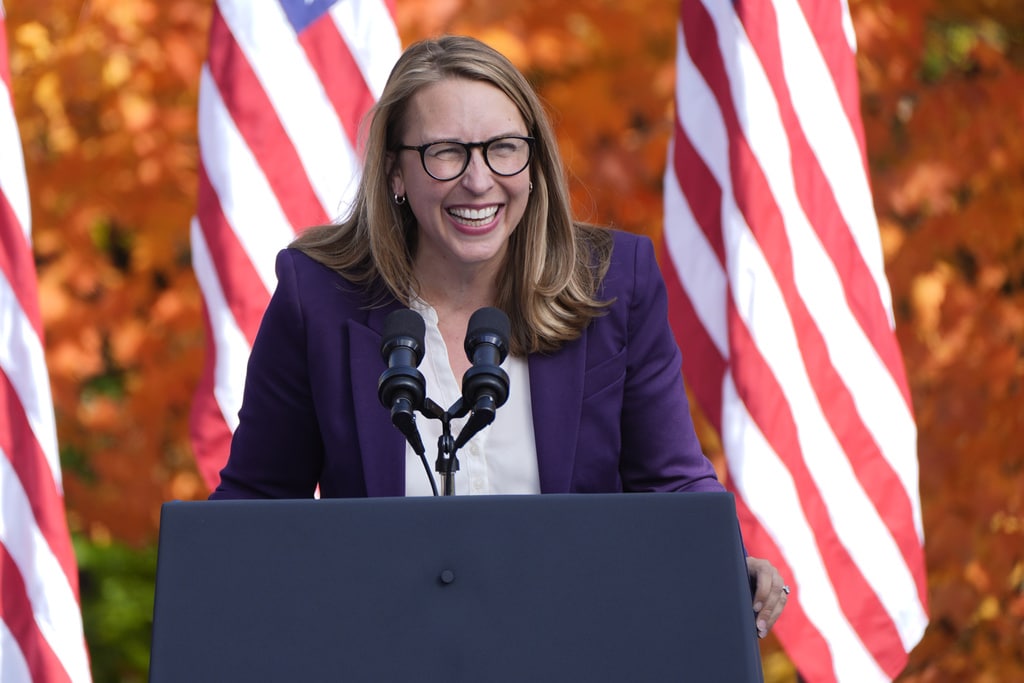
U.S. Rep. Hillary Scholten (D-MI) will defend her West Michigan seat against former television meteorologist Terri DeBoer this November. DeBoer will vie for Michigan’s 3rd Congressional seat after securing the GOP nomination on Tuesday.
AP News projected DeBoer the winner of the GOP primary over Ryan Cushman with just 25% of the vote counted.
Scholten ran unopposed in the Democratic primary, securing her spot on the general election ballot as she seeks a second term in the U.S. House. In 2022, Scholten made political history by becoming the first Democrat to represent the Grand Rapids-centered district since the 1970s and the first woman elected to the seat. A former immigration attorney and U.S. Department of Justice official, Scholten has introduced legislation on economic development and federal infrastructure funding.
Scholten also supports the United States’ continued relationship with Israel, and recently voted against an amendment to cut aid to the country. The congresswoman also drew scrutiny in early 2025 when she voted for the Laken Riley Act, a bill that expanded federal immigration detention and deportation authority.
DeBoer entered the race after a 30-year career as a broadcast meteorologist in West Michigan, most recently with FOX 17. Running on a platform centered on fiscal restraint, border security, price transparency in health care and parental rights in education, DeBoer established early name recognition across the district.
However, DeBoer’s campaign finance reports drew scrutiny. Disclosures revealed that over 40% of her initial fundraising came directly from members and associates of the billionaire DeVos family, long-standing power brokers in West Michigan conservative politics. The heavy financial backing allowed DeBoer to flood local airwaves and digital platforms with advertising, while Democrats criticized her reliance on mega-donors.
Cushman, a Michigan National Guard veteran and small business owner, positioned himself as a populist alternative to the party establishment. Running on a fraction of DeBoer’s budget, Cushman put forward an unconventional Republican platform. His priorities included capping corporate political contributions, expanding Medicaid, auditing health insurance companies, and reducing dependence on fossil fuels. Cushman campaigned extensively on direct voter outreach, aiming to appeal to working-class voters weary of corporate influence in federal elections.
Heartland Signal encourages news organizations and content creators to use our content. You're welcome to republish this article for free as long as you follow our republishing guidelines.
Related Articles

No Kings to host voter mobilization effort ahead of Election Day
After mobilizing millions of Americans in opposition to the administration of President Donald Trump through previous demonstrations, the coalition of organizations leading No Kings Day protests are preparing for a fourth.
South Dakota’s top election official, a Republican, endorses a Democrat to succeed her
Surprise announcement completes secretary of state’s shift away from activists calling for hand-counting and denying legitimacy of 2020 presidential election.
FACT CHECK: Ads fault Minnesota state senators Hauschild, Kupec on fraud vote they later backed
A GOP-backed ad campaign claims DFL state Sens. Grant Hauschild and Rob Kupec opposed fraud accountability measures. But both senators voted yes on Senate File 856, which created Minnesota’s Office of the Inspector General.