
FACT CHECK: Ryan Mackenzie parrots misleading claim denying Iran War is spiking fuel prices
U.S. Rep. Ryan Mackenzie (R-PA) is repeating misleading claims that recent high fuel prices aren’t driven by the war with Iran. Experts say even with sea passages open, risk premiums and lost oil supply from ongoing Middle East conflict continue to keep prices inflated.
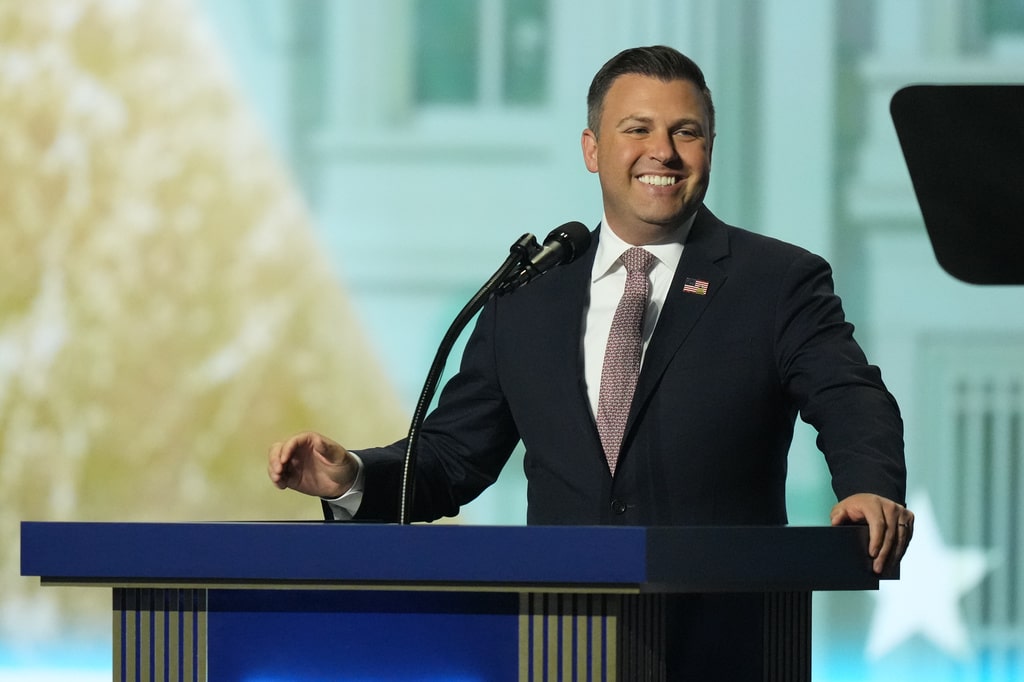
During an interview on CNN Tuesday, U.S. Rep. Ryan Mackenzie (R-PA) repeated President Donald Trump’s misleading claim that recent high fuel prices are not because of the Iran War.
CNN’s Manu Raju brought the topic up with Mackenzie when talking about how national issues were influencing his reelection campaign. Raju asked the Pennsylvania Republican whether the war with Iran was worth his constituents paying higher prices, namely with fuel and diesel prices. Mackenzie instead blamed former President Joe Biden for high prices, despite him not being president for almost 21 months, before highlighting how fuel prices are going down because of the reopening of the Strait of Hormuz in the Middle East.
“Well, we always want to see lower fuel prices. They were sky high under the Biden administration,” Mackenzie said. “And now that you see the Strait of Hormuz opening up, prices are starting to come down.”
“Diesel’s still about three bucks higher than it was at the beginning of the war,” Raju interjected.
“The biggest constraint on diesel is refinery capacity,” the congressman responded. “We haven’t built refineries in this country in decades. And then when refineries are blown up in Russia because of an ongoing conflict in Russia and Ukraine, that’s what really drives up those prices.”
President Donald Trump used that same argument on Monday via a Truth Social post, saying destroyed oil refineries in Russia and closed refineries in the United States are the main drivers of high fuel prices.
Why fuel prices are still high
Diesel prices have, in fact, dropped by $0.33 in the past two weeks, according to data from the U.S. Energy Information Administration (EIA). However, even though U.S. forces are protecting ships, leading to the Strait of Hormuz to occasionally reach prewar averages in critical crude oil exports, the Oct. 5 price of $6.20 for a gallon of diesel is still much higher than where it was exactly one year ago: $3.71.
Also, experts told The Hill and CNN that even with the sea passage open, recent fuel price spikes couldn’t just be attributed to a lack of refineries. Tom Kloza, the chief energy advisor for Gulf Oil, told The Hill that because the war with Iran is still ongoing and threatening ships, risk premiums are keeping fuel prices high.
“As long as that continues, you’re going to have this incredible risk premium that’s attached to the price of crude, even though you may be getting as much crude as you were getting on Feb. 28,” Kloza told The Hill’s Ryan Mancini.
Iran is also still attacking ships attempting to leave the passage with drones and missiles, with the Houthi-led militia attacking at least 11 tankers between last Saturday and Monday, according to The New York Times.
John Auers, managing director of refined fuels at the data analytics firm Novi Labs, told CNN’s Chris Isidore that even with refinery constraints globally, fuel prices are still inflated because of how much is lost because of the Iran War and the Russia-Ukraine war.
“The problem is we’ve lost 2 million barrels per day of supply combined between Russia and the Middle East to global markets,” Auers told CNN. “That is huge in a market that was already fairly tight.”
Auers also contended that reopening or creating new American refineries is not something oil companies have an incentive to do. The current market system is profitable, he says, and companies would not commit to spend billions of dollars in new refineries just because of recent events in the Strait of Hormuz.
“What’s the Strait of Hormuz going to look like in four to five years?” Auers asked Isidore. “The assumption is it’ll be opened by then, and Russian refineries will be back to normal. So, it doesn’t really matter what’s happening now or next year when making plans for a major expansion project.”
Mackenzie backs expanded war powers for Trump
Also during Raju’s CNN interview, Mackenzie continued to endorse Congress giving up some of its constitutional war powers to the executive branch, specifically Trump.
“I don’t think when you’re involved in a conflict like this that is ongoing, that you want to take any of those [levers of power] away,” Mackenzie said. “In fact, I’m glad that we added powers to the president and the executive by giving him additional sanction power, which had bipartisan support from both Republicans and Democrats in Congress.”
Mackenzie, a freshman congressman, is running for reelection in Pennsylvania’s 7th Congressional District against Democrat Bob Brooks. The Republican has voted five times against limiting funding or military engagement in the Middle East, while Brooks is running on ending the Iran War.
Heartland Signal encourages news organizations and content creators to use our content. You're welcome to republish this article for free as long as you follow our republishing guidelines.
Related Articles

Sprague, Russo, and more secretary of state candidates weigh in on Trump’s expanded voter database
The Supreme Court cleared the way for the federal government to share Social Security data to build a nationwide voter database. But election officials in Minnesota, Ohio and South Dakota are divided on whether the error-prone tool will protect voter rolls or disenfranchise eligible citizens.
Cooke calls Van Orden’s AI deepfake videos defamatory, threatens legal action
Incumbent Derrick Van Orden (R) has posted numerous AI-generated deepfake videos of Rebecca Cooke on his X account. Cooke and her lawyers have issued a cease-and-desist letter to Van Orden, arguing that his conduct meets the legal standards for defamation.

Democratic candidate David Crowley up in polls, down in fundraising
Wisconsin’s race for governor is tight with Democratic gubernatorial candidate David Crowley up in the most recent Marquette poll over Republican gubernatorial candidate Tom Tiffany, but down in fundraising.