
Sprague, Russo, and more secretary of state candidates weigh in on Trump’s expanded voter database
The Supreme Court cleared the way for the federal government to share Social Security data to build a nationwide voter database. But election officials in Minnesota, Ohio and South Dakota are divided on whether the error-prone tool will protect voter rolls or disenfranchise eligible citizens.
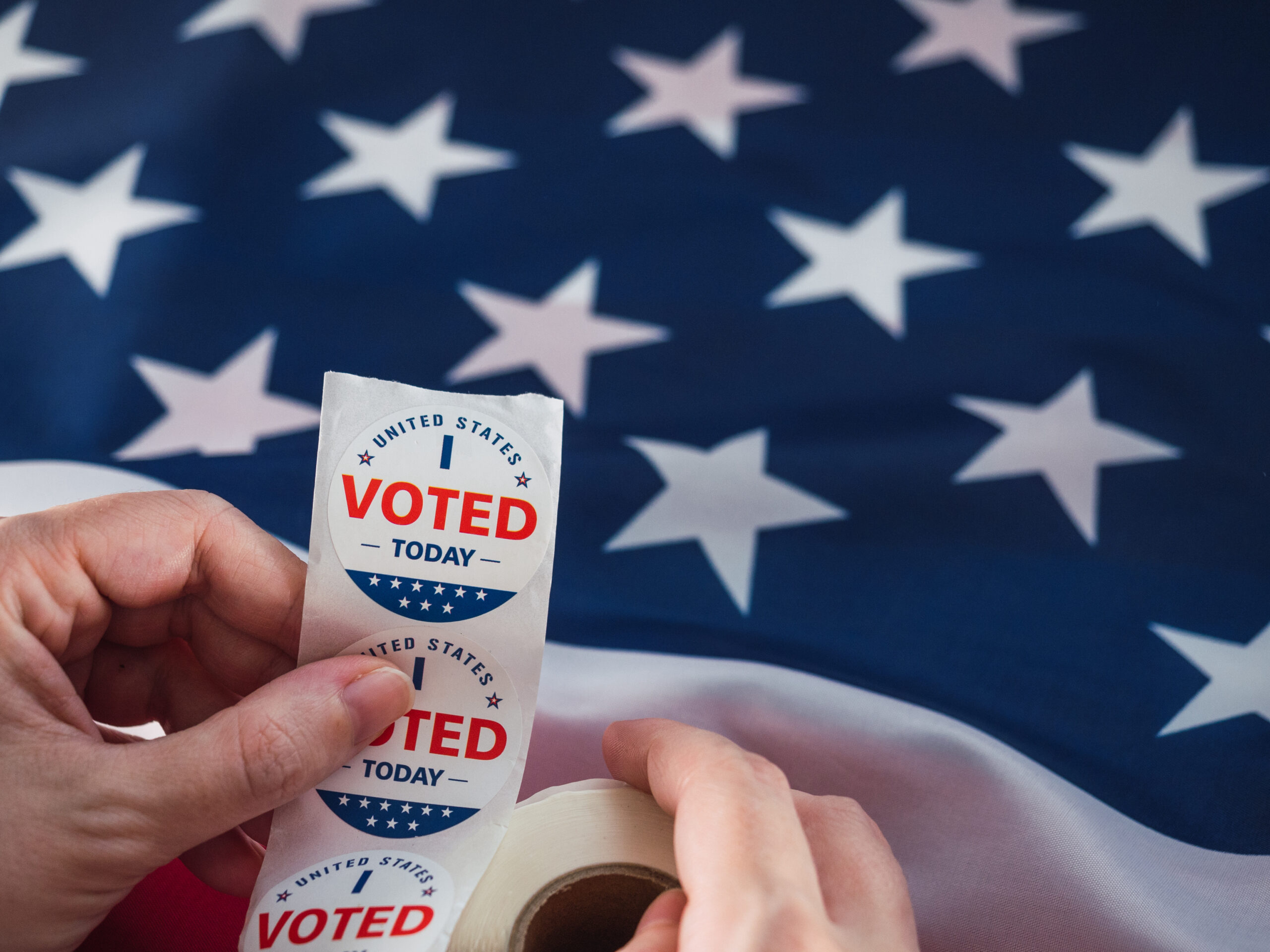
Candidates for secretary of state across the nation had mixed responses about the Supreme Court’s recent ruling to allow election officials to use the Systematic Alien Verification for Entitlements (SAVE) tool.
The tool has existed since 1986, when the federal government created it to help other agencies verify public benefits applicants’ citizenship and immigration status. In March 2025, President Donald Trump signed an executive order expanding the program to include data from the Social Security Administration and allow bulk searches using that data.
The League of Women Voters challenged the order in court, and a district court judge blocked the program in June 2026.
On Sept. 25, the Supreme Court overturned that finding. In an unsigned opinion, the six-member majority argued that the Department of Homeland Security is already entitled to information from the SSA through the 1996 Illegal Immigration Reform and Immigrant Responsibility Act.
The Trump administration argues that the tool is necessary to secure federal elections, but several nominees for secretary of state across the country disagree.
Minnesota and Ohio candidates split on the SAVE tool
Minnesota’s Democratic-Farmer-Labor (DFL) nominee for secretary of state, incumbent Steve Simon, said his office wouldn’t use the tool due to concerns over accuracy and privacy.
“Minnesota has never used the SAVE Program for voter verification, we’re not permitted in state law to do so, and we have no plans to do so,” he said in a statement. Tad Jude, the Republican nominee for Minnesota secretary of state, did not respond to requests for comment in time for publication.
Robert Sprague, Ohio’s Republican nominee for secretary of state, said the tool is necessary to keep the state’s elections secure.
“Requiring proof of citizenship is foundational for secure, trustworthy Ohio elections,” he said on X. “The fact that Democrats are howling so loudly over the Court’s ruling is further evidence that noncitizens voting in Ohio elections is an essential part of their campaign strategy.” Research released by the the Center for Election Innovation & Research last year found that noncitizen voting is extremely rare, and doesn’t happen in numbers large enough to affect election outcomes.
Sprague’s opponent, Democrat Allison Russo, said noncitizen voting isn’t the biggest threat to Ohio’s elections.
“There is zero evidence of widespread election problems in Ohio. Our current Ohio Secretary of State Frank LaRose boasts about how well we run elections in our state,” she said in an email. “I’m more concerned about federal meddling.”
Philip Mayor, the deputy legal director of the Michigan chapter of the American Civil Liberties Union, said the administration is providing a solution for a problem that doesn’t exist.
“Voting by people who are not citizens is vanishingly rare in the United States, and it’s a fever dream for the administration to try to suggest otherwise,” he said.
Accuracy questions follow the tool to South Dakota
The tool is part of the Trump administration’s project to create a nationwide citizen list.
But the list is full of errors. In Texas and Missouri, the SAVE tool has incorrectly flagged several eligible voters as noncitizens. And several states started using the tool before it was blocked in June.
In South Dakota, a 2024 manual audit identified 273 non-U.S. citizens registered to vote. The state is one of several that have opted in to using the SAVE tool. Heather Baxter, the Republican nominee for Secretary of State, said the tool should be one of many options available to correct errors like the ones found in 2024.
“It is possible other mistakes were made, so using all the tools available to us to ensure all voter registrations are compliant with state and federal law may be a benefit to County Auditors,” she said in an emailed statement.
Terrence Davis, the Democratic nominee in South Dakota, said that election integrity also includes protecting eligible voters from disenfranchisement.
“SAVE can be one tool in that process. But a database result should not automatically determine whether an eligible citizen can vote,” he said over email.
What the ruling means for the midterms and 2028
Mayor said the system could lead to election officials removing eligible voters from the rolls — on either side of the aisle.
“It’s using a flawed database to potentially provide a way for states who are willing participants to challenge voters in ways that is far more likely to result in the disenfranchisement of eligible voters,” he said.
Mayor said the decision likely won’t affect the upcoming midterms. That’s thanks to the National Voter Registration Act, which bans mass purges of voter rolls within 90 days of an election.
But the Supreme Court is set to take a case challenging parts of that law this term. And the case about the SAVE tool will continue through the court system. It could have implications for the 2028 presidential election, Mayor said.
“This is not a good decision, and it’s not one that I agree with,” Mayor said. “But it’s not the final word.”
Heartland Signal encourages news organizations and content creators to use our content. You're welcome to republish this article for free as long as you follow our republishing guidelines.
Related Articles

Data centers investments, personal finances take center stage at Michigan governor debate
Michigan gubernatorial candidates Jocelyn Benson and John James faced off over rising living costs, government reform and data center developments. While both candidates agreed on a couple issues, they clashed over transparency and who is best equipped to lead the state.
FACT CHECK: Ryan Mackenzie parrots misleading claim denying Iran War is spiking fuel prices
U.S. Rep. Ryan Mackenzie (R-PA) is repeating misleading claims that recent high fuel prices aren’t driven by the war with Iran. Experts say even with sea passages open, risk premiums and lost oil supply from ongoing Middle East conflict continue to keep prices inflated.

Sand, Lahn trade attacks on residency, family at first Iowa gubernatorial debate
Democrat Rob Sand and Republican Zach Lahn accused each other of lying about their residency and family wealth Tuesday while answering questions on the state budget and education during the first 2026 Iowa gubernatorial debate.