
Bill to end Pennsylvania’s closed primary elections passes state House
A bill to allow independent and third-party voters to cast ballots in Pennsylvania primary elections passed Tuesday in the state House.
This post has been republished from the Pennsylvania Capital Star under Creative Commons license CC BY-NC-ND 4.0.
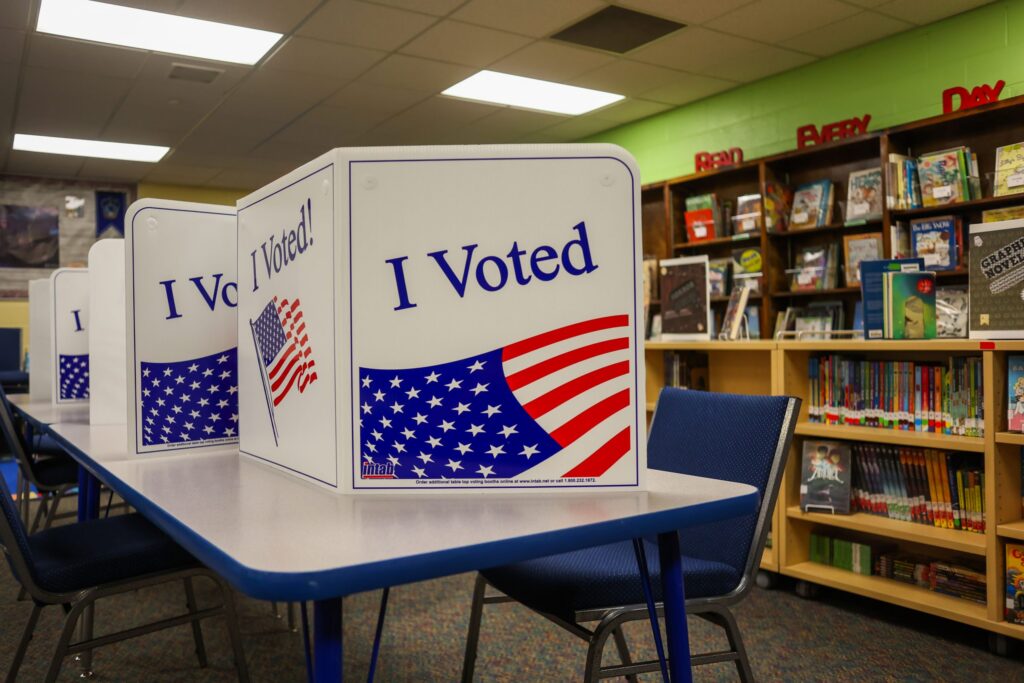
A bill to allow independent and third-party voters to cast ballots in Pennsylvania primary elections passed Tuesday in the state House.
Despite the 115-88 vote, the legislation attracted opposition from both sides of the aisle from lawmakers who argued the primaries are the exclusive domain of the parties to nominate candidates for the general elections.
State Rep. Jared Solomon (D-Philadelphia), who is the measure’s prime sponsor, said opening the commonwealth’s primaries would correct an injustice for 1.5 million unaffiliated voters that has existed since the state Election Code was made law in 1937.
“Our election system has all the gloss and feel of being open to voters throughout Pennsylvania, there are our community centers, our synagogues, our mosques, our churches, our civic institutions that welcome people,” Solomon said. “Yet these voters are counted out each and every election.”
SUBSCRIBE: GET THE MORNING HEADLINES DELIVERED TO YOUR INBOX.
Solomon’s bill was introduced in 2025 but not reported out of the House State Government Committee until Monday. It now heads to the Republican-controlled Senate for consideration.
Advocates for open primaries have argued that the current system disenfranchises groups including about 400,000 Pennsylvania veterans and nearly two-thirds of young adults who choose to join an alternative political party or remain independent. The commonwealth is one of just 10 states with closed primaries.
“This year, we can bring in those veterans, those young people, and those that diverse coalition of voters into the civic fabric of Pennsylvania,” Solomon said.
But Rep. Wendy Fink (R-York) argued that the commonwealth’s general elections are open to every U.S. citizen who registers to vote and Solomon’s bill would actually alter the nomination process.
“The primary is not an election in the purest form,” Fink said, adding that allowing non-party voters to participate in primaries would add complexity to elections.

A voter registration booth features a cardboard cutout of the late Charlie Kirk at the NRA’s Great American Outdoor Show at the Farm Show complex in Harrisburg, on Feb. 11, 2026. (Photo by Tim Lambert/Pennsylvania Capital-Star)
Although the measure passed with 16 Republicans voting “yea,” Democratic support was not unanimous.
Rep. Greg Vitali (D-Delaware) echoed Fink’s argument and added that independent voters choose to exclude themselves from the partisan process. Vitali said in conversations with some independent voters, they told him they find it distasteful to be affiliated with either party.
“I find it very inconsistent on the part of those people … who find it too distasteful to be affiliated with a party, yet at the same time want a voice in choosing its standard bearer,” he said. “That’s just inconsistent.”
One lawmaker compared the spring elections to football draft picks.
“It would be really bad if, when the NFL draft came along, that my Eagles would allow some person from the Steelers to make their draft picks,” Rep. Russ Diamond (R-Lebanon) said.
But Democratic Whip Mike Schlossberg (D-Lehigh) said every elected official should be working to make government participation easier for constituents. And he rejected the notion that voters who want to participate in primaries should just pick a party.
“Our job is to do everything we can to expand the franchise and to make sure that our citizens have an easier pathway to communicate with us, an easier pathway to influence our decisions, because that is a core tenet of democracy,” he said.
Heartland Signal encourages news organizations and content creators to use our content. You're welcome to republish this article for free as long as you follow our republishing guidelines.
Related Articles
Minnesota Truth Council concludes public testimony on Operation Metro Surge
A council tasked with documenting the harms of — and resistance to — the federal government’s immigration crackdown held its final public meeting Tuesday in Rochester.
Missouri education board declines to seek $300 million increase in school aid
After a stalemate, the board voted to keep its foundation formula request flat despite rising costs under state law.
December trial date set for South Dakota lawmaker facing election-related felony charges
A judge in Minnehaha County set a December trial date on Tuesday for a South Dakota state senator facing election-related felony charges.