
2026 midterm debates: Why candidates are skipping or stalling them
Election debate scheduling has become increasingly contentious across several midterm races this year. Candidates across the Midwest have had disputes over debate participation, logistics and host selection, with some candidates declining to debate altogether.
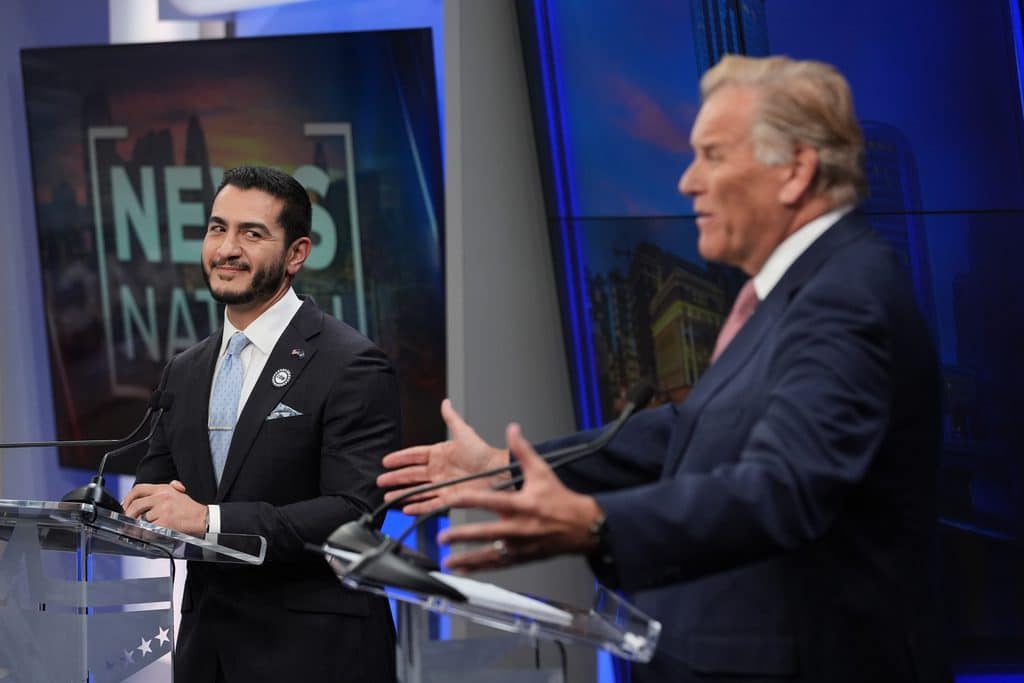
After several weeks of blaming each other for breakdowns in scheduling, Rebecca Cooke (D) and U.S. Rep. Derrick Van Orden (R-WI) participated in a candidate forum Tuesday morning. The candidates for Wisconsin’s 3rd Congressional District discussed border security, health care affordability and tax cuts — while routinely accusing the other of lying to the audience.
The public and contentious exchange over the debate highlights an issue that’s becoming more common during elections. In Ohio, Democratic gubernatorial candidate Dr. Amy Acton has said that she will not debate her Republican opponent, Vivek Ramaswamy. In Michigan, Mike Rogers declined to attend a debate Detroit’s Fox 2 station hosted. And in Iowa, U.S. Rep. Zach Nunn (R-IA) and state Sen. Sarah Trone Garriott (D) only recently agreed to a debate after their campaigns couldn’t agree on dates.
Some of these arguments are normal parts of the election process. Others are new — and ugly.
What’s normal
It’s not unusual for candidates to disagree on logistics like dates and format. But in recent election cycles it’s gotten worse, said Kedron Bardwell, professor of political science at Simpson College in Iowa.
“I’ve seen more of it maybe this cycle than anything else,” he said. “But it’s just because so much hinges on what happens in this particular election.”
Incumbents or candidates polling in the lead are usually more likely to avoid debates, Bardwell said.
“You want fewer opportunities to make mistakes, essentially,” he said. “If you’re the candidate who’s behind, you want more [debates] because you want more opportunities to kind of change the narrative of the race.”
What’s new(er)
But more and more voters get their news from social media, not television news stations. That’s fragmented and siloed the news ecosystem, Bardwell said.
“It’s not like the days when everybody who was politically engaged would sit and watch presidential debate or something like that,” he said. That’s limited the influence debates have on polling and race outcomes as well.
“I don’t think debates can actually have quite as much impact as they used to because the viewership is not there,” Bardwell said.
Candidates themselves have become less trustful of the debate process. The campaign of Mike Rogers, U.S. Senate candidate in Michigan, said he didn’t attend a debate hosted by FOX 2 Detroit because he didn’t trust the moderator to be unbiased.
“Michiganders deserve to see their candidates engage in a healthy, fair debate — not one compromised by media bias,” Alyssa Brouillet, communications director for the Rogers campaign, told FOX 2 in a statement last month.
Democrats have also expressed wariness about debate hosts. In Wisconsin, Cooke declined to debate Van Orden at events that would have been hosted by the Wisconsin Firearm Owners Association and Hispanic Chamber of Commerce Wisconsin. Cooke’s campaign then stepped back from negotiations, saying that Van Orden was not bargaining in good faith.
What’s ugly
Bardwell said increasing distrust between candidates and parties has also led to more public — and uglier — exchanges about debate scheduling.
“Polarization has poisoned the well, where candidates now don’t see the other person as a good faith opponent,” he said. “They see them as evil or the enemy.”
Several midterm races have reached this point. Democratic Ohio gubernatorial candidate Dr. Amy Acton has said she will not debate her Republican opponent Vivek Ramaswamy because of GOP-funded political ads that she described as personal attacks. One ad released this week platforms Acton’s estranged mother, whom she has not seen since 1978. In Pennsylvania, 7th Congressional District Democratic candidate Bob Brooks dropped out of a planned debate with Rep. Ryan Mackenzie at the last minute after alleging that his opponent published a defamatory advertisement.
Other candidates have noticed it, too.
“I’ll be frank, this political environment is vile,” Van Orden said at the beginning of the debate with Cooke. His comments come three weeks after Cooke sent him a cease and desist letter over AI-generated deepfake videos Van Orden posted on X depicting Cooke saying things she never said.
Heartland Signal encourages news organizations and content creators to use our content. You're welcome to republish this article for free as long as you follow our republishing guidelines.
Related Articles
Huizenga campaign spending at center of McCann’s MI-04 challenge
Democrat Sean McCann is making Rep. Bill Huizenga’s campaign spending, including $400,000 paid to his half-brother’s firm, the core of the MI-04 race.
Deleted posts reveals Pfaffenbach’s extreme political rhetoric and false claims
259 deleted X posts from Wisconsin Assembly candidate reveals a record of inflammatory political rhetoric, including opposition to abortion rights and false claims about Social Security fraud.
Copper and canoes, health care and affordability. Skraba, Kania debate the issues in Minnesota House District 3A
This sprawling district along the U.S.-Canada border was once reliably blue. But Republicans flipped the seat in 2022. The state’s DFL party hopes it has the right candidate to flip it back, with a little help from an unpopular president.